✅ Checking Car Battery with Multimeter
• Use the DC Voltage Function for Basic Battery Testing • Know What Other Meter Functions Can Help With✅ Testing Car Battery Voltage
• Steps To Check Voltage • Different Voltage Readings Mean
✅ Measuring Car Battery Health
• Check Electrical Performance • Check Physical Condition and Overall Reliability
✅ Car Battery Life Estimation
• Check Battery Type and Typical Service Life • Check Aging and Current Condition
✅ How to Check Car Battery Drain
• Check Drain on a Lead-Acid Car Battery • Check Self-Discharge on a Lithium Starter Battery
✅ Checking the Installed Battery Model
• Check the Battery Label First • Use Size and Appearance if the Label Is Missing • Pay More Attention to Labels on Lithium Batteries
✅ FAQ
How to Check a Car Battery? How to Check a Car Battery with a Multimeter? How to Check Car Battery Health? How to Check Car Battery Life? How to Check Car Battery Voltage?
Car battery problems do not always show up in the same way. Sometimes the voltage looks low, sometimes the engine cranks more slowly than usual, and sometimes the battery keeps going dead after the car has been parked. That is why checking a car battery is not just one test. In many cases, understanding some car battery basics makes it easier to tell whether the problem is low charge, battery aging, or an electrical drain elsewhere in the vehicle.
In most vehicles, the battery is still a 12V starter battery, usually a lead-acid type such as flooded, AGM, or EFB. To judge whether it is still usable, you may need to check voltage, battery health, battery life, drain, model, or compatibility, because each test answers a different question about battery condition.
This article looks at car battery testing from several angles. It explains how to check car battery voltage, how to use a multimeter, how to judge battery health and service life, how to check for abnormal drain, and how to confirm the battery model when replacement is needed. For vehicles using lithium starter batteries, some test methods and result interpretation can also be different.

Checking Car Battery with MultimeterA multimeter or voltmeter is one of the simplest tools for checking a car battery. Since most car batteries are 12V batteries, the main function used during testing is the DC voltage setting. This is the basic mode for checking battery voltage and getting a quick idea of whether the battery is fully charged, low, or possibly failing. If you are using a multimeter instead of a simple voltmeter, it can also be used for other battery-related checks, such as current draw and continuity, but voltage testing is still the most common and most useful starting point.
• Use the DC Voltage Function for Basic Battery Testing
Set the meter to DC voltage
This is the standard function used to check car battery voltage.
Choose the 20V range on a manual multimeter
Because most car batteries are 12V, the 20V DC range is usually the correct setting.
Use this setting for a quick battery condition check
It helps show whether the battery is in a normal voltage range or needs further attention.
• Know What Other Meter Functions Can Help With
Current measurement can be used for drain testing
On a multimeter, the current setting is used when checking parasitic drain or abnormal battery draw.
Resistance or continuity is not the main battery test
These functions may help with some electrical checks, but they are not the normal way to judge battery condition.
A voltmeter only reads voltage
If you are using a voltmeter, it is mainly for checking voltage and cannot do the wider range of tests that a multimeter can.
For most car battery checks, the most important function is still DC voltage testing. A voltmeter is enough for a simple voltage reading, while a multimeter gives more flexibility if you also need to check drain or other electrical issues.
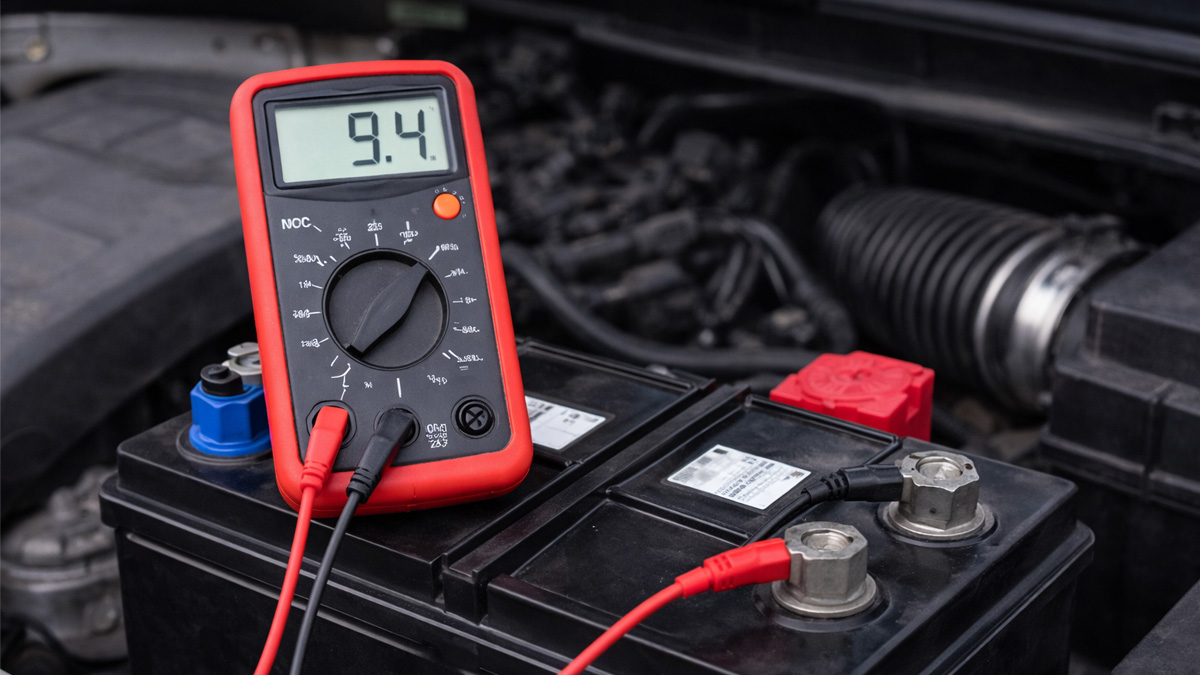
Testing Car Battery VoltageIn most cases, a car battery is a 12V battery, so the easiest way to check it is with a multimeter set to 20V DC. Once the car is turned off, you can measure the voltage across the battery terminals and compare the reading with common 12V battery ranges to see whether the battery is fully charged, weak, or likely needs charging or replacement.
• Steps To Check Voltage
- Turn off the car and remove the key.
Make sure the engine, headlights, and other electrical loads are off before testing.
- Open the hood and locate the battery.
Identify the positive terminal (+) and negative terminal (−).
- Set the multimeter to 20V DC.
Since most car batteries are 12V, the 20V range is the correct setting for a basic voltage check.
- Place the probes on the battery terminals.
Touch the red probe to the positive terminal and the black probe to the negative terminal.
- Read the voltage on the display.
A healthy resting voltage usually falls close to the normal range for a 12V lead-acid car battery.
• Different Voltage Readings Mean
- 12.6V or slightly higher: the battery is usually fully charged and in normal condition.
- 12.4V to 12.5V: the battery is still usable, but not fully charged.
- 12.2V to 12.3V: the battery is partly discharged and may need charging soon.
- Around 12.0V or below: the battery is low and may struggle to start the car.
- Below 11.8V: the battery is heavily discharged or may already be failing.
If the reading is slightly low, charge the battery first and test it again later. If the voltage keeps dropping, or the car still cranks slowly after charging, the battery may be weak or near the end of its service life. If the reading is very low and the battery cannot hold voltage, replacement is usually the safer option.
 Measuring Car Battery Health
Checking car battery health is not just about battery age. It means checking whether the battery can still hold a charge, provide enough starting power, and remain stable in normal use. A battery may not be very old, but it can still be in poor health if it discharges too easily, struggles during cranking, or shows signs of physical damage.
• Check Electrical Performance
- Measure the resting voltage
Check the battery voltage after the car has been off for a while. For most 12V lead-acid car batteries, around 12.6V usually indicates a full charge, while a lower reading may suggest the battery is weak or undercharged.
- Check how the battery performs during starting
A healthy battery should crank the engine normally. Slow cranking, hesitation, or repeated starting trouble often means the battery is losing strength.
- Check whether the battery can hold a charge
If the battery drops in voltage again soon after charging, or the car struggles to start after sitting overnight, the battery may no longer store energy well.
- Use a load test if needed
A load tester or battery analyzer gives a more accurate health check by showing whether the battery can maintain voltage while supplying current.
• Check Physical Condition and Overall Reliability
- Look for corrosion, leaks, or swelling
Corroded terminals, a swollen case, cracks, or leaking fluid can all point to declining battery health.
- Notice repeated battery-related problems
Frequent jump starts, dim lights, or recurring low-battery symptoms may mean the battery condition is no longer reliable.
- Consider battery age, but do not rely on age alone
An older battery is more likely to weaken, but age by itself does not confirm battery health. A newer battery can also fail early if it has been deeply discharged, overheated, or poorly maintained.
- Judge the battery as a whole
Battery health should be judged from voltage, cranking performance, charge retention, and physical condition together, not from one sign alone.
Car Battery Life Estimation
Car battery life is usually checked in two ways. For a new battery, the starting point is its battery type and the normal service life that type usually provides. For a battery already in use, the focus is on how much it has aged and whether its performance has clearly declined.
In most vehicles, the battery is still a 12V lead-acid starter battery, and its service life is often around 3 to 5 years under normal conditions. AGM batteries may last somewhat longer, while lithium starter batteries can last several times longer in the right application. That is why battery type should be identified before making any lifespan estimate.
• Check Battery Type and Typical Service Life
- Start with the battery chemistry
A conventional flooded lead-acid car battery often lasts about 3 to 5 years under normal use. AGM batteries may last slightly longer, depending on the vehicle and charging conditions.
- Lithium starter batteries usually last much longer
If the car uses a lithium starter battery, its service life can be several times longer than a standard lead-acid battery. That is why battery type should always be checked before judging battery life.
- A new battery is judged by its expected service life
For a new battery, life is usually estimated from its battery type, build quality, and normal service range, not from testing wear that has not happened yet.
• Check Aging and Current Condition
- Look at how the battery behaves in daily use
Slow cranking, repeated jump starts, and difficulty starting after the car sits for a short time often suggest the battery is aging.
- Check whether it still holds a charge well
If the battery loses voltage too quickly after charging, or keeps going weak after normal driving, its remaining life may be limited.
- Use voltage and load testing to judge condition
A resting voltage check is a useful starting point, but a load test or battery analyzer gives a clearer picture of whether the battery is still strong, weak, or near the end of its service life.
- Use capacity and age only as reference points
Battery age is one of the easiest ways to estimate life
If a lead-acid car battery is already several years old and is also showing weaker performance, replacement becomes more likely.
- Capacity inspecting can help show aging, but not predict exact remaining life
A capacity tester can help show whether the battery has lost performance, but it cannot accurately calculate exactly how much life is left in a car starter battery.
- Cycle count is not the main way to judge starter battery life
Unlike deep-cycle batteries, car starter batteries are not usually evaluated by cycle count in everyday use. Their remaining life is better judged from real-world performance, charge retention, voltage behavior, age, and test results together. A car battery’s life is not judged by age alone. For a new battery, battery type gives the basic lifespan range. For a used battery, the better approach is to judge aging through performance, charge retention, and test results together.
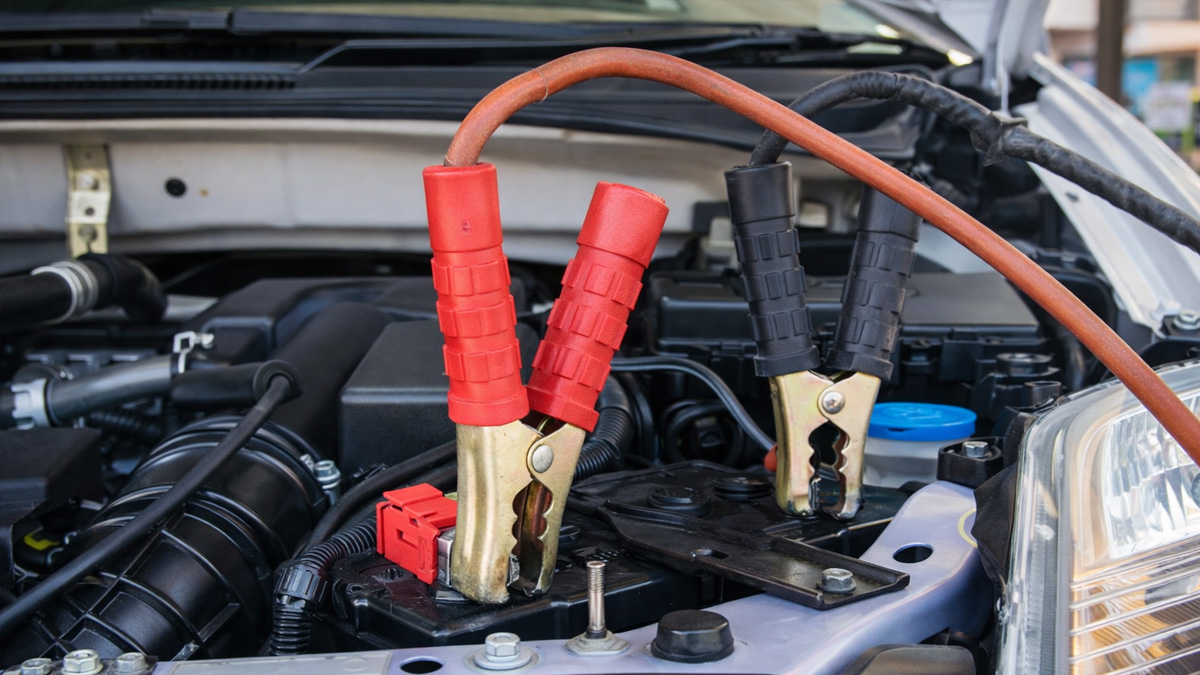 How to Check Car Battery Drain
Checking car battery drain usually means checking whether the battery is losing power because something in the vehicle is still drawing electricity when the car is off. For a typical lead-acid starter battery, this is usually tested by measuring parasitic draw with a multimeter. If the car uses a lithium starter battery, the idea is different. In that case, self-discharge is usually checked by removing the battery from the vehicle, letting it rest for about 10 days to 2 weeks, and then checking whether the voltage has dropped abnormally.
• Check Drain on a Lead-Acid Car Battery
- Turn off the car completely
Remove the key, close all lights and accessories, and let the vehicle sit so normal systems can go to sleep.
- Set the multimeter to inspectcurrent
This test is used to see whether there is abnormal current draw when the car is off.
- Connect the meter in series with the battery
Disconnect one battery cable and place the multimeter in series between the battery terminal and the cable so the current draw can be measured.
- Check whether the reading is abnormally high
A small standby draw is normal, but a higher reading may mean there is a parasitic drain from a module, light, relay, or another electrical component.
- Find the source if needed
If the reading stays too high, the next step is usually to remove fuses one by one to identify which circuit is causing the drain.
• Check Self-Discharge on a Lithium Starter Battery
- Do not judge it only by the same lead-acid method
A lithium starter battery may have different voltage behavior and internal protection, so drain checking is not always interpreted the same way as with a lead-acid battery.
- Remove the battery from the vehicle first
This helps separate battery self-discharge from vehicle-side parasitic draw.
- Let the battery rest for about 10 days to 2 weeks
During this period, the battery should remain disconnected and unused.
- Measure the voltage before and after the rest period
If the voltage remains stable, the battery is usually not showing obvious self-discharge. If the voltage drops noticeably over that period, the battery may have an abnormal self-discharge problem or internal fault.
- Check the battery maker’s voltage standard
Lithium starter batteries can differ by design and BMS settings, so the voltage drop should be judged against the manufacturer’s specifications rather than lead-acid benchmarks alone.
Car battery drain is therefore not checked in exactly the same way for every battery type. For a lead-acid starter battery, the main concern is usually parasitic draw in the vehicle. For a lithium starter battery, it is often more useful to separate the battery from the car and observe whether the voltage drops abnormally over time.
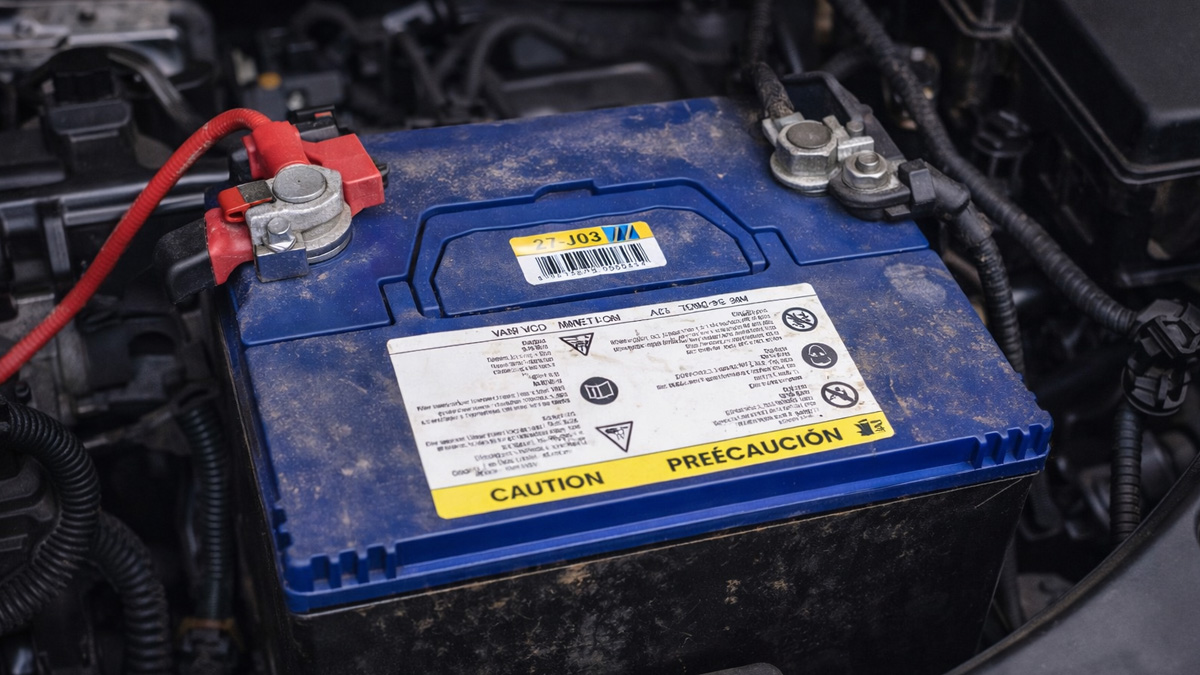 Checking the Installed Battery Model
In most cases, checking a car battery model means confirming the exact battery currently installed in the vehicle. Unlike tires or oil filters, there is no single universal battery model chart that works across every brand and battery type, so the most practical method is usually to identify the battery itself. For most car batteries, the label is the first place to check because it often shows the model, size, voltage, battery type, and other key specifications.
If the label is missing or no longer readable, the next step is usually to confirm the battery by its physical size, terminal layout, and overall appearance. In many cases, measuring the battery and comparing it with product photos or battery size listings online can help narrow down the correct model. This is often enough for common lead-acid batteries, especially when the battery case style and dimensions match a standard size.
• Check the Battery Label First
- Look for the model number on the label
Most batteries have the model, part number, group size, or product code printed directly on the top or side label.
- Check other useful label information
The label may also show voltage, battery type, capacity, CCA, and terminal layout, which all help confirm the battery model.
- Use the serial number as a reference if needed
Some batteries do not show the model very clearly, but the serial label or product code can still help identify the battery through the brand catalog or online search.
• Use Size and Appearance if the Label Is Missing
- Measure the battery dimensions
Length, width, and height can help narrow down the battery size and possible model range.
- Check terminal position and case shape
The direction of the positive and negative terminals, the shape of the case, and the hold-down style can all help identify the battery.
- Compare with product images online
For many common lead-acid batteries, comparing the battery’s appearance and dimensions with online product photos can help you find the matching model more easily.
• Pay More Attention to Labels on Lithium Batteries
- Lithium battery labels are even more important
Unlike many lead-acid batteries, where one case style often points to one standard model, a lithium battery with the same outer appearance may be available in several different capacities or internal configurations.
- A missing label makes lithium identification much harder
If the label is gone, it may be difficult to confirm the exact capacity, internal design, or intended replacement model just from the case alone.
- The replacement does not always need the exact same capacity
When replacing a lithium battery, matching the original capacity is not always necessary. In many cases, you can choose a suitable capacity based on your own needs, as long as the battery type, voltage, fitment, and system compatibility are correct.
The most reliable way to check a car battery model is therefore to start with the label. If the label is unavailable, size, terminal layout, and appearance can still help identify many common lead-acid batteries. For lithium batteries, however, label information is much more important, because the same case style may correspond to several different battery capacities.
FAQ
How to Check a Car Battery?A car battery can be checked by looking at its voltage, starting performance, ability to hold a charge, and overall condition. In most cases, a quick check starts with measuring the resting voltage, then watching for signs such as slow cranking, repeated jump starts, or visible corrosion and damage.
How to Check a Car Battery with a Multimeter?To check a car battery with a multimeter, set the meter to DC voltage and choose the 20V range for a typical 12V car battery. Then place the red probe on the positive terminal and the black probe on the negative terminal to read the voltage. This is the most common way to check whether the battery is charged, weak, or possibly failing.
How to Check Car Battery Health?Checking car battery health means checking more than just age. It usually includes voltage, charge retention, cranking performance, and visible condition. A battery may still be relatively new but in poor health if it loses charge quickly, struggles to start the engine, or shows signs of swelling, leaks, or terminal corrosion.
How to Check Car Battery Life?Car battery life is usually estimated from battery type, age, and current condition. A typical lead-acid starter battery often lasts around 3 to 5 years, while lithium starter batteries may last much longer. For a battery already in use, remaining life is usually judged from performance, charge retention, and test results rather than age alone.
How to Check Car Battery Voltage?To check car battery voltage, turn off the vehicle, open the hood, and use a multimeter set to 20V DC. Touch the probes to the battery terminals and read the display. For most 12V lead-acid car batteries, around 12.6V usually indicates a full charge, while a much lower reading may mean the battery is weak or discharged.


