✅
When to Replace a Car Battery • Most Car Batteries Last 3 to 5 Years • Main Factors Shorten Battery Life • Signs Mean the Battery Needs Replacement✅
Best Car Battery Brands✅
Premium Upgrade - Lithium Car Batteries✅
Places to Replace a Car Battery • Common Places for Car Battery Replacement • Free Installation✅
Replace a Car Battery at Home • Tools Needed for Car Battery Replacement • Steps for Replacement✅
Car Battery Replacement Cost • Main Factors That Affect the Cost • Installation Cost Is Often Low for Simple Batteries✅ Time to Replace a Car Battery✅
Concluson✅
FAQ How to Replace Car Battery? When to Replace Car Battery? How Long Does It Take to Replace a Car Battery? Where to Get Car Battery Replaced? How Often to Replace Car Battery?Car battery replacement is one of the most common vehicle maintenance tasks, but it is still important to replace the battery at the right time and install the correct model. A weak battery can cause slow starting, unstable electronics, frequent jump starts, and unexpected breakdowns. Before choosing a new battery, it helps to understand
how car batteries work, including battery type, voltage, lifespan, and vehicle compatibility.
In this guide, we will explain when to replace a car battery, where to get it replaced, how much it usually costs, how to replace it at home, and how to choose the best battery for your vehicle.
When to Replace a Car BatteryCar battery replacement is usually needed when the battery becomes too old, cannot hold charge, or starts causing repeated starting problems. Before installing a new battery, check the battery age, starting performance, voltage, charging condition, and physical appearance.
• Most Car Batteries Last 3 to 5 Years
A standard 12V lead-acid car battery usually lasts about 3 to 5 years. If the battery is already within this age range and starts showing weak performance, replacement should be considered.
• Main Factors Shorten Battery Life
- Hot Weather: High temperatures speed up internal battery aging and can reduce service life.
- Cold Weather: Low temperatures reduce battery output, making weak batteries harder to start the engine.
- Short Trips: Short driving cycles may not give the alternator enough time to fully recharge the battery.
- Long Parking Periods: Cars still use a small amount of power when parked, which can slowly drain the battery.
- Heavy Electrical Loads: Dash cameras, audio systems, lights, and other accessories can increase battery stress.
• Signs Mean the Battery Needs Replacement
A weak battery often shows warning signs before it completely fails. If several of these problems appear together, car battery replacement is usually the safer option.
Common signs include:
- Slow Engine Cranking: The engine turns over slowly because the battery cannot provide enough starting current.
- Frequent Jump Starts: If the car often needs a jump start, the battery may no longer hold enough charge for normal use.
- Dim Headlights: Weak or dim headlights when the engine is off can indicate low battery power.
- Clicking Sound When Starting: A repeated clicking sound usually means the battery does not have enough power to engage the starter properly.
- Battery Drains Overnight: If the battery becomes weak after sitting for one night, it may have poor charge retention.
- Unstable Electrical Accessories: Flickering dashboard lights, slow power windows, or unstable electronics can be caused by low battery voltage.
- Dashboard Battery Warning Light: A battery warning light may point to a weak battery, alternator issue, or charging system problem.
- Low Battery Voltage: If a 12V lead-acid battery stays around 12.0V or below after charging, it may be weak or unable to hold energy properly.
- Charging No Longer Restores Performance: If the battery charges but quickly becomes weak again, the internal capacity may already be reduced.
- Swollen Battery Case: A swollen case often means overheating or internal damage, so the battery should be replaced.
- Leaking Battery Fluid: Any visible leakage is a safety risk and means the battery should not be reused.
- Heavy Terminal Corrosion: Serious corrosion can block current flow and may also suggest battery leakage or aging.
- Rotten-Egg Smell: A sulfur smell can indicate battery damage or overcharging and should be checked immediately.
Before replacing and installing a new car battery, always confirm that the old battery is truly the problem. Age, slow starting, frequent jump starts, low voltage, poor charging recovery, and visible damage are the most common reasons for replacement. If the battery is old and several warning signs appear together, replacement is usually the safest choice. However, if the issue comes from a weak alternator, loose terminals, or parasitic drain, those problems should be fixed before the new battery is installed.
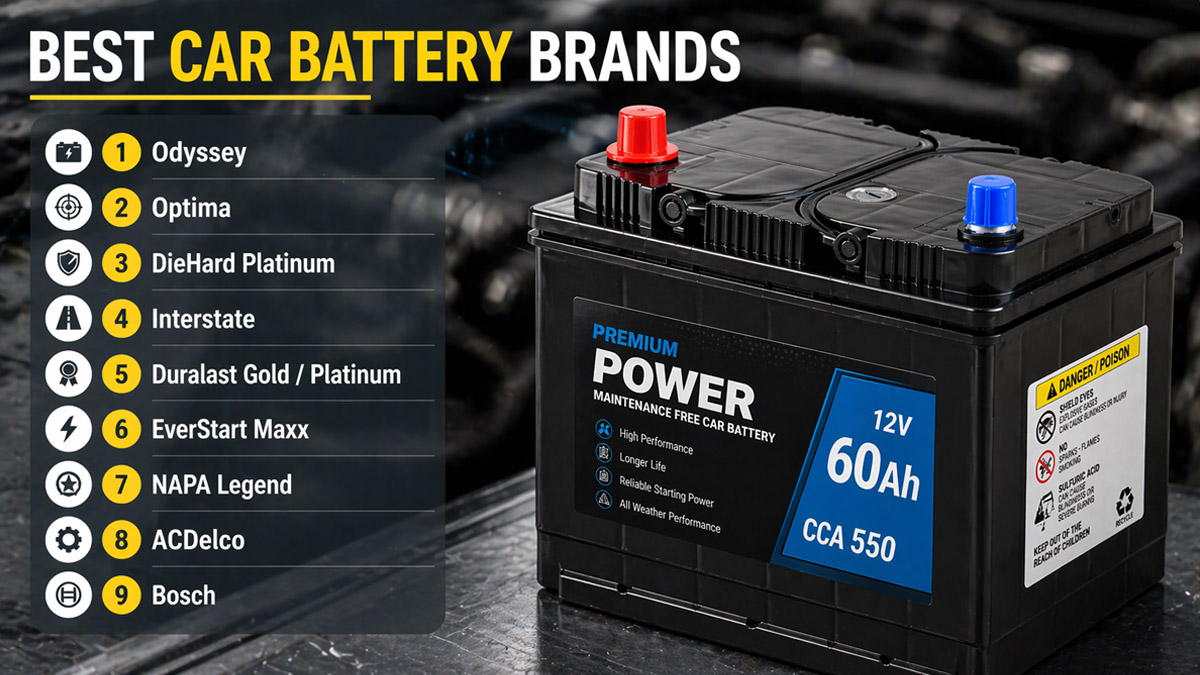 Best Car Battery Brands
Choosing the best car battery is not only about the brand name. Battery type, group size, CCA rating, reserve capacity, warranty, local availability, and installation support all matter. For most drivers, a reliable lead-acid or AGM battery is still the most common choice, while lithium car batteries are a higher-end option for users with a larger budget.
| Brand |
Positioning |
Main Strengths |
Best For |
| Odyssey |
Premium AGM |
Strong power, long life, heavy-duty use |
Trucks, performance cars, high-demand vehicles |
| Optima |
Premium AGM |
Vibration resistance, strong starting power, brand recognition |
Off-road, performance, rough driving conditions |
| DieHard Platinum |
High-end retail |
AGM options, good warranty, wide availability |
Newer vehicles, start-stop systems, daily drivers |
| Interstate |
Trusted mainstream |
Stable quality, broad distribution, Costco availability |
General replacement, family cars, common vehicles |
| Duralast Gold / Platinum |
Service-friendly |
Easy testing, local installation, AutoZone support |
Fast replacement and local service |
| EverStart Maxx |
Value choice |
Competitive price, Walmart availability, basic installation |
Budget-focused replacement |
| NAPA Legend |
Local parts-store option |
Good availability, store support, practical warranty |
Drivers who prefer local service |
| ACDelco |
OEM-style option |
GM fitment, reliable replacement, familiar brand |
GM vehicles and OEM-style replacement |
| Bosch |
Reliable aftermarket |
Good build quality, strong brand reputation |
Drivers wanting a trusted aftermarket battery |
For premium quality, Odyssey, Optima, DieHard Platinum AGM, and high-end Interstate or Duralast AGM batteries are usually stronger choices. They are better for vehicles with higher electrical demand, rougher driving conditions, or start-stop systems.
For value, EverStart Maxx, Costco-sold Interstate batteries, and some NAPA or ACDelco models are usually practical choices. They are easier to buy, often more affordable, and suitable for normal daily driving.
For service convenience, Duralast at AutoZone, EverStart at Walmart, DieHard at Advance Auto Parts, and NAPA batteries are strong options because testing, replacement, and warranty support are easier to handle through local stores.
Brand is important, but the exact model matters more. A lower-tier battery from a famous brand may not perform better than a higher-tier battery from a value brand. Before buying, always compare the correct battery type, group size, CCA rating, reserve capacity, warranty, and installation support.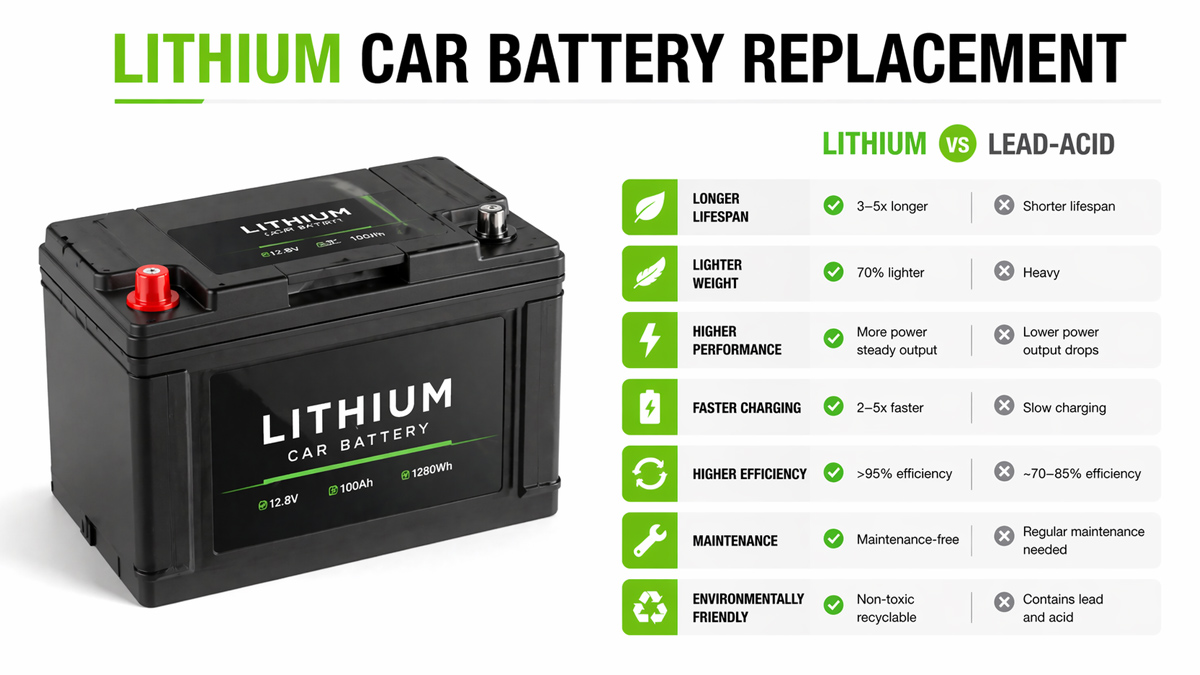
Premium Upgrade - Lithium Car Batteries
Most car batteries used as starter batteries are still lead-acid batteries, including flooded lead-acid, AGM, and EFB batteries. They remain popular because they are affordable, easy to find, and compatible with most vehicle charging systems. Flooded lead-acid batteries are common in standard vehicles, while AGM and EFB batteries are designed for higher electrical demand and start-stop systems.
Lithium car batteries are a higher-end alternative. They cost more upfront, but they are much lighter and can deliver a longer service life when the battery quality and vehicle compatibility are correct. For drivers with enough budget, comparing
reliable lithium battery options can be worthwhile because a well-matched lithium or LiFePO4 car battery may offer better long-term value than a traditional lead-acid battery.
| Comparison |
Lead-Acid Car Battery |
Lithium Car Battery |
| Common Use |
Standard starter battery |
Premium starter upgrade |
| Typical Price |
$100–$250 for standard lead-acid; $230–$450+ for AGM |
Usually $400–$900+ for quality lithium starter batteries |
| Typical Lifespan |
About 3–5 years |
Often 5–10 years, depending on quality and use |
| Cycle Life |
About 300–600 cycles for many lead-acid batteries |
About 2,000–5,000 cycles for many LiFePO4 batteries |
| Weight |
Usually 30–50 lb for standard car batteries |
Often 8–20 lb, depending on size and cranking power |
| Weight Reduction |
Standard weight |
Usually 50%–70% lighter |
| Usable Capacity |
Often around 50% recommended depth of discharge |
Often 80%–100% usable capacity with proper BMS |
| Voltage Stability |
Voltage drops more under load |
More stable voltage output |
| Maintenance |
More affected by sulfation and deep discharge |
Lower maintenance with BMS protection |
| Compatibility |
Fits most vehicles easily |
Must check charging voltage, BMS, size, terminals, and low-temperature protection |
| Best For |
Budget replacement and daily driving |
High-budget users, performance cars, long-term use, weight reduction |
Lithium car batteries are a good choice when the user wants longer service life, lower weight, and better performance stability. However, because lithium batteries are expensive, choosing a reliable seller or manufacturer is very important. A good lithium car battery supplier should provide clear battery specifications, real cell information, BMS protection details, charging voltage guidance, warranty terms, and technical support.
For most standard vehicles, lead-acid or AGM is still the easiest and most affordable replacement. For users with a higher budget, a reliable lithium or LiFePO4 car battery is the better long-term option, especially when weight, lifespan, and stable performance matter more than upfront cost.
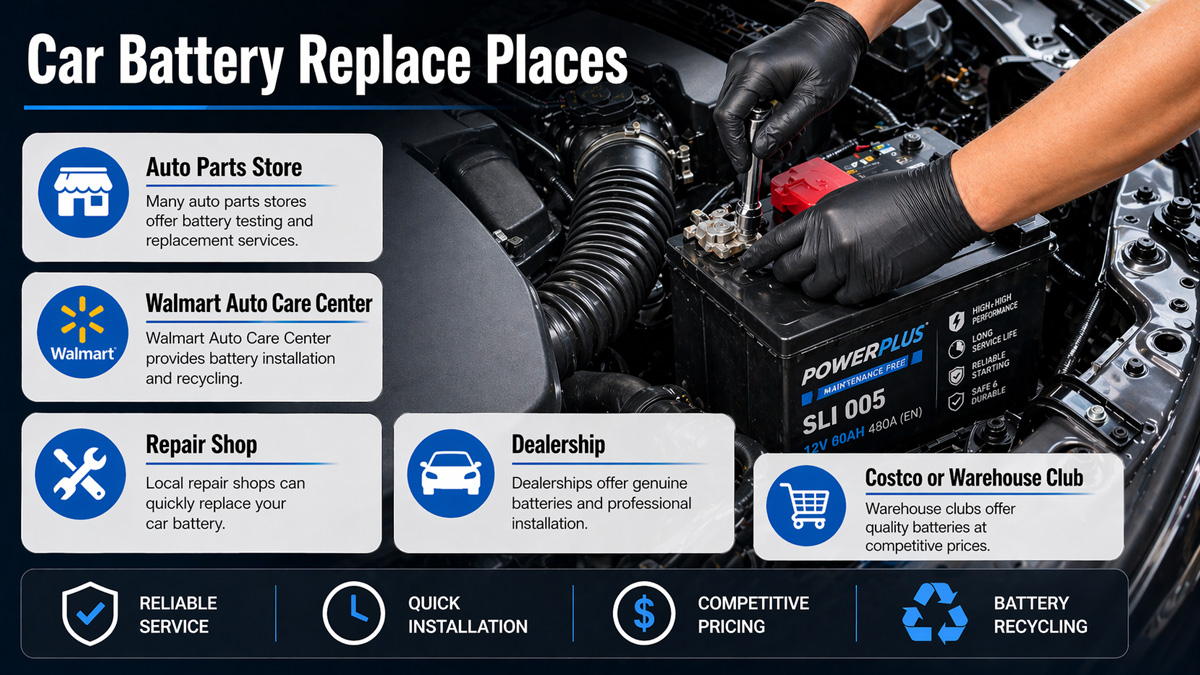
Places to Replace a Car BatteryCar battery replacement can be done at several places, including auto parts stores, Walmart Auto Care Centers, repair shops, dealerships, warehouse clubs, or at home. The best choice depends on the vehicle type, battery location, installation difficulty, and whether the car needs battery registration or charging system diagnosis.
• Common Places for Car Battery Replacement
Walmart and AutoZone usually can replace car batteries for standard vehicles, while Costco is usually better for buying a replacement battery, not always for installation.
| Replacement Place |
Pros |
Cons |
Best For |
| Auto Parts Store |
Usually offers battery testing, battery matching, and simple installation support. |
May not handle hidden batteries, coding, or complex electrical issues. |
Standard cars with easy-access batteries. |
| Walmart Auto Care Center |
Convenient for buying and installing a battery in one place; good for basic replacement. |
Not every Walmart has an Auto Care Center, and complex vehicles may not be supported. |
Budget-friendly battery replacement. |
| Repair Shop |
Can check the battery, alternator, starter, wiring, and parasitic drain. |
Usually costs more than a basic retail installation. |
Vehicles with repeated battery problems or unclear electrical issues. |
| Dealership |
Best for OEM battery matching, battery registration, and model-specific procedures. |
Usually the most expensive option. |
Newer cars, luxury vehicles, and vehicles still under warranty. |
| Costco or Warehouse Club |
Often good for buying replacement batteries at competitive prices. |
Installation service may be limited or location-dependent. |
Drivers who want to buy a battery and install it elsewhere or by themselves. |
Walmart is usually the cheapest choice for in-store car battery replacement because it often has lower-priced EverStart batteries and may offer free installation when you buy the battery there. Costco can also be affordable for buying a battery, but installation is not always guaranteed. AutoZone is very convenient for testing and basic installation, but its battery prices are often higher than Walmart. So, for the lowest total cost, Walmart is usually the best option; for battery purchase only, Costco can also be competitive.
In general, Costco is better for buying a car battery, Walmart is good for affordable battery purchase and installation, and AutoZone is convenient for testing, charging, and quick replacement. For hidden batteries, start-stop vehicles, luxury cars, or vehicles that need battery registration, a repair shop or dealership is usually safer.
• Free Installation
Some stores may offer free car battery installation when you buy the battery from them. This is common at many auto parts stores and some Walmart Auto Care Centers for standard batteries that are easy to access. However, free installation usually depends on the store policy, vehicle model, battery location, and whether the car needs special reset or registration. For hidden batteries, luxury vehicles, or complex electrical systems, the store may charge extra or recommend a repair shop.
 Replace a Car Battery at Home
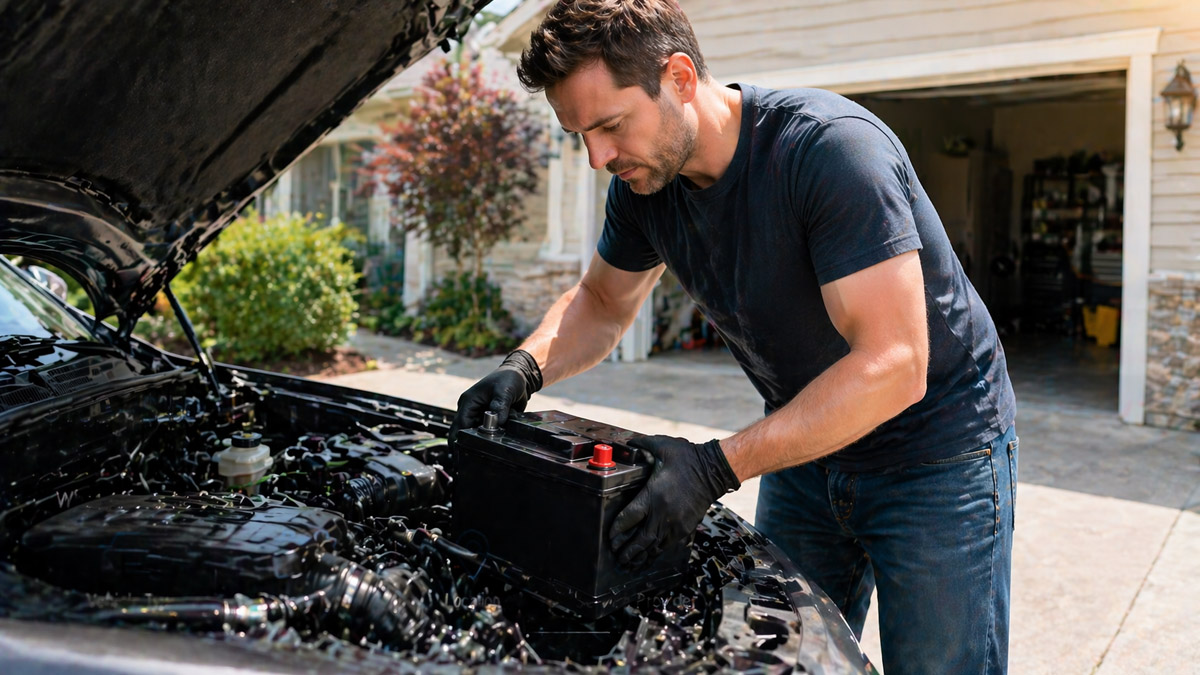
You can replace a car battery at home if the battery is easy to access and the vehicle does not require battery registration, coding, or special reset procedures. For most standard cars with an under-hood 12V battery, DIY replacement is usually simple. However, if the battery is hidden in the trunk, under the seat, or connected to a start-stop system, professional installation is safer.
• Tools Needed for Car Battery Installation
Before removing the old battery, prepare the basic tools and safety items. This helps make the installation safer and prevents terminal damage or short circuits.
| Tool or Item |
Purpose |
| Socket Wrench or Spanner |
Loosens and tightens the battery terminals and hold-down bracket. |
| Battery Terminal Cleaner or Wire Brush |
Cleans corrosion from the battery terminals and cable clamps. |
| Gloves |
Protects your hands from acid residue, corrosion, and sharp edges. |
| Safety Glasses |
Protects your eyes when working around battery acid or corrosion. |
| Battery Carrier or Strap |
Helps lift and move the battery safely, especially for heavy lead-acid batteries. |
| Memory Saver |
Helps keep radio settings, clock settings, and some electronic memory during replacement. |
| Multimeter |
Checks battery voltage before and after installation. |
| Anti-Corrosion Grease or Terminal Protector |
Helps reduce future corrosion on the terminals. |
Not every tool is required for every vehicle. For a basic battery swap, a wrench, gloves, safety glasses, and terminal cleaner are usually enough. A multimeter is useful because it confirms whether the new battery has normal voltage before installation.
• Steps for Installation
Follow the correct order when removing and installing a car battery. The most important rule is to remove the negative terminal first and install it last.
- Turn Off the Vehicle Completely: Park on a flat surface, turn off the engine, remove the key, and make sure lights and electronics are off.
- Confirm the Battery Type and Terminal Position: The new battery should match the original battery’s voltage, group size, terminal layout, CCA rating, and battery type.
- Disconnect the Negative Terminal First: Always remove the negative cable before the positive cable. This reduces the risk of accidental short circuits.
- Disconnect the Positive Terminal Second: Keep tools away from both terminals at the same time. Metal contact between terminals can cause sparks or short circuits.
- Remove the Hold-Down Bracket and Old Battery: Take out the bracket, then lift the battery straight up. Keep lead-acid batteries upright because they are heavy and may leak.
- Clean the Tray and Cable Clamps: Remove corrosion before installing the new battery. Poor contact can cause starting problems even with a new battery.
- Install and Secure the New Battery: Place the new battery in the same position as the old one and tighten the hold-down bracket so it cannot move while driving.
- Connect the Positive Terminal First: When installing the new battery, connect the positive cable before the negative cable.
- Connect the Negative Terminal Last: Tighten both terminals firmly, but do not overtighten and damage the clamps.
- Start the Car and Check Charging Voltage: After installation, start the vehicle and check that it runs normally. A charging voltage check can confirm whether the alternator is working properly.
DIY car battery replacement is usually safe when the battery is easy to access and the correct replacement battery is used. The new battery should match the original battery’s voltage, group size, terminal position, CCA rating, and battery type. If the vehicle requires battery registration, has a complex battery location, or shows repeated electrical problems, it is better to let a repair shop handle the installation.
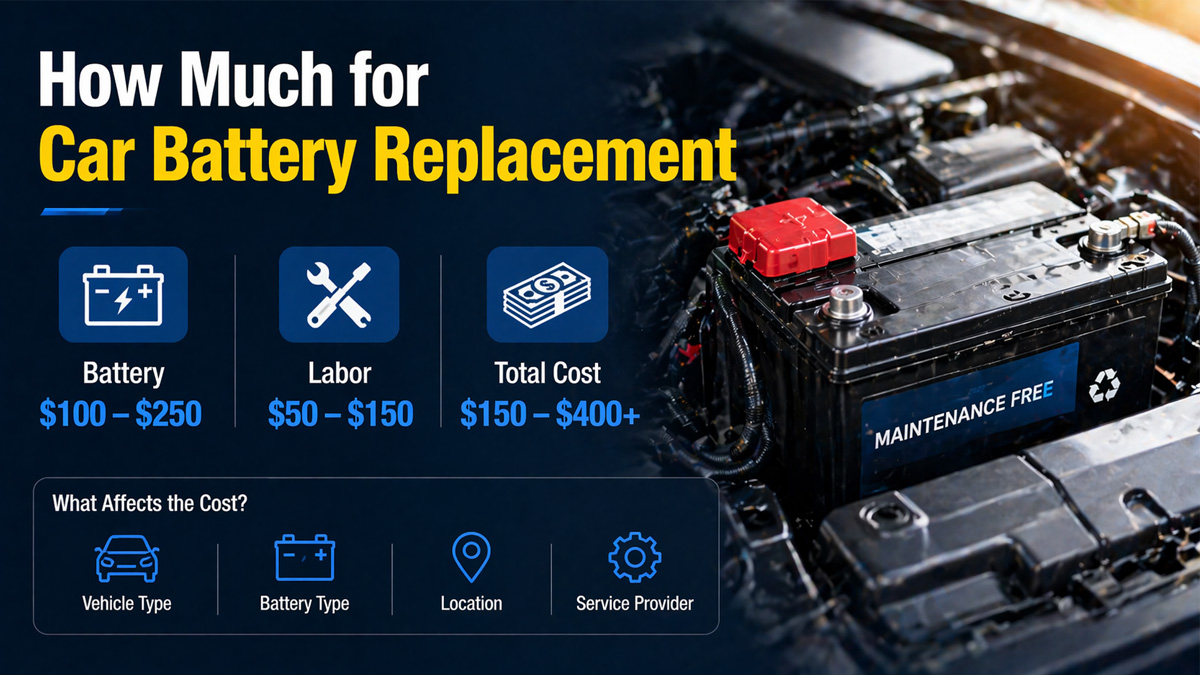 Car Battery Replacement Cost
Car battery replacement usually costs $100 to $450 for most standard vehicles, depending on the battery type, vehicle model, labor cost, and where the battery is replaced. A basic lead-acid battery is usually cheaper, while AGM, premium, or lithium replacement batteries cost more.
This cost usually includes two parts: the battery price and the installation fee. Some retailers offer free installation when you buy the battery from them, while repair shops and dealerships may charge extra labor.
• Car Battery Replacement Cost by Option
| Replacement Option |
Estimated Cost |
What It Usually Includes |
| DIY Replacement |
$90–$300+ |
Battery cost only; no labor fee. |
| Auto Parts Store |
$90–$400+ |
Battery purchase, testing, and often free basic installation. |
| Walmart Auto Care Center |
Battery price + $0–$15 installation |
Walmart lists battery installation as free with Walmart battery purchases, or $15 when parts are not included. |
| Repair Shop |
$200–$450+ |
Battery, labor, charging system check, and basic diagnosis. |
| Dealership |
$250–$600+ |
OEM battery, labor, battery registration, and model-specific reset if needed. |
| AGM or Premium Battery Replacement |
$230–$500+ |
Higher-performance battery for start-stop vehicles or cars with heavier electrical loads. |
| Lithium Car Battery Replacement |
$300–$800+ |
Lightweight or specialty lithium battery, often requiring compatibility checks. |
AutoZone says most standard replacement batteries cost about $90 to $200, lead-acid batteries often fall around $90 to $225, AGM batteries may cost $230 to $450+, and specialty or premium batteries can reach $300 to $500 or more. It also says installation may be free on most vehicles at most locations.
• Main Factors That Affect the Cost
- Battery Type: Lead-acid batteries are usually the cheapest. AGM, EFB, lithium, and premium batteries cost more.
- Vehicle Size and Power Demand: Trucks, SUVs, diesel vehicles, and cars with many electronics often need higher-capacity batteries.
- CCA Rating: Batteries with higher cold cranking amps usually cost more, especially for cold-weather driving.
- Battery Location: A battery under the hood is cheaper to replace. A battery in the trunk, under the seat, or behind panels may require more labor.
- Battery Registration or Reset: Some modern vehicles need battery coding or registration after installation, which adds cost.
- Where You Replace It: Retailers may offer free or low-cost installation, while repair shops and dealerships usually charge more for labor.
• Installation Cost Is Often Low for Simple Batteries
For a basic under-hood battery, installation may be free or inexpensive if you buy the battery from the same store. Walmart lists battery installation as free with Walmart battery purchases and $15 when parts are not included.
Repair shops can cost more because they may include labor, testing, and diagnosis. RepairPal’s 2026 estimate shows average battery replacement at $412 to $448, with estimated labor around $56 to $82, although the final cost depends heavily on vehicle model and location.
For most drivers, a standard car battery replacement costs about $100 to $300 if the battery is easy to access and installation is free or simple. The cost can rise to $300 to $600+ for AGM batteries, luxury vehicles, hidden battery locations, or cars that need battery registration. DIY replacement is usually the cheapest option, but professional installation is safer when the vehicle has complex electronics or special battery requirements.
 Time to Replace a Car Battery
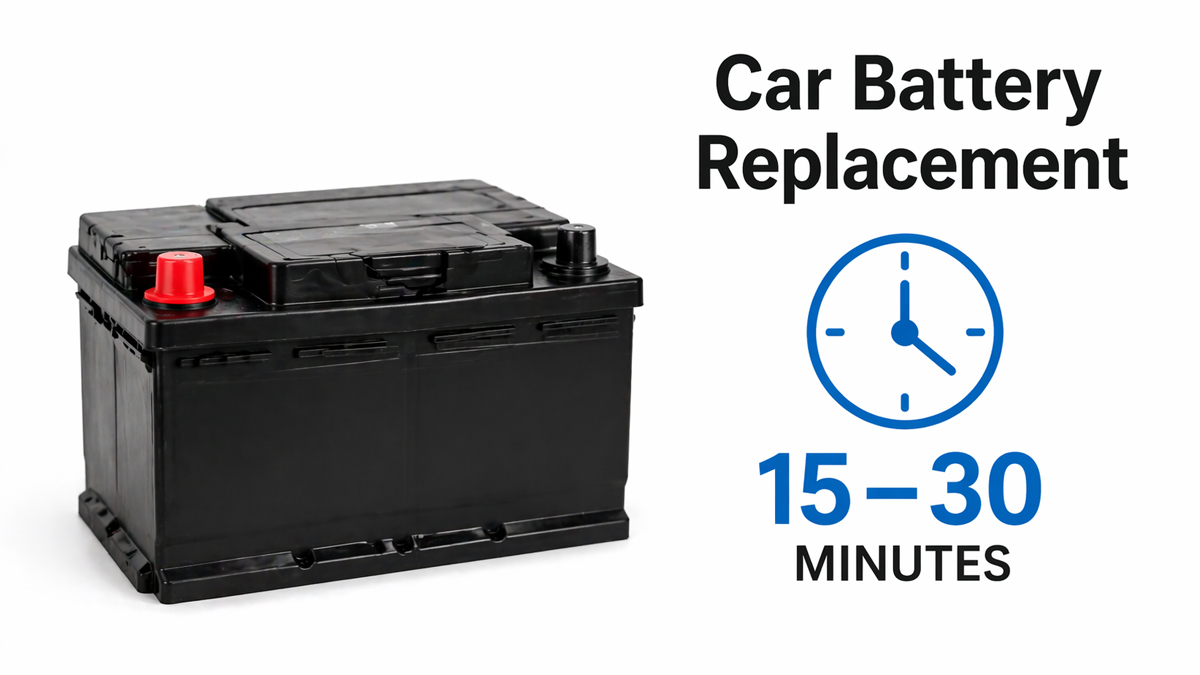
Car battery replacement usually takes 15 to 30 minutes for a standard vehicle. If the battery is easy to access and there is no serious corrosion, the process is normally quick. If the battery is hidden, the terminals are badly corroded, or the vehicle needs battery registration, it can take longer.
At an auto parts store, Walmart Auto Care Center, repair shop, or dealership, car battery replacement usually takes about 15 to 45 minutes. A simple under-hood battery can often be replaced quickly, while newer vehicles or complex battery locations may take closer to an hour.
Replacing a car battery at home usually takes about 20 to 40 minutes. If you already have the right tools and the battery is easy to reach, it may take less than 30 minutes. First-time DIY replacement, corroded terminals, or a hidden battery location can make the job take longer.
Concluson
Car battery replacement should be done when the battery is old, weak, or no longer holds charge well. Most lead-acid car batteries last about 3 to 5 years, but slow cranking, frequent jump starts, low voltage, swelling, or leakage can mean earlier replacement is needed.
For basic replacement, Walmart, AutoZone, repair shops, dealerships, or DIY installation can all work. Always choose the correct battery type, size, CCA rating, and terminal position. Lead-acid and AGM batteries are the most common choices, while lithium car batteries are a premium option for longer life, lighter weight, and better performance.
FAQ
How to Replace Car Battery?Turn off the vehicle, disconnect the negative terminal first, then disconnect the positive terminal. Remove the hold-down bracket and old battery, clean the tray and terminals, install the new battery, connect the positive terminal first, then connect the negative terminal. Finally, secure the battery and test the vehicle.
When to Replace Car Battery?Replace a car battery when it is old, weak, or unreliable. Common signs include slow engine cranking, frequent jump starts, low voltage after charging, dim lights, unstable electronics, swelling, leaking, or heavy corrosion. Most lead-acid car batteries last about 3 to 5 years.
How Long Does It Take to Replace a Car Battery?A simple car battery replacement usually takes 15 to 30 minutes. If the battery is hidden, the terminals are corroded, or the vehicle needs battery registration or system reset, it may take 45 minutes to over 1 hour.
Where to Get Car Battery Replaced?You can get a car battery replaced at auto parts stores, Walmart Auto Care Centers, repair shops, dealerships, or some battery retailers. AutoZone and Walmart are convenient for basic replacement, while repair shops and dealerships are better for complex vehicles, hidden batteries, or cars that need battery registration.
How Often to Replace Car Battery?Most lead-acid car batteries should be replaced every 3 to 5 years. However, hot weather, cold starts, short trips, long parking periods, and heavy electrical loads can shorten battery life. If the battery shows slow cranking, low voltage, or poor charging recovery before 3 years, it may still need replacement earlier.

 Best Car Battery Brands
 Replace a Car Battery at Home
 Car Battery Replacement Cost
 Time to Replace a Car Battery


