✅ Size Comparison: Why 21700 Was Designed and How It Improves Over 18650
✅ Why was 21700 designed? What problems does it solve?
✅ Cycle Life Comparison — 18650 vs 21700 (With Authoritative Data)
✅ Is 21700 Always Better Than 18650?? The Truth Behind the Choice
✅ Can I Use 21700 Instead of 18650? Understanding Battery Interchangeability
✅ Conclusion
Size Comparison: Why 21700 Was Designed and How It Improves Over 18650
When comparing cylindrical lithium-ion cells, the most immediate and fundamental difference lies in their physical size. The classic 18650 format—18 mm in diameter and 65 mm in height—was originally created in the early laptop-battery era of the 1990s. Its dimensions were optimized for consumer electronics, not for high-power mobility devices. As a result, the inr18650 format is considered a mature but older design standard. In contrast, the 21700 format—21 mm in diameter and 70 mm in height—was introduced much later as a next-generation cylindrical standard. Companies such as Tesla and Panasonic began widely promoting 21700 cells around 2016–2017 because the larger geometry allowed significantly better energy density, improved thermal stability, and higher manufacturing efficiency.
Advantages of the More Advanced 21700 Lithium-Ion Batteries
Several engineering considerations explain why the industry moved from 18650 to 21700:
1. Higher Gravimetric & Volumetric Energy Density
Because of the larger internal volume, a 21700 cell can store 35–50% more energy than a typical 18650 cell.
• Typical 18650 capacity range: 2400–3500 mAh
• Typical 21700 capacity range: 4000–5000 mAh
According to data published by Panasonic and Samsung SDI, the volumetric energy density of 21700 cells increases by 20–30% over 18650 because more active material fits inside the same cylindrical shell while reducing the proportion of inactive materials (steel casing, insulation rings, etc.).
2. Improved Thermal Behavior
Documents from the U.S. Department of Energy (DOE) and NREL (National Renewable Energy Laboratory) indicate that larger-format cylindrical cells such as 21700 exhibit:
• Lower internal resistance
• Improved heat dissipation per watt-hour
• More stable temperature rise during high current discharge
This is partly due to the optimized surface-area-to-volume ratio and improved jelly-roll design, allowing better thermal pathways.
3. Higher Current Capability
With more electrode surface area and optimized tab welding designs, 21700 cells can handle:
• Higher continuous discharge currents
• Lower voltage sag under load
• Less heat generation at moderate C-rates
This is why many e-bike and power-tool manufacturers rapidly shifted to 21700 as their new standard.
4. Better Manufacturing Efficiency
Battery manufacturers such as EVE and CATL have publicly stated that 21700 production leads to:
• Lower cost per Wh
• Higher yield rates
Fewer cells needed per battery pack, reducing the number of welds and potential failure points
Tesla’s adoption of the 21700 format was driven largely by this gain in pack-level efficiency—fewer cells, fewer connections, higher overall reliability.
5. Improved Pack-Level Design for E-Bikes and EVs
Because a 21700 cell offers significantly higher capacity, it allows battery packs to be built with:
• Fewer parallel groups
• Simpler BMS load balancing
• More compact pack structure
For electric bikes, this translates directly to longer range and better thermal stability without increasing pack complexity.
Cycle Life Comparison — 18650 vs 21700 (With Authoritative Data)
Cycle life is one of the most important metrics when comparing 18650 and 21700 lithium-ion cells. Thanks to improvements in electrode design, thermal stability, and material utilization, 21700 cells generally deliver a significantly longer cycle life than 18650 cells.
According to the U.S. Department of Energy (DOE) Vehicle Technologies Office, next-generation large-format cylindrical cells (including 21700) can achieve 20–30% longer cycle life compared with legacy 18650 formats because of better heat dissipation and lower internal resistance under load.
A study published in the Journal of The Electrochemical Society (“Degradation Mechanisms of High-Energy Cylindrical Cells,” 2020) demonstrated that:
• 18650 cells typically achieve 300–500 full cycles before dropping to 80% State of Health (SOH).
• 21700 cells tested under the same conditions achieve 500–1000 cycles, depending on chemistry and manufacturer.
Research from NREL (National Renewable Energy Laboratory) also confirms that larger cylindrical formats such as 21700 maintain slower capacity-fade rates because the increased volume allows for more efficient heat spreading, reducing thermal hotspots that directly accelerate degradation.
Tesla’s and Panasonic’s technical disclosures during Tesla Battery Day (2020) highlighted that moving from 18650 to 21700 format resulted in:
• Improved thermal management
• Higher electrode loading
• Lower cycle-aging rate
• Longer usable lifetime under both high-current and high-temperature conditions
21700 cells typically maintain their health longer and experience slower performance decline compared to 18650 cells. Even when both formats use similar NCA/NCM chemistries, the 21700’s optimized geometry gives it a measurable longevity advantage.
| Source | Key Conclusion |
|---|---|
| U.S. DOE | 21700 format provides 20–30% longer cycle life than 18650 due to design efficiency. |
| NREL | Larger cylindrical cells have slower thermal-driven degradation. |
| Journal of Electrochemical Society | 21700: 500–1000 cycles; 18650: 300–500 cycles under identical test profiles. |
| Tesla/Panasonic | 21700 cells age more slowly and retain capacity longer in EV-scale testing. |
From authoritative technical data, 21700 cells clearly outperform 18650 cells in cycle life, making them a superior choice when longevity is a priority.
Is 21700 Always Better Than 18650? The Truth Behind the Choice
Although 21700 cells clearly offer advantages in energy density, thermal performance, and cycle life, that doesn’t mean 21700 is always the better choice. Battery selection depends heavily on application scenarios, design constraints, and cost considerations.
18650 cells have been on the market for more than two decades and benefit from extremely mature production lines, highly stable quality, and massive global availability. For products that require a large number of small cells—such as flashlights, DIY packs, compact power banks, or older e-bike designs—the smaller size of 18650 is actually an advantage. Because the physical dimensions are smaller, manufacturers have more flexibility in pack layout, cooling channel design, and enclosure structure.
Additionally, the 18650 supply chain is broader and often more price-competitive, making it suitable for projects with tight budgets or high-volume manufacturing. In many light- and medium-duty applications, the performance difference between 18650 and 21700 may not justify the design change or cost increase.
Can I Use 21700 Instead of 18650? Understanding Battery Interchangeability
Many users wonder, can I use 21700 instead of 18650 in their devices? While both are lithium-ion cells, they are not always directly interchangeable due to differences in size, capacity, and discharge characteristics. Questions like are 21700 and 18650 batteries interchangeable often arise when upgrading battery packs or designing custom solutions. In some cases, a dual 18650 vs single 21700 configuration can provide similar voltage and energy output, but careful consideration of device dimensions, BMS compatibility, and thermal performance is essential. Choosing the right format ensures optimal performance, safety, and longevity for your electronics.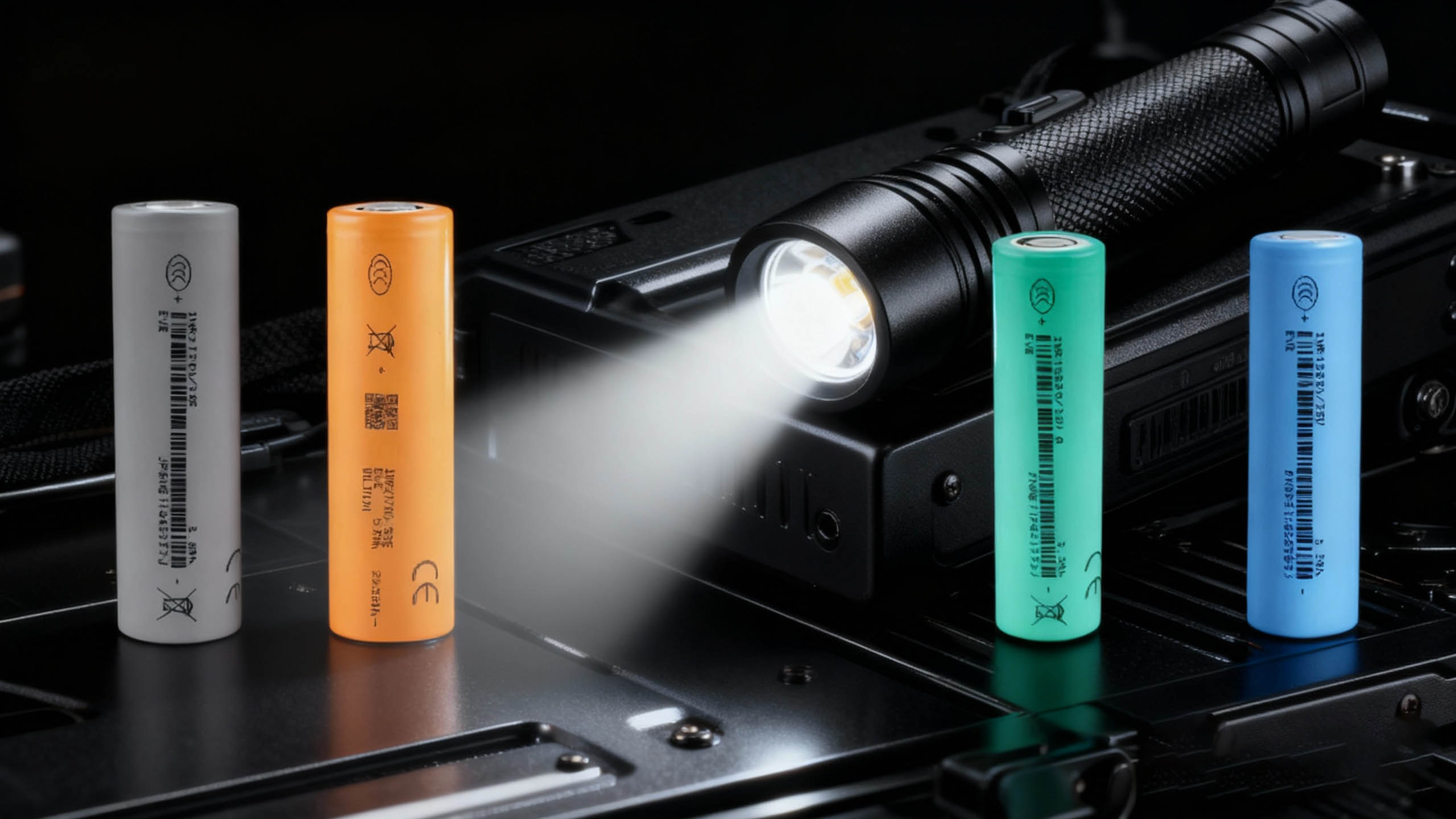
Conclusion
When comparing 18650 and 21700 lithium-ion cells, several key differences emerge. The 21700 format offers higher energy capacity, improved thermal stability, and longer cycle life, making it ideal for high-demand applications like e-bikes, power tools, and energy storage systems. In contrast, 18650 cells remain reliable, widely available, and cost-effective, particularly for lower-drain or compact devices. Ultimately, the choice depends on your application requirements: if you need maximum runtime and durability, 21700 cells provide a clear advantage; if space constraints or budget are the priority, 18650 cells are still a solid, proven option. Both formats maintain strong safety and performance standards, so selecting the right cell comes down to balancing capacity, longevity, and device design considerations.


