✅
Hybrid Battery Types, Structure, and Materials • Common Hybrid Battery Types • Hybrid Battery Pack Structure • Main Materials Used in Hybrid Batteries✅
Typical Voltage of a Hybrid Battery✅
Battery Capacity in Hybrid Cars✅
Charging a Hybrid Car Battery✅
Lifespan of a Hybrid Battery • Long-Term Non-Use Can Affect a Hybrid Car Battery • How to Extend Hybrid Battery Life✅
Driving Distance on Hybrid Battery • Traditional Hybrid Battery • Modern Plug-in Hybrid Battery✅
Hybrid Battery Health Check • Common Signs of a Weak Hybrid Battery • What to Check During a Health Test • When to Get a Professional Check✅
Hybrid Battery Problems, Inspection, and Repair • Jump-Starting a Hybrid Car Battery • What Happens When a Hybrid Battery Dies? • Can a Hybrid Run Without the Hybrid Battery?✅
Maintenance Tips✅
Hybrid Battery Replacement Cost✅
Recycling and Disposal✅
Conclusion✅
FAQ What Is a Hybrid Battery? How Long Do Hybrid Batteries Last? How Can You Extend the Life of a Hybrid Car Battery? How Much Is a Hybrid Battery? Can You Jump a Hybrid Battery? How Do You Charge a Hybrid Battery? How Do You Check Hybrid Battery Health? Hybrid batteries are the core power source behind hybrid vehicles, helping the gasoline engine reduce fuel use, recover braking energy, and provide electric assist during driving. Unlike a standard 12V car battery, a hybrid battery is a high-voltage pack made from many cells, modules, sensors, cooling parts, and control systems.
In most traditional hybrid cars, the battery does not need to be plugged in. It charges automatically through regenerative braking and engine operation. However, hybrid battery performance still depends on chemistry, voltage, capacity, cooling, driving habits, and age. To better understand the battery chemistry behind many modern packs, you can also read our
overview of rechargeable lithium battery technology before comparing hybrid battery types, lifespan, repair, replacement, and recycling.
This article explains what a hybrid battery is, how it works, how long it lasts, how far it can drive, what problems to watch for, and when repair, replacement, or recycling may be needed.
Hybrid Battery Types, Structure, and MaterialsA hybrid battery is not a single large cell. It is a battery pack made from many smaller cells, modules, electrical connections, sensors, and control components. Different hybrid vehicles may use different battery chemistries, but the basic purpose is the same: store energy, support the electric motor, and work with the gasoline engine to improve efficiency.
• Common Hybrid Battery Types
The two most common hybrid battery types are nickel-metal hydride batteries and lithium-ion batteries.
- Nickel-metal hydride battery: NiMH batteries were widely used in earlier hybrid cars, especially many older Toyota Prius, Camry Hybrid, and Highlander Hybrid models. They are known for stable performance, good durability, and mature technology.
- Lithium-ion battery: Lithium-ion batteries are now used in many newer hybrid and plug-in hybrid vehicles. They usually have higher energy density, lighter weight, and better packaging flexibility than NiMH batteries.
- Lithium iron phosphate battery: LiFePO4 batteries are less common in traditional hybrid cars but are used in some electric and energy storage applications. They offer strong safety and long cycle life, but they usually have lower energy density than some other lithium-ion chemistries.
• Hybrid Battery Pack Structure
A hybrid battery pack is built in layers. The smallest unit is the battery cell. Several cells are connected together to form a module, and multiple modules are assembled into the full battery pack.
The main parts usually include:
- Battery cells: These store and release electrical energy.
- Battery modules: Groups of cells connected in series or parallel.
- Battery pack housing: A protective case that holds the modules in place.
- Busbars and wiring: Metal conductors and cables that connect the cells and modules.
- Battery management system: The control system that monitors voltage, temperature, current, and battery condition.
- Cooling fan and air ducts: These help control battery temperature during charging and discharging.
- Sensors and safety components: These detect overheating, overvoltage, short circuits, and other abnormal conditions.
This structure allows the battery to deliver high voltage safely while protecting the cells from heat, vibration, and electrical faults.
• Main Materials Used in Hybrid Batteries
- NiMH hybrid batteries, the main materials include nickel-based positive electrodes, hydrogen-absorbing alloy negative electrodes, alkaline electrolyte, separators, and metal current collectors.
- lithium-ion hybrid batteries, the main materials usually include lithium-based cathode materials, graphite or other carbon-based anode materials, electrolyte, separator film, copper foil, aluminum foil, and protective casing.
Outside the cells, a hybrid battery pack also uses plastic, steel, aluminum, copper, electronic boards, sensors, and insulation materials. These materials support electrical connection, thermal management, impact protection, and safe operation.
In simple terms, the battery chemistry determines how energy is stored, while the pack structure determines how safely and efficiently that energy is delivered to the hybrid system.
 Typical Voltage of a Hybrid Battery
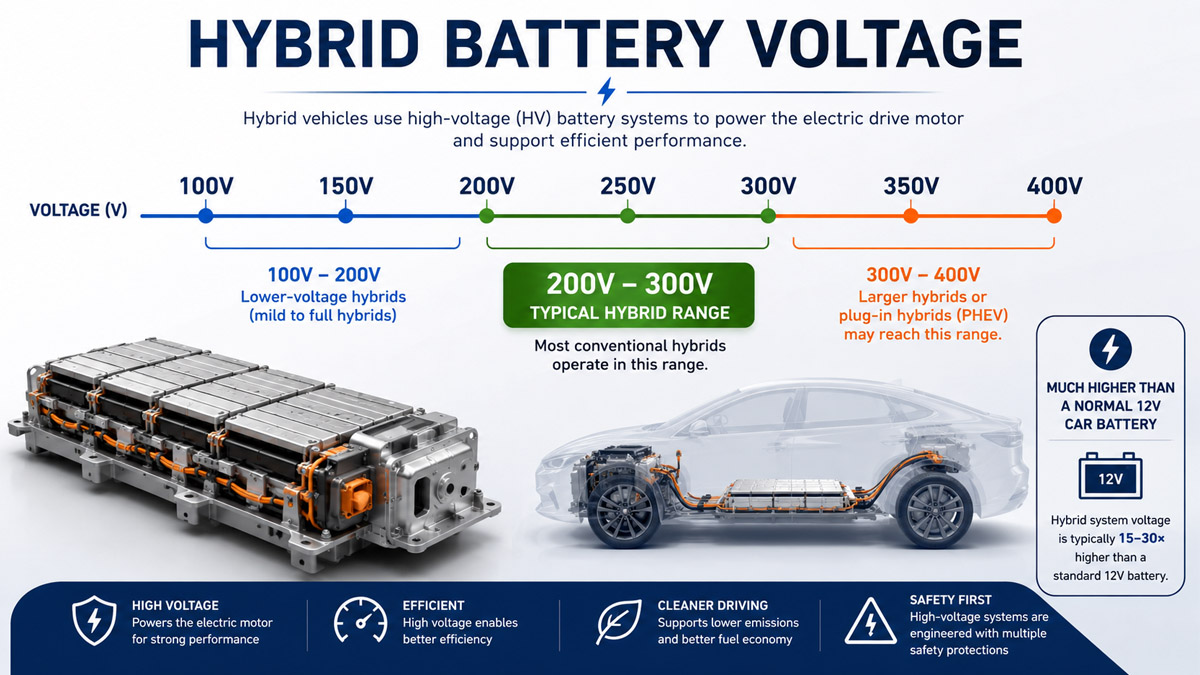
Hybrid battery voltage depends on the vehicle model, battery chemistry, and pack design. Most traditional hybrid cars use a high-voltage battery pack in the range of about 100V to 300V, while larger hybrids and plug-in hybrid vehicles may use higher-voltage systems, often around 300V to 400V.
For example, many Toyota Prius hybrid battery packs are around 200V, while some hybrid SUVs may use higher-voltage packs to support larger motors and heavier vehicle weight. This voltage is much higher than a standard 12V car battery, because the hybrid battery must power the electric motor, support regenerative braking, and work with the hybrid control system.
Because hybrid batteries operate at high voltage, testing, repair, or replacement should not be handled like a normal car battery. Proper insulation, safety tools, and professional service are required.
Battery Capacity in Hybrid CarsHybrid battery capacity is usually much smaller than a full EV battery because a traditional hybrid does not rely on the battery as its only power source. Most standard hybrid cars have battery packs around 1 kWh to 2 kWh, while larger hybrid SUVs may be around 1.5 kWh to 3 kWh depending on the model and generation.
For example, many older Toyota Prius hybrid batteries are around 1.3 kWh, while some Camry Hybrid, RAV4 Hybrid, and Highlander Hybrid models use slightly larger packs. Plug-in hybrid vehicles are different because they are designed for longer electric driving. Their battery capacity is often around 8 kWh to 20 kWh or more.
In simple terms, a hybrid battery is built for short electric assist, regenerative braking, and fuel saving. It is not designed to provide the long electric range of a pure electric vehicle.
 Charging a Hybrid Car Battery
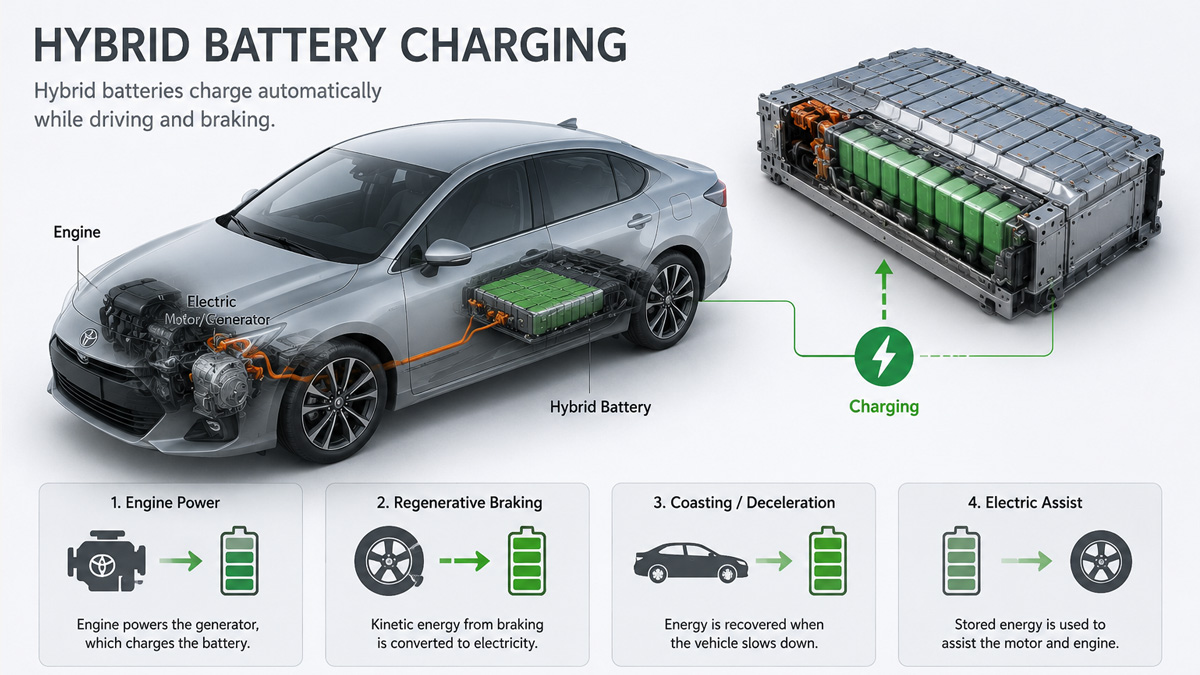
For most standard hybrid cars, the hybrid battery does not need to be charged by plugging it into an external charger. The battery is charged automatically while the car is driving, mainly through regenerative braking and the gasoline engine.
There are three common charging situations:
- Driving and braking: When the car slows down or brakes, the electric motor works as a generator. It converts part of the vehicle’s motion energy into electricity and sends it back to the hybrid battery. This is called regenerative braking.
- Gasoline engine charging: When the battery level becomes low, the gasoline engine can drive the generator or motor-generator unit to produce electricity. That electricity is then controlled by the hybrid system and stored in the high-voltage battery. In simple terms, the engine burns fuel, creates mechanical power, and the generator converts part of that power into electrical energy for the battery.
- Plug-in charging: Only plug-in hybrid vehicles, or PHEVs, need external charging. They can be charged at home with a wall outlet, a home EV charger, or at a public charging station. A regular hybrid, such as many Toyota Prius or Camry Hybrid models, usually cannot be plugged in.
In daily use, a standard hybrid battery is charged wherever the car is driven. There is no separate charging location for a normal hybrid. The driver only needs to refuel the car with gasoline, and the hybrid system manages battery charging automatically.
The battery also does not usually charge from 0% to 100%. The battery management system keeps the state of charge within a safe working range to reduce heat, prevent overcharging or over-discharging, and extend battery life. If the battery stays low, charges too fast, or drops quickly, the problem may come from battery aging, a dirty cooling filter, a weak module, or a hybrid system fault.
 Lifespan of a Hybrid Battery
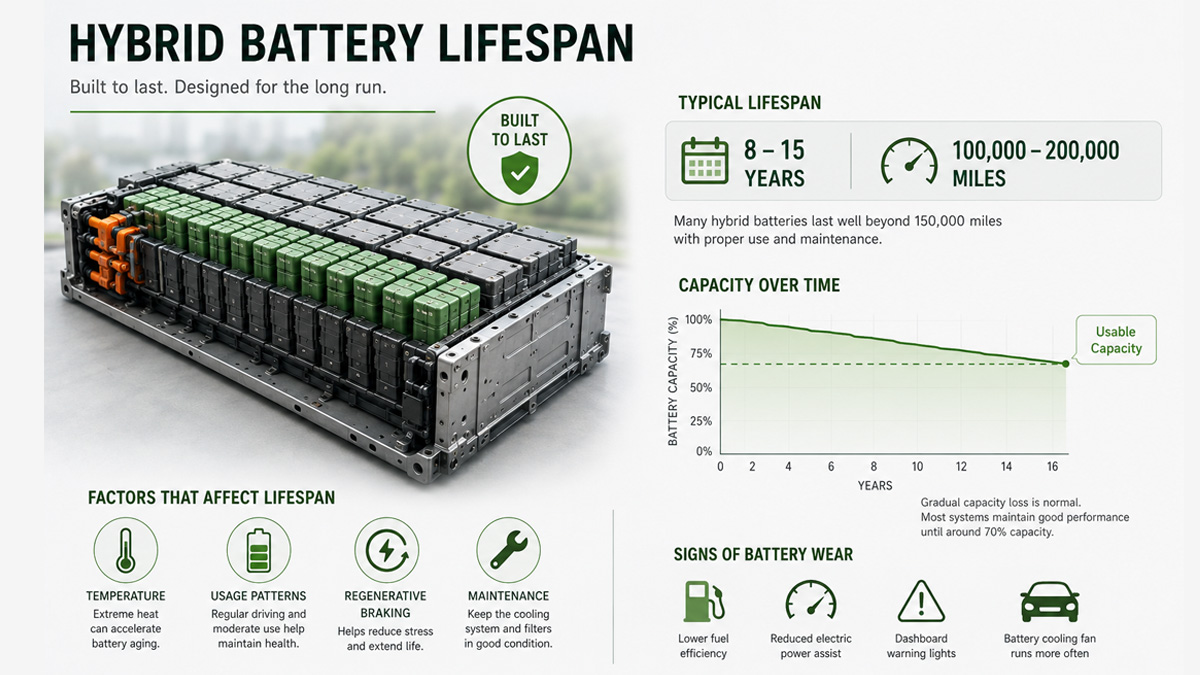
A hybrid battery usually lasts about 8 to 15 years, or around 100,000 to 200,000 miles, which is about 160,000 to 320,000 kilometers. Some hybrid batteries may fail earlier, while well-maintained batteries can last longer.
However, hybrid battery lifespan is not decided by mileage alone. Climate, driving habits, battery chemistry, cooling performance, and maintenance all affect how long the battery can stay healthy. Heat, poor cooling, frequent short trips, and deep discharge can speed up battery aging.
As the battery gets older, its usable capacity may gradually decrease. The car may still run, but you may notice lower fuel economy, weaker acceleration, faster charge and discharge on the dashboard, or hybrid system warning lights.
• Long-Term Non-Use Can Affect a Hybrid Car Battery
Long-term non-use can affect a hybrid battery because the battery still slowly loses charge while the car is parked. If a hybrid vehicle sits unused for weeks or months, the high-voltage battery may become too low, unbalanced, or harder to recover.
This does not mean every parked hybrid battery will fail, but long storage can increase the risk of deep discharge and capacity loss, especially in hot weather or if the battery was already old. The 12V battery may also drain during storage, which can prevent the vehicle from starting even when the hybrid battery is still usable.
For this reason, a hybrid car should not be left unused for too long. Regular driving helps the system maintain the proper battery charge level and keeps the hybrid battery within a healthier working range.
• How to Extend Hybrid Battery Life
The best way to extend hybrid battery life is to keep the battery cool, drive the vehicle regularly, and maintain the battery cooling system. Heat is one of the main causes of hybrid battery aging, so airflow around the battery should not be blocked.
To help the battery last longer:
- Drive the car regularly: Regular use helps the hybrid system maintain the battery charge level.
- Keep the battery filter clean: A dirty hybrid battery filter can reduce airflow and cause overheating.
- Do not block battery vents: Bags, seat covers, dust, or pet hair near the air intake can affect cooling.
- Avoid extreme heat: Parking in shade or a cooler place can reduce battery stress.
- Fix warning signs early: Fast charge/discharge, poor fuel economy, loud fan noise, or warning lights should be checked quickly.
- Store the car properly: If the vehicle will not be used for a long time, follow the manufacturer’s storage advice and run or drive the car periodically when possible.
In simple terms, a hybrid battery lasts longer when it stays cool, avoids deep discharge, and is used regularly instead of sitting unused for months.
 Driving Distance on Hybrid Battery
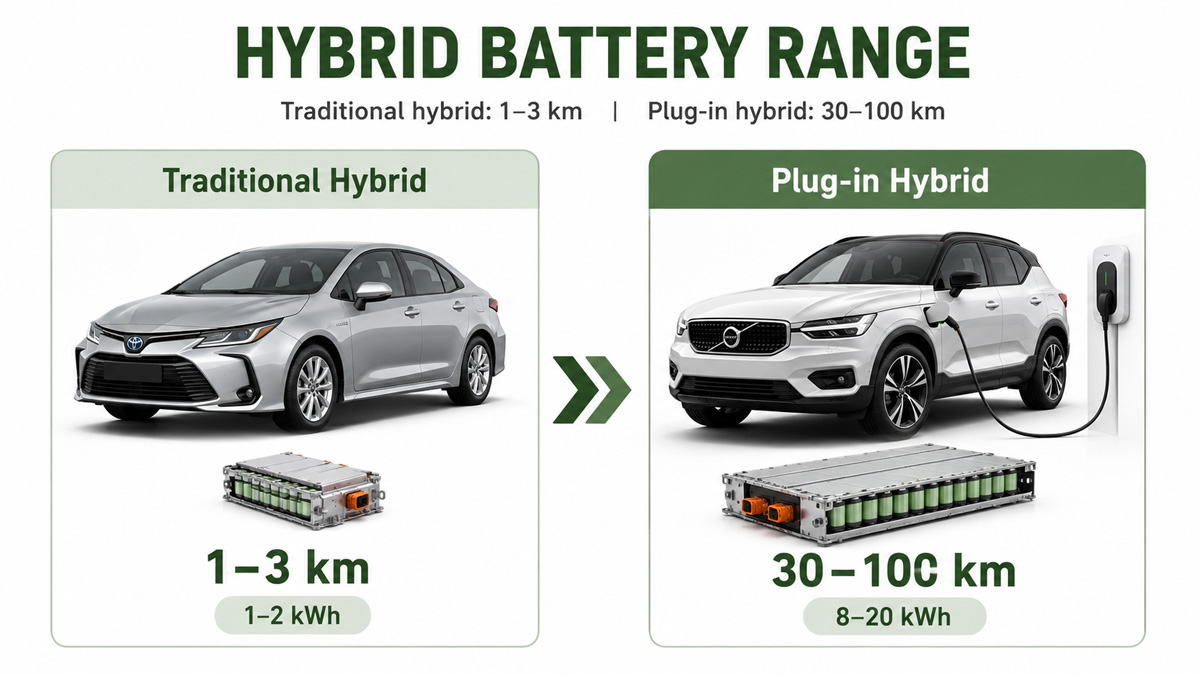
A hybrid battery can usually drive 1–3 km in a traditional hybrid car, while a modern plug-in hybrid battery can often drive 30–100 km on electricity alone. The exact range depends on battery size, vehicle model, speed, road conditions, and battery condition.
• Traditional Hybrid Battery
A traditional hybrid battery usually drives only about 1–3 km on battery power alone, and often only at low speed and light load. Its capacity is usually around 1–2 kWh, so it is not designed for long electric-only driving. Its main role is to assist the gasoline engine, recover braking energy, reduce fuel consumption, and support short low-speed electric driving.
• Modern Plug-in Hybrid Battery
A modern plug-in hybrid battery can usually drive about 30–100 km on electricity alone. Its capacity is often around 8–20 kWh or more, which is much larger than a traditional hybrid battery. Because it can be charged from a wall outlet, home charger, or public charging station, it is designed to handle daily short trips with electricity before the gasoline engine is needed.
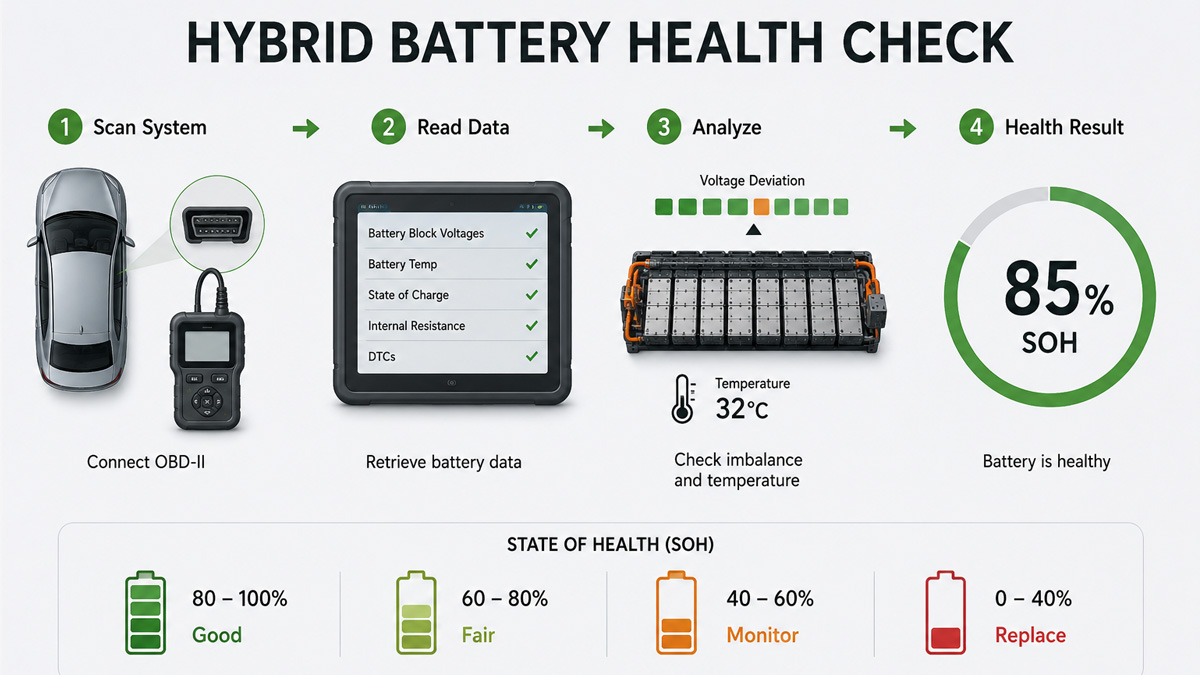 Hybrid Battery Health Check
A hybrid battery health check helps determine whether the battery pack is still healthy or starting to lose capacity. It usually looks at battery performance, voltage balance, temperature, fault codes, and cooling system condition.
• Common Signs of a Weak Hybrid Battery
- The battery level rises and drops very quickly.
- Fuel economy becomes worse than before.
- The gasoline engine starts more often.
- Acceleration feels weaker.
- The hybrid battery cooling fan becomes louder.
- The dashboard shows a hybrid system warning light.
- The battery cannot hold charge as well as before.
• What to Check During a Health Test
- State of charge: Whether the battery charge level stays within a normal range.
- Module voltage balance: Whether some battery modules are weaker than others.
- Internal resistance: Whether the battery has higher resistance from aging.
- Battery temperature: Whether the pack is overheating during use.
- Fault codes: Whether the hybrid system stores battery-related error codes.
- Cooling fan and filter: Whether dust, pet hair, or blocked airflow is causing heat buildup.
- Driving performance: Whether the battery charges, discharges, and assists the engine normally.
• When to Get a Professional Check
- The battery charge changes too fast.
- Warning lights appear on the dashboard.
- Fuel economy drops noticeably.
- The cooling fan runs loudly or frequently.
- The car feels weak during acceleration.
- The vehicle has high mileage or an old hybrid battery.
A professional repair shop can use a scan tool or battery test equipment to check whether the problem comes from battery aging, weak modules, poor cooling, or the hybrid control system.
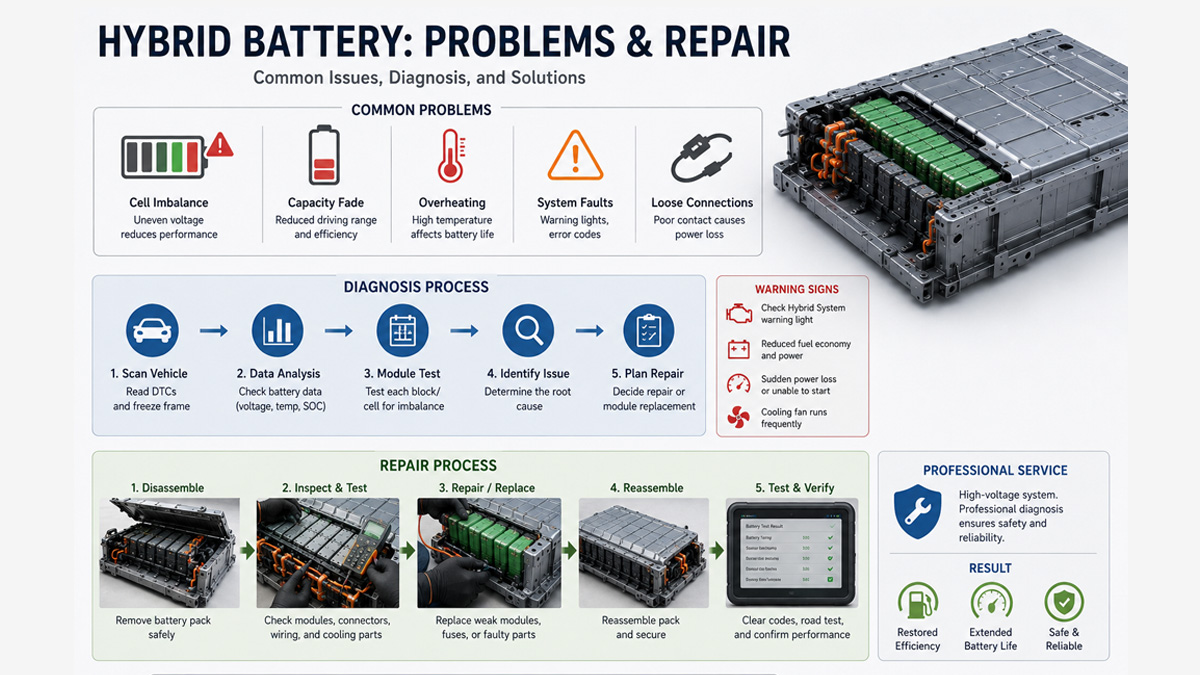 Hybrid Battery Problems, Inspection, and Repair
Hybrid battery problems can come from battery aging, weak modules, poor cooling, wiring faults, control system errors, or long-term non-use. Some issues only need cleaning or diagnosis, while others may require module repair or full battery replacement.
| Common Problem |
Possible Cause |
How to Check |
Repair Method |
| Battery charge rises and drops quickly |
Battery capacity loss, weak modules |
Check state of charge changes during driving |
Professional battery test, module repair, or battery replacement |
| Lower fuel economy |
Aging battery, poor hybrid assist, engine running more often |
Compare fuel consumption with normal driving records |
Diagnose battery health, cooling system, and hybrid control system |
| Hybrid system warning light |
Battery fault, sensor issue, cooling problem, control system fault |
Scan fault codes with a diagnostic tool |
Repair based on fault codes; may require battery service or replacement |
| Loud cooling fan noise |
Dirty battery filter, blocked air intake, overheating battery |
Inspect battery vents, filter, and cooling fan |
Clean or replace filter, clean fan, improve airflow |
| Weak acceleration |
Battery cannot provide enough assist |
Check battery output and module balance |
Battery health test, module repair, or pack replacement |
| Battery overheating |
Poor cooling, blocked vent, dirty fan, high ambient temperature |
Check battery temperature data and airflow |
Clean cooling system, replace filter, repair fan if needed |
| Battery cannot hold charge |
Aging cells, imbalance, internal resistance increase |
Test module voltage and internal resistance |
Rebalancing, module replacement, or full battery replacement |
| Car will not start or ready-on |
Weak 12V battery, hybrid battery fault, system error |
Check 12V battery first, then scan hybrid system codes |
Replace 12V battery if needed; diagnose high-voltage system |
| Hybrid battery low warning |
Low state of charge, aging battery, charging issue |
Watch charge behavior and scan for codes |
Drive to recharge if normal; inspect battery if warning repeats |
| Long-term parked vehicle battery issue |
Self-discharge, imbalance, deep discharge risk |
Check 12V battery and hybrid battery status |
Recharge/diagnose system; severe cases may need battery repair or replacement |
In general, simple issues such as a dirty hybrid battery filter or blocked cooling vent can often be fixed with cleaning or maintenance. But high-voltage battery repair should be handled by trained technicians, because hybrid batteries operate at dangerous voltage levels.
• Jump-Starting a Hybrid Car Battery
You usually cannot jump-start the high-voltage hybrid battery directly like a normal 12V car battery. In most hybrid vehicles, jump-starting refers to the 12V auxiliary battery, which powers the vehicle’s electronics and allows the hybrid system to turn on.
If the 12V battery is dead, the car may not enter ready mode even if the hybrid battery still has charge. In that case, a proper 12V jump-start may help start the vehicle. However, if the high-voltage hybrid battery itself is deeply discharged or faulty, a normal jump-start will not fix the problem. The vehicle will need professional diagnosis and service.
• What Happens When a Hybrid Battery Dies?
When a hybrid battery dies, the vehicle may lose electric assist, show warning lights, run the gasoline engine more often, or fail to enter ready mode. Fuel economy may drop, acceleration may feel weaker, and the battery charge display may rise and fall very quickly.
In some cases, the car may still move for a short time, but it will not operate normally. Since the hybrid battery is part of the drive system, a failed battery can affect starting, acceleration, regenerative braking, and overall hybrid performance. The correct repair depends on the cause: some batteries can be repaired by replacing weak modules, while severely aged or damaged packs usually need full replacement.
• Can a Hybrid Run Without the Hybrid Battery?
In most cases, a hybrid car cannot run normally without the hybrid battery. The high-voltage battery is not just an accessory; it is part of the hybrid drive system. It supports the electric motor, helps start and move the vehicle, stores braking energy, and works with the gasoline engine.
Some hybrid vehicles may still power on or move briefly with a weak battery, but driving without a working hybrid battery is not a reliable solution. If the battery is dead, disconnected, or removed, the vehicle will usually show system errors and may not drive normally. For long-term use, the hybrid battery must be repaired, replaced, or properly restored.
Maintenance TipsHybrid battery maintenance mainly focuses on keeping the battery cool, clean, and used regularly. Most hybrid batteries do not need daily manual maintenance, but poor airflow, heat, and long-term parking can shorten battery life.
- Keep the battery filter clean: A dirty hybrid battery filter can block airflow and cause the battery to overheat.
- Clean the cooling fan when needed: Dust, pet hair, and debris can collect in the hybrid battery cooling fan.
- Do not block battery vents: Avoid covering the air intake with bags, seat covers, clothing, or other items.
- Drive the car regularly: Long-term non-use can let the battery charge drop too low and may increase battery imbalance.
- Avoid extreme heat: Parking in shade or a cooler place helps reduce battery stress.
- Check warning signs early: Fast charge/discharge, loud fan noise, poor fuel economy, or warning lights should be inspected quickly.
- Follow service intervals: Some vehicles may require hybrid battery filter inspection or replacement during routine maintenance.
Overall, a hybrid battery lasts longer when it stays
cool, clean, and regularly used. Simple maintenance such as cleaning the battery filter, keeping vents clear, avoiding extreme heat, and checking warning signs early can help reduce overheating, slow battery aging, and prevent expensive repair or replacement.
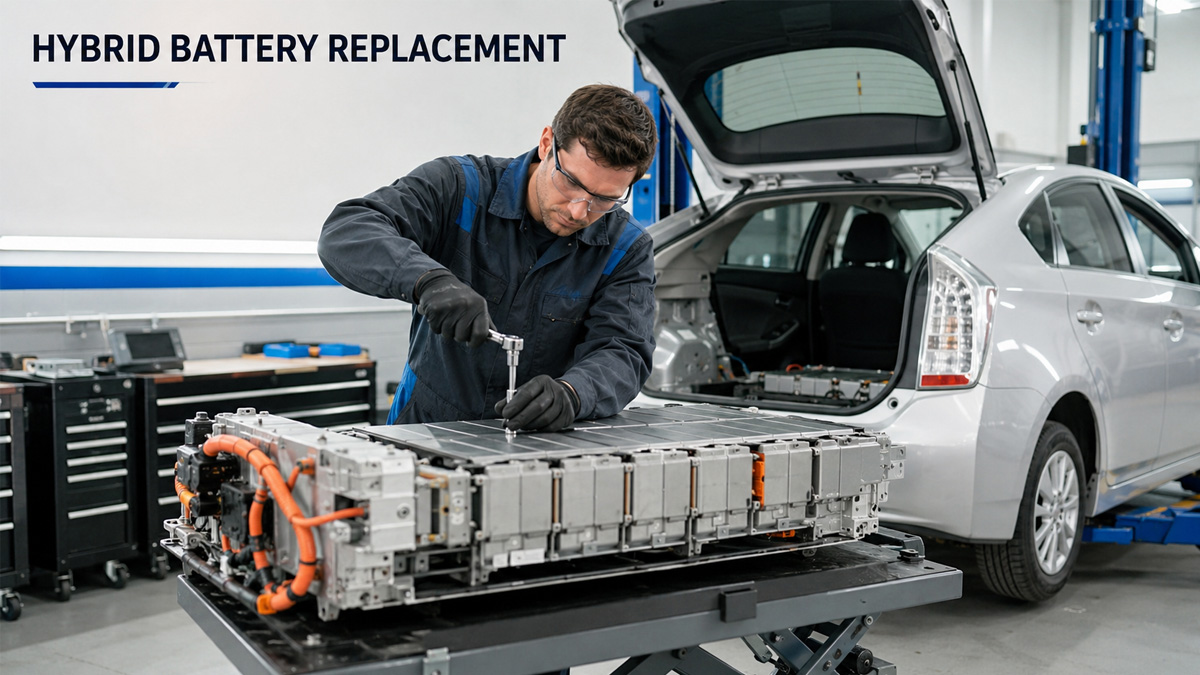 Hybrid Battery Replacement Cost
Hybrid battery replacement cost depends on where the battery is replaced, what type of battery is installed, and whether labor, mobile service, warranty, and core exchange are included. In general, hybrid battery replacement often costs about $2,000 to $8,000, while Toyota Prius replacement at a dealership is often around $3,500 to $5,000+ installed.
| Replacement Place |
Typical Cost Range |
Battery Type |
Replacement Service Included? |
Core Exchange / Old Battery Return |
Extra Fees to Watch |
| Dealership |
$3,500–$8,000+ |
Usually new OEM battery |
Yes, installed by dealer technicians |
Usually keeps or processes the old battery |
Higher labor cost, diagnostic fee, taxes, possible programming fee |
| Hybrid Battery Specialist |
$1,500–$4,500 |
Remanufactured, refurbished, new aftermarket, or sometimes OEM |
Usually yes |
Often requires old battery exchange |
Core charge if old battery is not returned, travel fee in some areas |
| Mobile Hybrid Battery Service |
$1,500–$4,000 |
Usually remanufactured or aftermarket replacement pack |
Often yes, installed at home or workplace |
Usually swaps your old battery during installation |
Service-area fee, travel fee, warranty upgrade fee |
| Independent Repair Shop |
$2,000–$5,000 |
New OEM, remanufactured, used, or aftermarket depending on supplier |
Usually yes |
Depends on shop and supplier |
Labor, diagnosis, towing, cooling fan cleaning, filter replacement |
| Used Battery Supplier / Salvage Yard |
$1,000–$3,000 |
Used battery from another vehicle |
Usually no, or limited |
Usually no formal exchange service |
Separate installation cost, short warranty, uncertain battery life |
| Module Repair / Rebuild Service |
$500–$2,000 |
Repairs weak modules inside old battery |
Yes, if done by repair shop |
Usually no full battery exchange |
May not solve long-term aging, possible repeat failure |
| DIY Replacement |
$800–$3,000+ |
Used, refurbished, or aftermarket battery |
No |
Depends on supplier |
Safety tools, shipping, core charge, no labor warranty |
For most owners, the dealership is the most expensive option because it usually uses a new OEM battery and factory labor. Hybrid battery specialists and mobile replacement companies are often cheaper because they may offer remanufactured, refurbished, or aftermarket battery packs. Some mobile services also include installation and take the old battery at the same time, while other suppliers may charge a separate core fee if the old pack is not returned.
A used battery has the lowest upfront price, but its remaining life is harder to predict. A remanufactured or aftermarket replacement is usually a middle option for older hybrid vehicles, while a new OEM battery is better for owners who want the longest reliability and factory-level compatibility. Before choosing a replacement option, drivers should compare battery type, warranty length, labor cost, mobile service availability, and whether the quote includes old battery exchange.

Recycling and DisposalHybrid batteries should not be thrown away with normal household waste because they contain valuable metals, high-voltage components, and materials that need proper handling. Recycling and proper disposal help reduce environmental impact and recover useful materials such as nickel, lithium, cobalt, copper, aluminum, and steel.
| Option |
What It Means |
Best For |
Notes |
| Dealer recycling |
The dealership takes back the old hybrid battery after replacement |
OEM replacement or dealer service |
Usually handled through the manufacturer’s recycling program |
| Hybrid battery specialist |
A repair or replacement company collects the old battery |
Remanufactured or aftermarket replacement |
Often included as part of the battery exchange process |
| Core return / core exchange |
The old battery is returned when a replacement battery is installed |
Replacement service |
Some suppliers charge a core fee if the old battery is not returned |
| Certified recycling center |
A licensed battery recycler processes the pack safely |
Old, damaged, or removed battery packs |
Best for batteries not replaced through a shop |
| Repair and reuse |
Usable modules are tested and reused in rebuilt packs |
Batteries with partial failure |
Reduces waste but requires professional testing |
| Improper disposal |
Throwing the battery into trash or scrap without control |
Not recommended |
Can create fire, chemical, and environmental risks |
Hybrid battery disposal should be handled by professionals because the battery pack may still hold dangerous voltage even when it is old or weak. The safest option is to return the old battery through a dealership, hybrid battery replacement company, or certified battery recycler.
In many replacement cases, the old battery has value as a core. This means the supplier may take it back for rebuilding, recycling, or material recovery. Before replacing a hybrid battery, owners should ask whether the quote includes old battery pickup, core return, recycling fees, and proper disposal.
ConclusionA hybrid battery is not designed to work like a full EV battery. In a traditional hybrid car, it mainly supports the gasoline engine, stores braking energy, improves fuel economy, and allows short electric driving. In plug-in hybrid vehicles, the battery is much larger and can provide real electric-only range.
For most drivers, the most important factors are battery lifespan, warning signs, replacement cost, maintenance, and proper recycling. Keeping the battery cool, cleaning the filter, driving the vehicle regularly, and checking problems early can help extend battery life. When the battery becomes weak or fails, owners should compare repair, remanufactured replacement, new OEM options, warranty coverage, core exchange, and recycling service before making a decision.
FAQ
What Is a Hybrid Battery?A hybrid battery is a high-voltage battery pack used in a hybrid vehicle. It stores energy, powers the electric motor, supports the gasoline engine, and recovers energy during braking. Unlike a standard 12V car battery, a hybrid battery is made from many cells, modules, sensors, cooling parts, and control systems.
How Long Do Hybrid Batteries Last?A hybrid battery usually lasts about 8 to 15 years, or around 100,000 to 200,000 miles. This is about 160,000 to 320,000 kilometers. Actual lifespan depends on the vehicle model, battery chemistry, climate, driving habits, cooling performance, and maintenance.
How Can You Extend the Life of a Hybrid Car Battery?The best way to extend hybrid battery life is to keep the battery cool, clean, and used regularly. Drivers should keep the battery filter clean, avoid blocking battery vents, clean the cooling fan when needed, avoid extreme heat, drive the vehicle regularly, and check warning signs early.
How Much Is a Hybrid Battery?Hybrid battery replacement often costs about $2,000 to $8,000, depending on the vehicle model, battery type, labor cost, warranty, and replacement place. A used or remanufactured battery is usually cheaper, while a new OEM battery from a dealership is usually more expensive.
Can You Jump a Hybrid Battery?You usually cannot jump-start the high-voltage hybrid battery directly. In most hybrid vehicles, jump-starting refers to the 12V auxiliary battery, which powers the electronics and allows the hybrid system to turn on. If the high-voltage battery is deeply discharged or faulty, a normal jump-start will not fix the problem.
How Do You Charge a Hybrid Battery?Most standard hybrid batteries charge automatically while driving. They receive power from regenerative braking and from the gasoline engine when the battery level is low. A regular hybrid usually does not need to be plugged in. Only plug-in hybrid vehicles, or PHEVs, can be charged from a wall outlet, home charger, or public charging station.
How Do You Check Hybrid Battery Health?Hybrid battery health can be checked by looking at battery charge behavior, fuel economy, acceleration, warning lights, cooling fan noise, and how quickly the battery charges or discharges. A professional health check may include module voltage balance, internal resistance, battery temperature, fault codes, cooling fan condition, and battery filter inspection.


