✅
The History of EV Batteries✅
Battery Types In Modern EV Batteries • Mainstream Types Used at Scale Today • Emerging Types With Strong Future Potential✅
How EV Batteries Work✅
EV Battery Structure and Materials • Cell Structure and Materials • Battery System Structure✅
Voltage in EV Batteries • High-Voltage Traction Battery • 12V Starting and Auxiliary Battery✅
Capacity of EV Batteries • Capacity Ranges by Electric Vehicle Type • Why EV Battery Capacity Varies✅
Charging an Electric Car Battery✅
EV Battery Technology Trends • Mainstream Lithium Battery Technology Keeps Improving • Emerging EV Battery Technologies Target Breakthroughs✅
EV Battery Energy Density • Energy Density of Mainstream EV Batteries • Energy Density of Emerging EV Battery Technologies✅
Battery Management System • Cooling System and Heat Management • Monitoring System and Sensors✅
Lifespan and Degradation of EV Batteries • Lifespan by Cycles, Years, and Mileage • Battery Degradation Over Time✅
EV Battery Replacement Cost and Warranty • Battery Replacement Cost • Battery Warranty Coverage✅
Common Battery Issues✅
Recycling and Disposal✅
Safety Risks✅
Leading EV Battery Manufacturers✅
Market Trends for EV Batteries✅
Conclusion✅
FAQ What Are EV Batteries Made Of? How Long Do EV Batteries Last? How Do EV Batteries Work? How Much Does It Cost for an EV Battery Change? What Factors Can Impact EV Battery Range? Which EV Cars Use LFP Batteries? How to Extend EV Battery Life?EV batteries are the core power source behind electric cars, affecting driving range, charging speed, safety, lifespan, replacement cost, and long-term vehicle performance. Most modern EV batteries use lithium-based chemistries such as LFP, NMC, and NCA because they offer higher energy density, better efficiency, and stronger pack design flexibility than older battery types. To understand the broader chemistry behind these systems, you can also read our main article on
how lithium batteries work and where they are used.
In this guide, we will explain the key parts of an EV battery, including battery types, voltage, capacity, energy density, thermal management, charging, lifespan, degradation, safety, recycling, replacement, warranty, and major global battery manufacturers.
The History of EV BatteriesEV battery development has followed a clear path: each new chemistry improved energy density, weight, cycle life, or driving range. From early lead-acid batteries to today’s lithium-ion systems, battery chemistry has shaped how practical electric vehicles can be.
- 1880s–Early 1900s: Lead-Acid Batteries
Early electric vehicles mainly used lead-acid batteries. They were rechargeable and affordable, but heavy weight and low energy density limited vehicle range.
- 1980s–1990s: Nickel-Cadmium Batteries
Nickel-cadmium batteries offered better durability than lead-acid batteries, but their cost, memory effect, and environmental concerns kept them from becoming a mainstream EV solution.
- 1990s–2000s: Nickel-Metal Hydride Batteries
Nickel-metal hydride batteries became important in hybrid vehicles and some early EV programs. They improved reliability and safety, but still lacked the energy density needed for long-range electric cars.
- 2000s–Today: Lithium-Ion Batteries
Lithium-ion batteries made modern EVs practical by offering higher energy density, lighter weight, better efficiency, and longer driving range.
- 2010s–Today: LFP and NMC Batteries
Modern EVs mainly use lithium-ion variants such as LFP and NMC. LFP batteries focus on safety, long cycle life, and cost control, while NMC batteries provide higher energy density for longer-range EVs.
 Battery Types In Modern EV Batteries
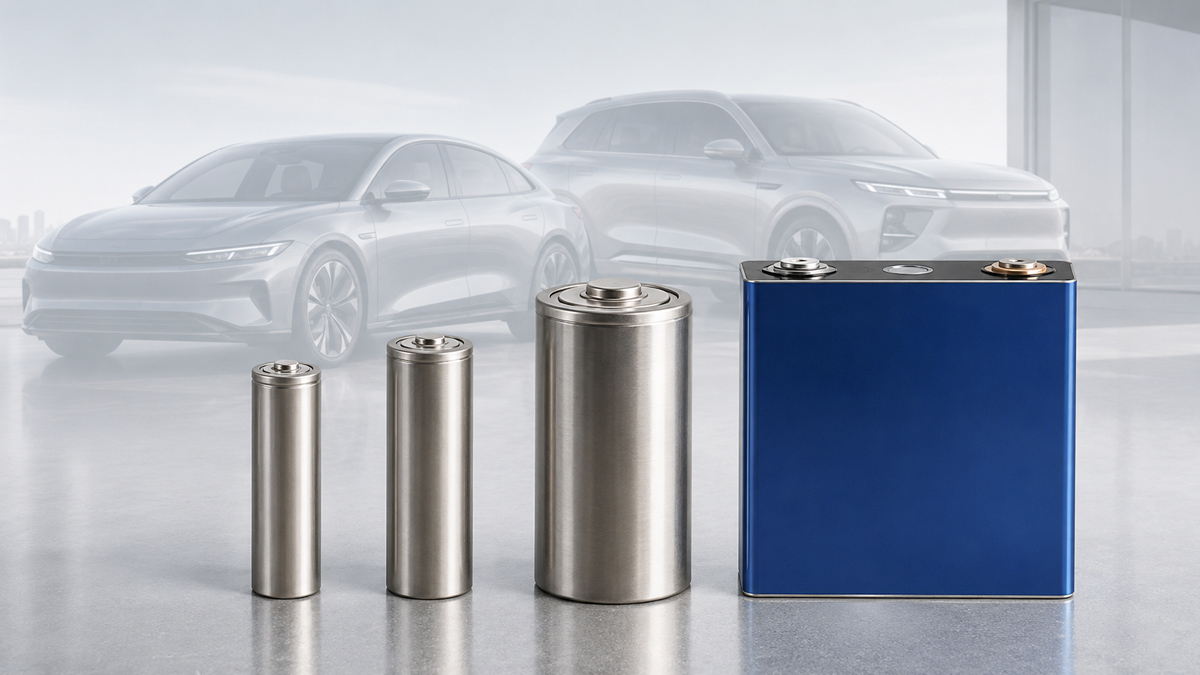
Early electric vehicles once used lead-acid batteries, but modern EVs mainly use lithium-based battery systems because they offer better energy density, longer range, and more efficient charging.
• Mainstream Types Used at Scale Today
The most widely used EV battery types today are LFP, NMC, and NCA batteries.
- LFP batteries are valued for safety, long cycle life, thermal stability, and lower cost. They are common in standard-range EVs, electric buses, commercial vehicles, and cost-focused models.
- NMC batteries offer a strong balance between energy density, power output, and driving range. They are widely used in passenger EVs where longer range and compact battery pack design are important.
- NCA batteries provide high energy density and are often used in long-range or performance-focused EVs. However, they need careful battery management and thermal control.
• Emerging Types With Strong Future Potential
Several battery technologies are still being developed for future EVs, especially solid-state batteries, sodium-ion batteries, and lithium-sulfur batteries.
- Solid-state batteries may improve energy density, charging speed, and safety by using a solid electrolyte instead of a liquid electrolyte. They are one of the most promising future EV battery technologies.
- Sodium-ion batteries use more abundant sodium materials and may help reduce battery cost and supply-chain pressure. Their energy density is usually lower than lithium-ion batteries, so they may first appear in short-range EVs and cost-sensitive models.
- Lithium-sulfur batteries have potential for very high theoretical energy density and lighter battery packs. However, cycle life, stability, and large-scale manufacturing still need major improvement before they can be widely used in EVs.
Overall, today’s EV battery market is still dominated by lithium-ion chemistries such as LFP, NMC, and NCA. Future battery development will focus on safer materials, lower cost, faster charging, longer range, and easier recycling, with solid-state and sodium-ion batteries likely to play a larger role as the technology matures
How EV Batteries WorkEV batteries work by storing electrical energy in lithium-ion cells and releasing that energy to power the electric motor. When the vehicle is driving, lithium ions move from the anode to the cathode through the electrolyte, while electrons flow through the external circuit to provide power. When the battery is charging, this process reverses, and lithium ions move back to the anode for storage.
Inside the battery pack, thousands of cells are connected in series and parallel to provide the voltage and capacity needed by the vehicle. The battery management system monitors voltage, current, temperature, state of charge, and cell balance, while the cooling system keeps the pack within a safe temperature range. Together, these systems allow the EV battery to deliver stable power, protect the cells, and maintain long-term battery performance.
 EV Battery Structure and Materials
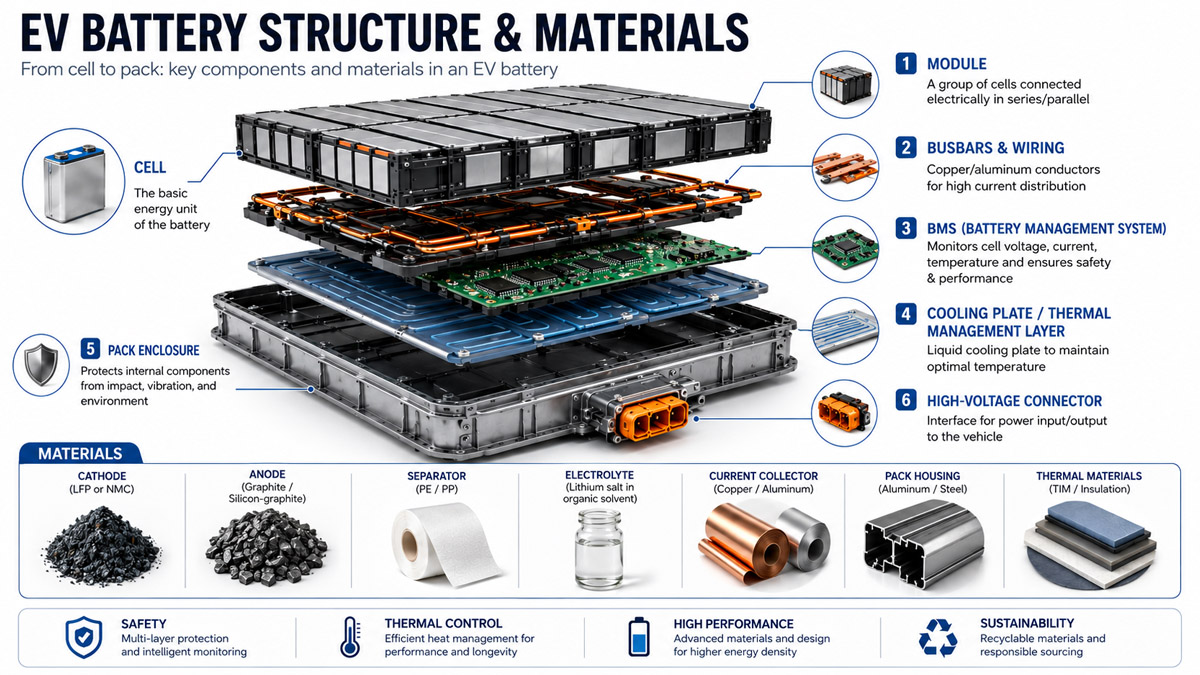
Modern EV batteries are not just single cells. They include the internal cell structure and the larger battery system structure that connects cells into modules, packs, cooling systems, and safety control units. In today’s EV market, the most common chemistries are still LFP batteries and ternary lithium batteries, including NMC and NCA.
• Cell Structure and Materials
- Cathode material: LFP batteries use lithium iron phosphate, while ternary lithium batteries use NMC or NCA cathode materials. The cathode chemistry largely determines energy density, safety, cost, and cycle life.
- Anode material: Most EV batteries use graphite as the anode. Some high-energy designs add silicon-based materials to improve capacity and charging performance.
- Electrolyte: Mainstream EV lithium batteries usually use liquid lithium salt electrolytes, which allow lithium ions to move between the cathode and anode during charging and discharging.
- Separator: The separator prevents direct contact between the cathode and anode while allowing lithium ions to pass through. It is critical for preventing internal short circuits.
- Cell casing and format: EV battery cells can be prismatic, cylindrical, or pouch cells. LFP batteries are often used in prismatic or blade-style designs, while ternary lithium batteries are common in cylindrical, pouch, and prismatic formats.
• Battery System Structure
- Cells: Cells are the smallest energy storage units in an EV battery system. Their chemistry, size, and format affect the whole battery pack’s performance.
- Modules: In many EV battery packs, multiple cells are grouped into modules. Modules make assembly, protection, and maintenance easier, although some newer designs reduce or remove modules to save space.
- Battery pack: The battery pack is the complete system installed in the vehicle. It includes cells, electrical connections, structural housing, cooling components, sensors, and protection systems.
- Battery Management System: The BMS monitors voltage, current, temperature, state of charge, and battery health. It helps prevent overcharging, over-discharging, overheating, and cell imbalance.
- Thermal management system: EV batteries use cooling and heating systems to keep the battery within a safe operating temperature range. This is especially important for fast charging, high-power driving, and cold-weather performance.
- Electrical connection and protection system: Busbars, wiring, fuses, contactors, and safety disconnects connect the battery to the vehicle while protecting it from short circuits, overloads, and electrical faults.
- Pack enclosure and structural protection: The pack housing protects the battery from vibration, impact, water, dust, and road damage. Some modern EVs also use structural battery pack designs to improve space efficiency and vehicle rigidity.
Overall, EV battery structure includes both the cell-level materials and the pack-level system design. LFP and ternary lithium batteries share similar basic structures, but they differ in cathode chemistry, energy density, safety behavior, cost, and thermal management needs. A well-designed EV battery system must combine reliable cell materials with strong BMS control, thermal management, electrical protection, and mechanical structure.
 Voltage in EV Batteries
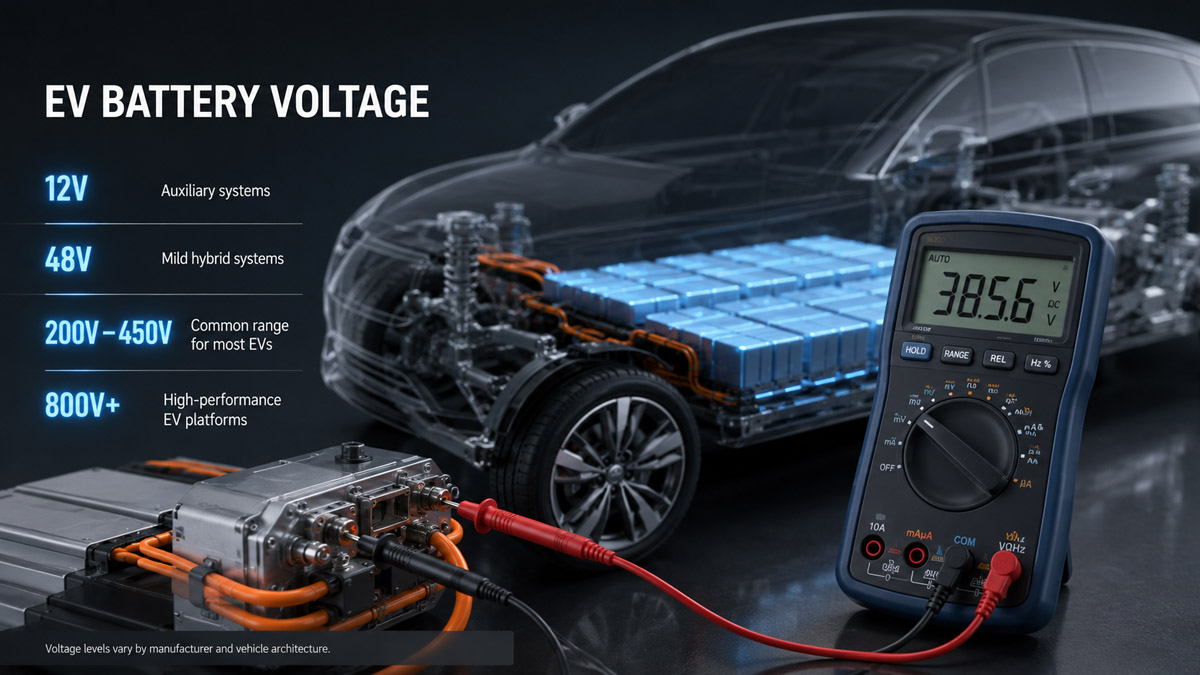
EV battery voltage usually includes two systems: a high-voltage traction battery and a 12V auxiliary battery. Most modern electric cars use traction battery packs around 400V, while newer fast-charging or high-performance EVs may use 800V platforms. At the same time, EVs also keep a 12V battery to power low-voltage electronics, safety systems, locks, lights, and control modules.
• High-Voltage Traction Battery
The high-voltage traction battery is the main EV battery used to power the electric motor. Most modern electric cars use battery packs with nominal voltages around 400V, while some newer high-performance or fast-charging EVs use 800V platforms.
A higher traction battery voltage can help reduce current, improve power delivery, support faster charging, and improve drivetrain efficiency. This is why many modern EV platforms are moving toward higher-voltage battery systems, especially for long-range and fast-charging models.
• 12V Starting and Auxiliary Battery
Besides the main traction battery, most EVs also use a 12V battery. Unlike a traditional gasoline car battery, it does not crank an engine, but it still plays an important role in starting the vehicle’s electronic systems.
The 12V battery powers low-voltage components such as lights, door locks, infotainment, sensors, relays, control modules, and safety systems. Even if the main high-voltage battery has energy, a weak or dead 12V battery can prevent the EV from waking up, unlocking, or entering drive mode.
 Capacity of EV Batteries
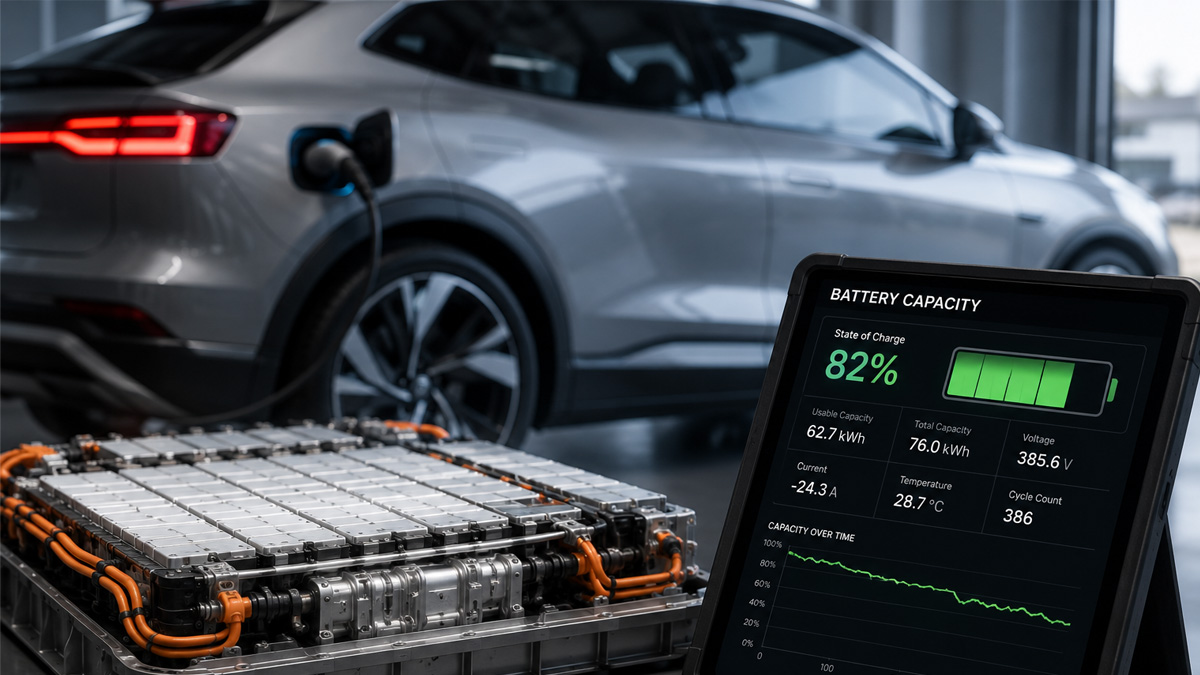
EV battery capacity usually ranges from about 20 kWh to over 200 kWh, depending on vehicle size, driving range, and power demand. Small city EVs may use 20–40 kWh packs, mainstream passenger EVs often use 50–90 kWh packs, and large electric trucks or premium long-range models can exceed 100 kWh.
• Capacity Ranges by Electric Vehicle Type
- Small city EVs: Usually around 20–40 kWh. These vehicles focus on short-distance commuting, lower cost, and lighter battery packs.
- Compact and standard passenger EVs: Usually around 40–70 kWh. This range is common for daily-use electric cars that need a balance between price, range, and efficiency.
- Long-range passenger EVs: Usually around 70–100 kWh. These models use larger battery packs to support longer highway driving and fewer charging stops.
- Performance EVs and luxury electric cars: Usually around 90–120 kWh. These vehicles need more capacity to support high power output, faster acceleration, and long-range performance.
- Electric SUVs and pickup trucks: Usually around 80–150 kWh. Heavier vehicles need larger battery packs because weight, aerodynamics, and towing demand increase energy consumption.
- Electric buses and commercial vehicles: Usually around 150–350 kWh or more. These vehicles need large battery systems to support long operating hours, heavy loads, and frequent daily use.
• Why EV Battery Capacity Varies
EV battery capacity depends on vehicle size, target driving range, battery chemistry, pack design, and energy efficiency. A larger battery can provide longer range, but it also adds weight, cost, and charging time. This is why EV manufacturers choose different capacity ranges for city cars, family vehicles, long-range models, SUVs, trucks, and commercial fleets.
Overall, EV battery capacity is not fixed. Small urban EVs may only need a compact battery pack, while long-range electric cars, trucks, and buses require much larger packs. For most passenger EVs, a battery capacity between 50 kWh and 100 kWh is the most common range.
Charging an Electric Car BatteryEV battery charging affects charging speed, daily range, battery temperature, and long-term battery life. Since charging methods, charger levels, fast charging limits, and best charging habits need more detailed explanation, our separate article covers
how to charge an electric car battery safely and efficiently in more detail.
 EV Battery Technology Trends
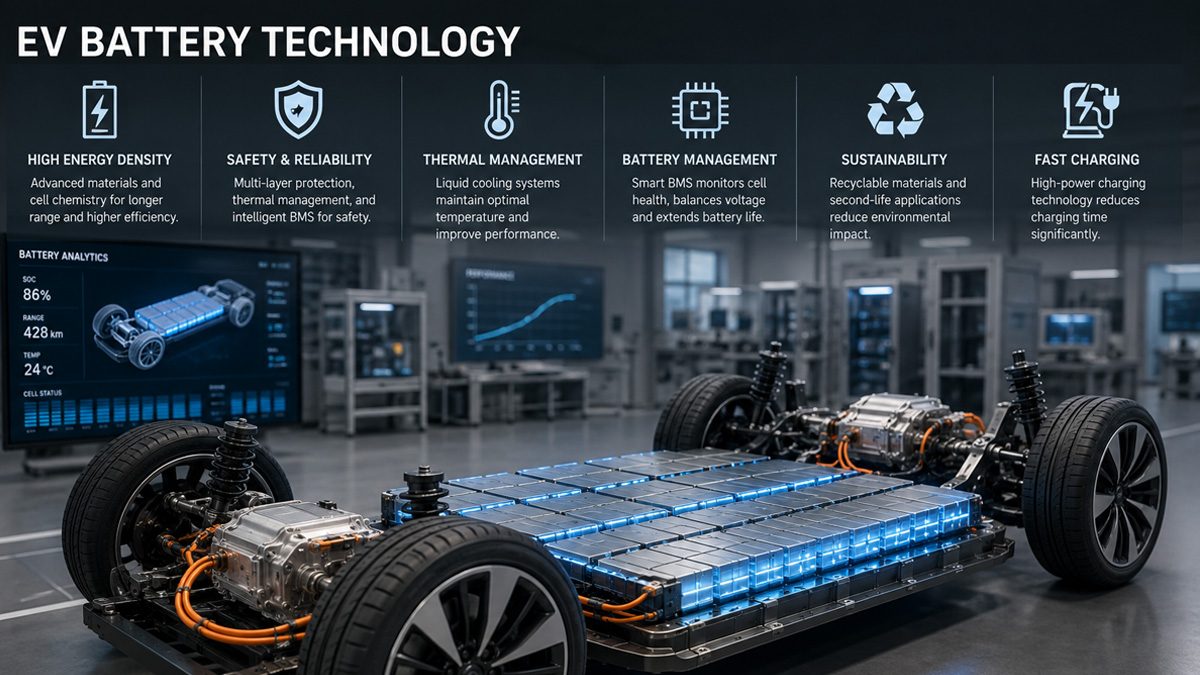
EV battery technology is improving around several key goals: longer driving range, faster charging, better safety, stronger durability, and lower cost. Most EVs today still rely on lithium-ion battery systems, but the technology inside the pack continues to evolve through better materials, smarter battery management, improved thermal control, and more efficient pack design.
• Mainstream Lithium Battery Technology Keeps Improving
Current EV battery technology is mainly based on lithium-ion batteries. Instead of changing the entire battery system, manufacturers are improving performance through several practical technology directions:
- Higher energy density: Battery cells are designed to store more energy in the same space, helping EVs achieve longer driving range without making the battery pack too large or heavy.
- Faster charging: Improved cell chemistry, charging algorithms, thermal management, and high-voltage platforms help reduce charging time while protecting battery life.
- Better safety: Modern EV batteries use safer cell materials, battery management systems, thermal sensors, fuses, and protective pack structures to reduce risks such as overheating, short circuits, and thermal runaway.
- Improved temperature resistance: Battery systems are designed to perform better in hot and cold conditions through liquid cooling, heating systems, insulation, and smarter temperature control.
- Advanced battery pack design: Cell-to-pack, module-free, and structural battery pack designs help improve space efficiency, reduce weight, and increase overall pack energy density.
- Smarter battery management systems: The BMS monitors voltage, current, temperature, state of charge, and battery health to keep the battery operating safely and efficiently.
• Emerging EV Battery Technologies Target Breakthroughs
Beyond today’s lithium-ion systems, several new EV battery technologies are being actively developed. These technologies aim to improve safety, range, charging speed, material supply, and long-term cost.
- Solid-state batteries: Solid-state batteries replace the liquid electrolyte with a solid electrolyte. They may offer higher energy density, faster charging potential, and better safety, but large-scale production and cost control are still major challenges.
- Sodium-ion batteries: Sodium-ion batteries use more abundant sodium materials instead of lithium. They may reduce material cost and supply-chain pressure, but their energy density is usually lower than mainstream lithium-ion batteries.
- Lithium-sulfur batteries: Lithium-sulfur batteries have very high theoretical energy density and could make battery packs lighter. However, cycle life, stability, and commercial manufacturing still need major improvement.
- Silicon-anode batteries: Silicon can store more lithium than traditional graphite anodes, which may increase energy density and charging performance. The main challenge is controlling expansion and maintaining long cycle life.
- Advanced recycling technology: Battery recycling technology is also becoming part of EV battery development. Better recycling can recover lithium, nickel, cobalt, and other materials, reducing waste and improving long-term battery sustainability.
Overall, EV battery technology is moving in two directions at the same time. Mainstream lithium-ion batteries are becoming safer, faster-charging, longer-lasting, and more efficient, while next-generation technologies such as solid-state, sodium-ion, lithium-sulfur, and silicon-anode batteries may reshape future EV performance.
 EV Battery Energy Density
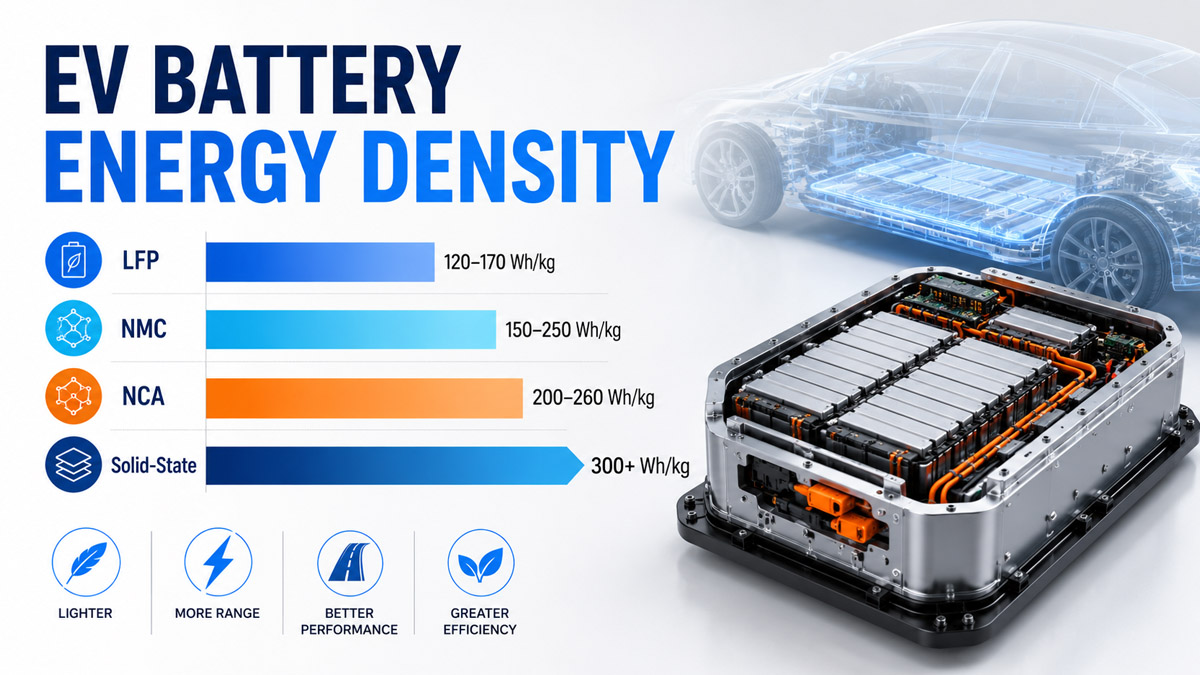
EV battery energy density usually ranges from about 90 to 300 Wh/kg at the cell level, depending on battery chemistry. In today’s EVs, LFP batteries are usually lower in energy density but stronger in safety and cycle life, while ternary lithium batteries such as NMC and NCA offer higher energy density for longer driving range.
• Energy Density of Mainstream EV Batteries
- LFP batteries: LFP batteries usually have a cell-level energy density of about 90–160 Wh/kg, while newer high-performance LFP designs may reach higher levels. They are widely used because they are safer, cheaper, more stable, and suitable for standard-range EVs.
- NMC batteries: NMC batteries usually offer about 150–260 Wh/kg at the cell level. They provide a strong balance between energy density, power output, and battery life, making them common in many passenger EVs.
- NCA batteries: NCA batteries can reach about 200–300 Wh/kg at the cell level in high-energy designs. They are often used in long-range or performance EVs, but they need stricter thermal management and safety control.
• Energy Density of Emerging EV Battery Technologies
- Solid-state batteries: Solid-state batteries may reach 300–500 Wh/kg or higher in future designs. They are expected to improve driving range, safety, and fast-charging potential, but large-scale commercial production is still developing.
- Lithium-sulfur batteries: Lithium-sulfur batteries have very high theoretical energy density and may reach 400–600 Wh/kg in advanced designs. However, cycle life, stability, and manufacturing challenges still limit practical EV use.
- Sodium-ion batteries: Sodium-ion batteries usually have lower energy density, often around 100–160 Wh/kg. Their advantage is lower material cost and better resource availability, so they may be more suitable for short-range EVs and energy storage.
- Silicon-anode lithium batteries: Silicon-anode batteries can improve energy density compared with traditional graphite-anode lithium-ion batteries. They may help future EVs achieve longer range and faster charging, but controlling silicon expansion and long-term cycle life remains a key challenge.
Overall, mainstream EV battery energy density is still dominated by LFP, NMC, and NCA batteries. LFP focuses on safety, cost, and cycle life, while NMC and NCA focus more on higher energy density and longer range. Future technologies such as solid-state, lithium-sulfur, and silicon-anode batteries may push EV energy density higher, but most are still in the development or early commercialization stage.
 Battery Management System
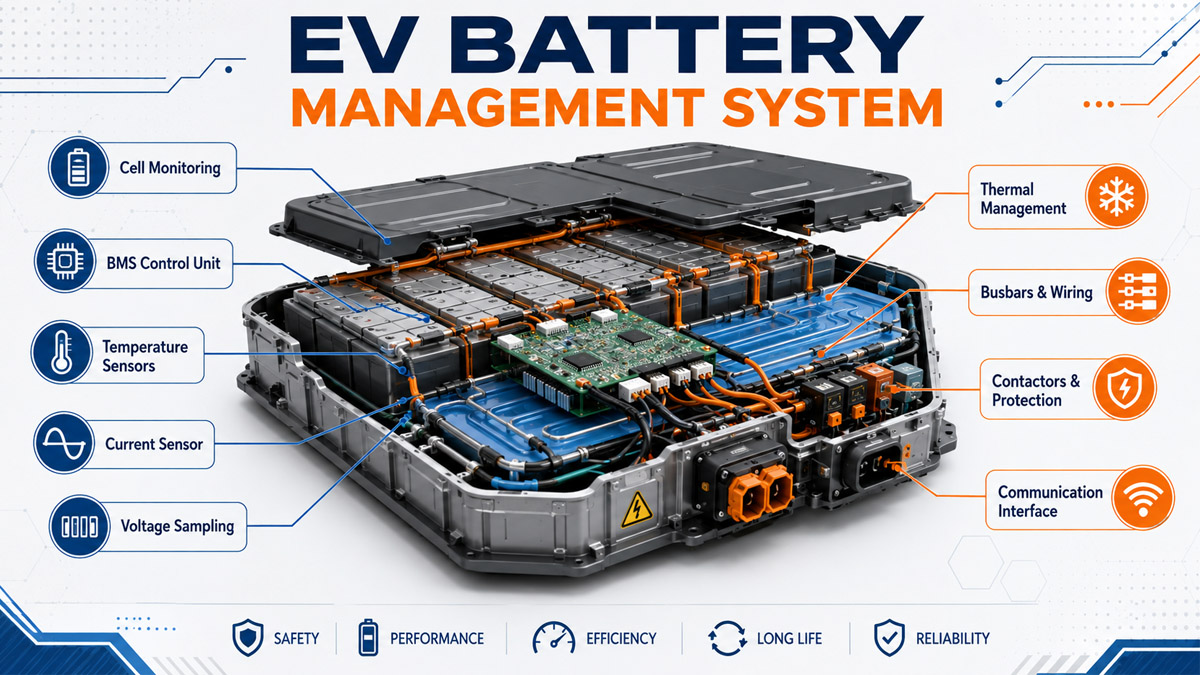
An EV battery management and cooling system keeps the battery pack safe, efficient, and stable during charging, driving, and long-term use. It includes the battery management system, thermal management system, cooling system, coolant fluid, sensors, software controls, and protection devices that monitor battery temperature, voltage, current, and overall battery health.
The battery management system, or BMS, is the control center of an EV battery pack. It monitors cell voltage, current, temperature, state of charge, state of health, and cell balance.
Main functions include:
- Voltage monitoring: Tracks each cell or cell group to prevent overcharging and over-discharging.
- Temperature monitoring: Detects overheating, cold-weather stress, or uneven heat distribution.
- Current monitoring: Controls charge and discharge current to protect the battery.
- Cell balancing: Keeps cells at similar voltage levels to improve pack performance and lifespan.
- Fault protection: Responds to short circuits, thermal risk, insulation faults, and abnormal battery behavior.
• Cooling System and Heat Management
The EV battery cooling system controls battery temperature during fast charging, high-speed driving, heavy acceleration, and hot-weather operation. Good heat management helps prevent capacity loss, charging slowdown, and safety risks.
Common EV battery cooling solutions include:
- Liquid cooling: Uses coolant fluid to remove heat from the battery pack. This is common in many modern EVs because it offers strong and stable cooling performance.
- Air cooling: Uses airflow to reduce battery temperature. It is simpler and cheaper, but usually less effective for high-power EVs.
- Cooling plates: Place liquid-cooled plates near cells or modules to transfer heat away from the battery.
- Direct cooling: Uses more advanced cooling methods to improve heat transfer, especially in high-performance battery systems.
EV battery coolant fluid carries heat away from cells, modules, and cooling plates. Many systems use water-glycol cooling fluids because they offer good heat transfer and freeze protection.
The coolant must remain stable, corrosion-resistant, and electrically safe inside the thermal management system. Poor coolant quality, leakage, or blocked cooling channels can reduce cooling performance and increase battery safety risks.
• Monitoring System and Sensors
The EV battery monitoring system uses sensors and software to track real-time battery conditions. It helps the vehicle decide when to cool, heat, limit power, reduce charging speed, or trigger a warning.
Common monitored data includes:
- Battery temperature
- Cell voltage
- Pack current
- State of charge
- State of health
- Coolant temperature
- Coolant flow rate
- Insulation resistance
- Fault codes and warning signals
Overall, the EV battery management system and cooling system work together to protect the battery pack. The BMS monitors and controls electrical behavior, while the thermal management system uses cooling solutions, coolant fluid, sensors, and heat management strategies to keep the battery within a safe operating range. A well-designed system improves safety, charging speed, performance, and battery lifespan.
 Lifespan and Degradation of EV Batteries
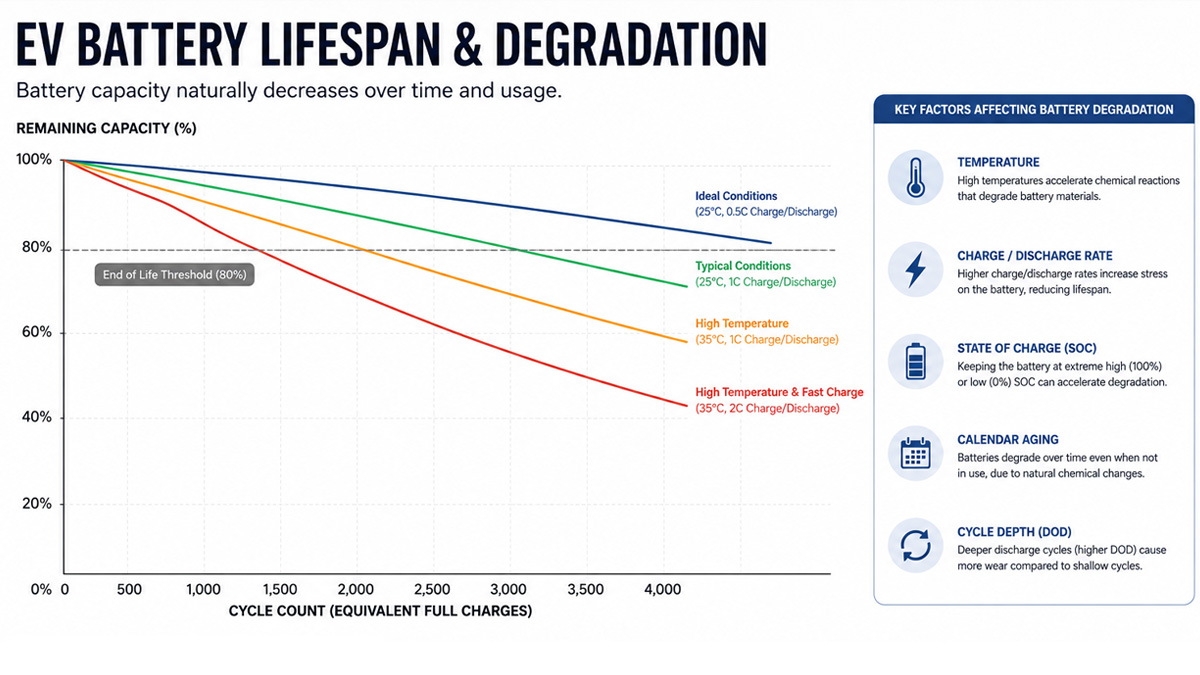
EV battery lifespan is usually measured in more than one way. A battery can be described by its cycle life, calendar life, or the total driving mileage it can support before capacity drops noticeably. Battery degradation is the natural process behind this decline, and it is affected by charging habits, temperature, driving conditions, battery chemistry, and battery management.
• Lifespan by Cycles, Years, and Mileage
EV battery lifespan is not measured only by age. In real use, it is usually understood through three practical indicators: cycle life, service years, and driving mileage.
- Cycle life: Cycle life refers to how many full charge and discharge cycles a battery can complete before its capacity drops to a certain level, often around 70%–80% of its original capacity. LFP batteries usually have a longer cycle life, while high-energy ternary lithium batteries may focus more on energy density and range.
- Service years: Most EV batteries are designed to last for many years under normal use. In general, an EV battery can often serve for about 8 to 15 years, depending on battery chemistry, climate, charging habits, and vehicle use.
- Driving mileage: EV battery lifespan can also be measured by how many miles or kilometers the vehicle can drive before the battery becomes significantly degraded. Many EV batteries can support roughly 100,000 to 200,000 miles or more, while well-managed battery packs may last even longer.
Average lifespan: For most drivers, the average EV battery lifespan is often around 10 years. However, this is not a fixed number. A battery used in a mild climate with moderate charging habits may last much longer, while frequent fast charging, high heat, deep discharge, and heavy use can shorten its useful life.
• Battery Degradation Over Time
EV battery degradation means the battery gradually loses its ability to store and deliver energy. As degradation increases, the vehicle may show shorter driving range, slower charging performance, or less stable power output.
Common causes of EV battery degradation include:
- Repeated charging and discharging: Every charge cycle causes small chemical and physical changes inside the battery. Over time, these changes reduce usable capacity.
- High temperature: Heat accelerates chemical aging inside lithium batteries. Long-term exposure to hot weather, poor cooling, or aggressive driving can speed up degradation.
- Frequent fast charging: Fast charging is convenient, but repeated high-power charging can increase battery stress, especially when the battery is hot or already at a high state of charge.
- Deep discharge: Regularly draining the battery to a very low level can increase stress on the cells and reduce long-term battery health.
- Keeping the battery fully charged for long periods: Holding a lithium battery at 100% state of charge for a long time can accelerate aging, especially in hot conditions.
- Cold-weather stress: Low temperatures reduce battery performance temporarily and can increase charging stress if the battery is charged quickly without proper preheating.
- Battery chemistry differences: LFP batteries generally offer strong cycle life and thermal stability, while NMC and NCA batteries often provide higher energy density but may require stricter thermal and charging management.
Overall, EV battery lifespan depends on both battery design and daily use habits. Cycle life, years of service, and total mileage are all useful ways to estimate how long an EV battery can last, while degradation explains why range slowly decreases over time. A well-managed EV battery with good thermal control, moderate charging habits, and stable operating conditions can remain useful for many years.
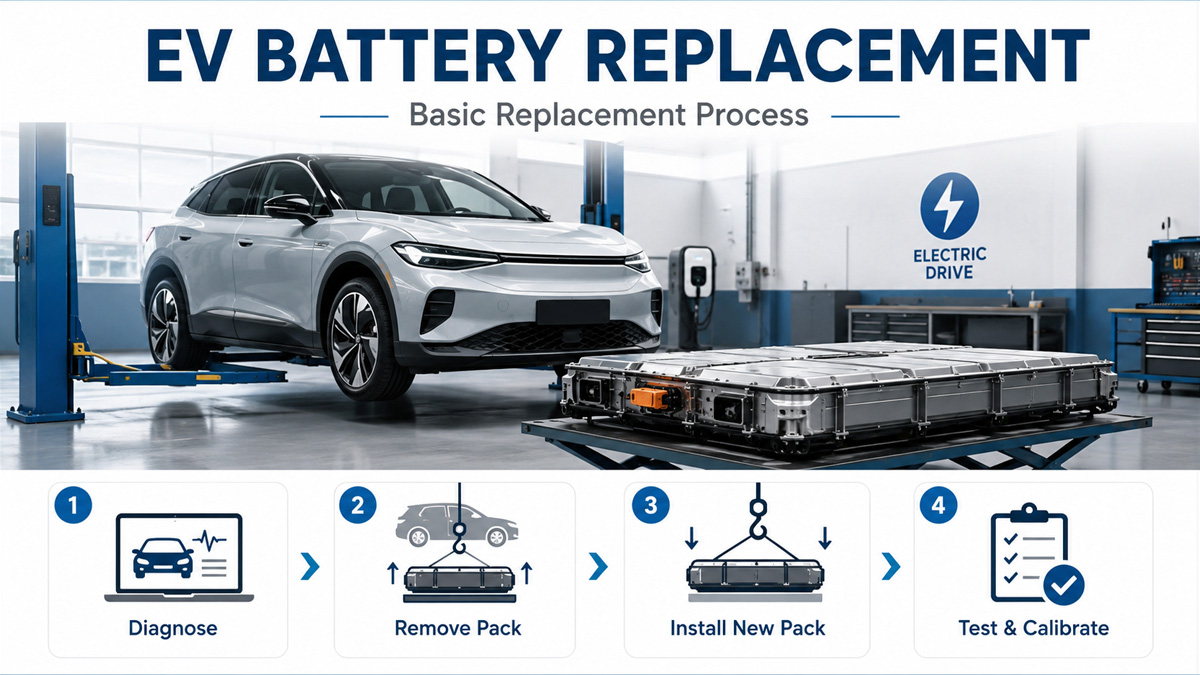 EV Battery Replacement Cost and Warranty
EV battery replacement can be expensive because the battery pack is one of the highest-value parts of an electric vehicle. In many cases, a full EV battery replacement may cost several thousand dollars to over $20,000, depending on the vehicle model, battery capacity, battery chemistry, labor cost, and whether the replacement uses a new, refurbished, or remanufactured battery pack.
• Battery Replacement Cost
Small EV battery packs: usually cost less to replace because they have lower capacity and simpler pack designs.
Mainstream passenger EVs: replacement costs often fall into the $5,000–$15,000 range, depending on pack size and vehicle brand.
Long-range EVs, SUVs, and luxury models: replacement costs can reach $15,000–$25,000 or more, especially when the battery pack is large or highly integrated into the vehicle structure.
Refurbished or module-level repair: in some cases, replacing damaged modules or using a refurbished battery pack can reduce cost, but availability depends on the vehicle model and repair network.
• Battery Warranty Coverage
Most electric vehicle battery warranties last about 8 years or 100,000 miles, although some brands may offer longer mileage or different coverage terms. EV battery warranty usually covers major defects, abnormal capacity loss, and battery pack failure, but it may not cover damage caused by accidents, flooding, improper charging, unauthorized repair, or misuse.
Many EV warranties also include a capacity retention standard. For example, the battery may be covered if its usable capacity drops below a certain level, often around 70%, within the warranty period.
Overall, EV battery replacement depends on cost, warranty coverage, battery condition, and repair options. A full pack replacement is the most expensive solution, while module repair or refurbished packs may be more affordable when available. For most EV owners, checking the warranty terms first is the most important step before paying for battery replacement.
Common Battery IssuesEV battery problems can involve range loss, charging failure, overheating, warning lights, cell imbalance, or BMS faults. Since diagnosis and repair often require more detailed steps, our separate article explains the symptoms, causes, inspection methods, and
common battery issues in electric cars in more detail.
Recycling and Disposal
EV battery recycling is a large topic on its own because it involves material recovery, second-life use, transportation rules, and regional policy differences. For readers who want to understand what happens after an EV battery reaches the end of its service life, our separate article on
how retired EV batteries are collected and reused explains the recycling process in more detail.
Safety RisksEV battery safety involves cell chemistry, thermal management, BMS protection, charging habits, crash protection, and fire risk prevention. Because safety deserves a deeper explanation, our separate article covers key risks, warning signs, prevention methods, and
safe battery use in electric cars in more detail.
Leading EV Battery ManufacturersThe global EV battery market is led by several major manufacturers from China, South Korea, Japan, Europe, and the United States. Chinese battery manufacturers currently hold the strongest position in production scale and LFP battery supply, while Korean and Japanese brands remain important in high-energy lithium-ion batteries and global automaker partnerships.
| Manufacturer |
Country / Region |
2025 Global Market Share |
| CATL |
China |
39.2% |
| BYD |
China |
16.4% |
| LG Energy Solution |
South Korea |
9.2% |
| CALB |
China |
5.3% |
| Gotion High-Tech |
China |
4.5% |
| SK On |
South Korea |
3.7% |
| Panasonic |
Japan |
3.7% |
| EVE Energy |
China |
2.6% |
| Samsung SDI |
South Korea |
2.4% |
| SVOLT |
China |
2.4% |
Main Strengths of Leading EV Battery Companies
- CATL: Strongest global scale, broad lithium battery portfolio, and leadership in LFP, NMC, and fast-charging battery technology.
- BYD: Known for its LFP Blade Battery, strong cost control, and close integration between battery production and electric vehicle manufacturing.
- LG Energy Solution: Strong in high-energy NMC batteries, pouch cells, and long-term supply partnerships with global automakers.
- CALB: Fast-growing Chinese supplier with strength in LFP and ternary lithium batteries for passenger EVs and commercial vehicles.
- Gotion High-Tech: Focuses on cost-effective LFP battery systems for affordable EVs, commercial vehicles, and energy storage.
- SK On: Known for high-nickel lithium batteries, pouch-cell technology, and overseas production partnerships.
- Panasonic: Strong in cylindrical lithium-ion cells, quality control, and long-term EV battery supply experience.
- EVE Energy: Offers broad cell formats, including cylindrical and prismatic cells, with strength in both EV and energy storage batteries.
- Samsung SDI: Focuses on premium lithium-ion batteries, prismatic cells, cylindrical cells, and high-performance EV applications.
- SVOLT: Develops LFP, cobalt-free, and cost-focused battery technologies for the growing EV market.
Market Trends for EV BatteriesThe EV battery market is closely linked to electric vehicle sales, because every new EV increases demand for battery cells, packs, raw materials, and recycling capacity. From 2020 to 2024, China, Europe, and the United States remained the three most important EV markets, with China growing the fastest and taking the largest share of global battery demand. IEA data shows that global electric car sales exceeded 17 million in 2024, with China alone selling more than 11 million electric cars.
| Year |
China EV Sales |
Europe EV Sales |
United States EV Sales |
| 2020 |
About 1.2 million |
About 1.4 million |
About 0.3 million |
| 2021 |
About 3.3 million |
About 2.3 million |
About 0.6 million |
| 2022 |
About 5.9 million |
About 2.7 million |
About 1.0 million |
| 2023 |
About 8.1 million |
About 3.2 million |
About 1.4 million |
| 2024 |
More than 11 million |
About 3.0–3.2 million |
About 1.6 million |
Regional Market Trends
- China: China is the largest EV battery market, with the strongest EV sales growth, the largest battery production capacity, and the most complete supply chain. Its market advantage comes from large domestic demand, strong LFP battery adoption, and leading manufacturers such as CATL and BYD.
- Europe: Europe remains a major EV battery market, but growth has become less stable because of subsidy changes, higher vehicle costs, and slower local battery factory expansion. European countries are still pushing local production, recycling, and stricter battery regulations to reduce dependence on Asian suppliers.
- United States: The U.S. EV battery market is growing, but it is still smaller than China and Europe in total EV sales. Its battery industry is expanding through local manufacturing incentives, automaker partnerships, and joint ventures with Korean and Japanese battery companies.
Other Regions: Markets such as Japan, South Korea, India, and Southeast Asia are also developing, but their roles are different. Japan and South Korea are stronger in battery technology and supply, while India and Southeast Asia have more growth potential in future EV adoption.
Overall, the EV battery market is now led by China, followed by Europe and the United States. China has the strongest demand, production scale, and supply-chain control, while Europe and the U.S. are focusing on local manufacturing, battery recycling, and long-term supply security.
ConclusionEV batteries are more than simple energy storage units. They are complete systems made of cells, materials, pack structures, cooling solutions, battery management software, safety protection, and recycling pathways. Today’s EV battery market is mainly built around lithium-ion technologies, especially LFP and ternary lithium batteries, while solid-state, sodium-ion, silicon-anode, and other emerging technologies may shape the next stage of electric vehicle development.
For EV owners, the most important factors are battery range, charging habits, lifespan, safety, warranty, and replacement cost. For manufacturers and suppliers, the key challenges are improving energy density, lowering cost, strengthening thermal management, extending cycle life, and building better recycling systems. As battery technology continues to improve, EV batteries will become safer, longer-lasting, faster-charging, and more sustainable.
FAQWhat Are EV Batteries Made Of?EV batteries are mainly made of battery cells, cathode materials, anode materials, electrolyte, separator, cell casing, modules, battery pack housing, cooling components, sensors, electrical connections, and a battery management system. In modern electric cars, the most common cathode materials are LFP, NMC, and NCA, while graphite is widely used as the anode material.
How Long Do EV Batteries Last?Most EV batteries can last about 8 to 15 years under normal use. Their lifespan can also be measured by cycle life and driving mileage, with many EV batteries supporting roughly 100,000 to 200,000 miles or more before major capacity loss becomes a serious problem. Actual lifespan depends on battery chemistry, climate, charging habits, thermal management, and vehicle use.
How Do EV Batteries Work?EV batteries work by storing electrical energy and releasing it to power the electric motor. During discharge, lithium ions move through the electrolyte from the anode to the cathode, while electrons flow through the external circuit to deliver power. During charging, the process reverses, and the battery management system monitors voltage, current, temperature, state of charge, and battery health to keep the pack safe.
How Much Does It Cost for an EV Battery Change?An EV battery change can cost several thousand dollars to more than $20,000, depending on the vehicle model, battery capacity, pack design, labor cost, and whether the replacement uses a new, refurbished, or repaired battery pack. Mainstream passenger EV battery replacement often falls around $5,000–$15,000, while large, luxury, or long-range EV packs can cost more.
What Factors Can Impact EV Battery Range?EV battery range is affected by battery capacity, energy density, vehicle weight, driving speed, temperature, terrain, tire condition, air conditioning or heating use, battery age, and driving habits. Cold weather, high-speed highway driving, heavy loads, frequent acceleration, and battery degradation can all reduce the real-world range of an electric car.
Which EV Cars Use LFP Batteries?Many standard-range and cost-focused EVs use LFP batteries because they offer strong safety, long cycle life, and lower material cost. Common examples include many BYD models, some Tesla Model 3 and Model Y standard-range or rear-wheel-drive versions depending on market and year, MG4 Standard Range, Dacia Spring, and some entry-level Ford Mustang Mach-E versions. Because automakers may change battery chemistry by country, model year, and trim, buyers should always confirm the exact battery type before purchase.
How to Extend EV Battery Life?To extend EV battery life, avoid keeping the battery at 100% for long periods, reduce frequent deep discharge, limit unnecessary fast charging, park in moderate temperatures when possible, and follow the manufacturer’s recommended charging range. Good thermal management, regular software updates, stable charging habits, and avoiding extreme heat can help slow battery degradation and maintain driving range for longer.


