✅ Lithium Battery Fire Risk Comes From Internal Chemical Reactions
✅ Fire Risk Differences Among Lithium Battery, Lipo Battery and Lifepo4 Battery
✅ Lithium Battery Fire Risks and Practical Prevention Measures
✅ Different Products, Different Fire Scenarios, and What People Should Do
✅ Lithium Battery Fire Suppression and Safety Procedures
✅ Conclusion
Lithium Battery Fire Risk Comes From Internal Chemical ReactionsLithium batteries are now widely used in everyday life, powering everything from smartphones and laptops to electric bikes and energy storage systems. Their high energy density and long service life have made them one of the most important battery technologies in modern electronics. However, occasional reports of battery fires have also drawn public attention, leading to growing concern about li-ion battery safety. To understand these incidents properly, it is important to look at the issue from a technical and scientific perspective rather than through fear or speculation.
At a chemical level, lithium batteries store energy through highly active materials and a flammable electrolyte. Under normal operating conditions, these components are stable and safely contained within the cell. Problems arise only when this balance is disrupted—such as through excessive heat, physical damage, overcharging, or internal defects. In these cases, unwanted chemical reactions can occur, releasing heat faster than it can be dissipated.
Another point that often causes confusion is the role of oxygen. A lithium battery burns does not behave exactly like a conventional fire. During a failure, some reactions inside the battery can release oxygen and combustible gases, which means the fire can continue even with limited external air. This characteristic helps explain why lithium battery fires are more difficult to control, not because they are common, but because the chemistry involved is fundamentally different.
Temperature is a key factor in this process. Elevated temperatures accelerate chemical reactions inside the battery and increase internal pressure. If the temperature rises beyond safe limits, internal components such as the separator may degrade, potentially leading to a short circuit and further heat generation. This is why proper thermal management, charging control, and battery design are critical in reducing fire risk.
Compared with lithium batteries, lead-acid, NiMH, and NiCd batteries have a much lower fire risk under normal use. This is mainly because their internal chemical materials are far less reactive and do not rely on highly flammable organic electrolytes. Lead-acid batteries use aqueous sulfuric acid, while NiMH and NiCd batteries are based on water-based electrolytes, which makes them resistant to ignition even under abuse conditions. As a result, these battery types are far more stable thermally and are rarely associated with burning incidents, with failures more likely to result in performance loss or leakage rather than combustion.
Overall, lithium battery fires are not an inherent feature of everyday use, but a result of abnormal conditions that allow internal chemical reactions to become uncontrolled. With proper design, quality manufacturing, and correct usage, lithium batteries remain a safe and reliable power source for modern applications.
Fire Risk Differences Among Lithium Battery, Lipo Battery and Lifepo4 Battery
Lithium batteries cover several related but distinct chemistries, and understanding their differences helps explain why safety behavior varies between them. Lithium-ion batteries and LiPo (lithium-polymer) batteries are closely related in terms of materials and working principles. Both rely on similar lithium-based electrode chemistry and flammable electrolytes, which allows them to achieve high energy density and compact form factors. This is why lithium-ion and LiPo batteries are widely used in phones, drones, scooters, RC models, and many other products where weight and size are critical.
Lithium iron phosphate batteries, by contrast, use a different cathode material and a more stable chemical structure. This makes LiFePO₄ cells significantly more resistant to thermal runaway and internal short circuits. In small battery formats, LiFePO₄ batteries are generally considered very safe and rarely experience fire incidents under normal use. Their lower energy density and stable chemistry reduce the likelihood of rapid heat release compared with lithium-ion or LiPo designs.
However, safety is not only determined by chemistry but also by total stored energy. Large LiFePO4 battery systems—such as those used in energy storage or high-capacity power applications—can still pose fire risk if severely damaged or improperly managed. Even though LiFePO₄ is more stable, the sheer amount of energy in large battery packs means that any failure can release significant heat.
Because of their higher energy density, lithium-ion and LiPo batteries remain the preferred choice in many applications where performance, runtime, and compact size are priorities. LiFePO4 batteries trade some of that energy density for improved stability and longer cycle life, making them attractive for applications where safety margins and longevity are more important than maximum energy in the smallest possible space.
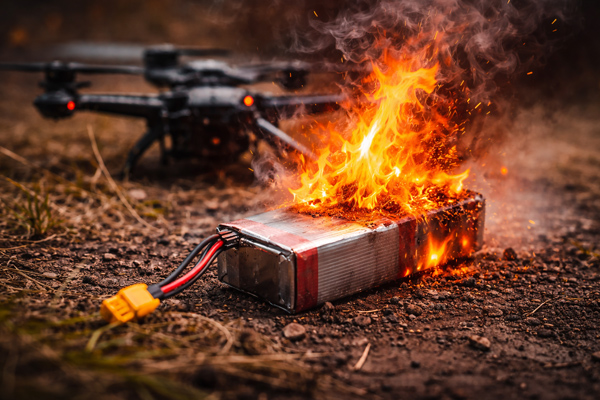
Lithium Battery Fire Practical Prevention MeasuresLithium battery fire risk is closely linked to environmental conditions, usage habits, and storage practices. Under normal operation, the risk remains very low, but certain situations significantly increase the likelihood of a failure. High ambient temperatures are one of the most important risk factors. Heat accelerates chemical reactions inside the battery, raises internal pressure, and reduces the safety margin of internal components. In hot environments or poorly ventilated spaces, batteries can reach temperatures that make thermal instability more likely.
Moisture and water exposure are another source of hazard. Although many li-ion battery packs are sealed, prolonged exposure to water or high humidity can still lead to corrosion, insulation breakdown, or internal short circuits over time. This is especially relevant for batteries used outdoors or stored in damp locations. Once internal insulation is compromised, even a small electrical fault can generate enough heat to cause damage or ignition.
It is also important to understand that not charging a lithium battery does not completely eliminate burning risk. While the risk is much lower when a battery is idle, there have been documented cases of batteries igniting during storage due to internal defects, prior damage, or long-term degradation. Fully discharging a lithium battery is not a safe solution either, as deep discharge can destabilize the cell chemistry and damage protective circuits, increasing long-term safety risks.
Effective prevention focuses on reducing these triggers. Li ion batteries should be kept away from high temperatures, direct sunlight, and heat sources. Storage and charging areas should be dry, well ventilated, and free of flammable materials. Charging should always be done with approved chargers and under supervision whenever possible.
From a broader safety perspective, many authorities strongly advise against bringing large lithium batteries, such as those used in electric bikes or scooters, into elevators or high-rise residential buildings. In confined spaces, a battery fire can spread rapidly, block escape routes, and endanger multiple occupants. For the same reason, storing large li ion battery packs indoors—especially in apartments or upper-floor residences—is widely discouraged. Using designated outdoor storage areas or professionally designed battery rooms significantly reduces risk.
Different Products, Different Fire Scenarios, and What People Should Do
Lithium batteries appear in many places—phones, scooters, motorcycles, RC cars, power tools, home storage systems, factories and recycling facilities, garages, and even aircraft and ships. When a battery incident happens, the safest response depends heavily on where it happens and how large the battery system is.
For small consumer devices (phone, RC car pack, laptop), the priority is usually rapid risk control: stop using the device, disconnect power if possible, and move away from people and flammable items if it can be done safely. In many real incidents, the most important decision is not “how to fight the fire,” but when to stop handling it and call emergency services. The National Fire Protection Association notes that for lithium-ion battery fires, water is an effective extinguishing and cooling medium, which is why many fire services focus on cooling to prevent re-ignition.
For large battery systems (EV cars, home storage, factory storage plants, recycling facilities, or large ebike/scooter packs), the response becomes very different. These events can escalate quickly and may involve toxic smoke, re-ignition risk, and high heat. In these settings, most individuals should treat it as an emergency: evacuate, alert others, and call the local emergency number rather than attempting to control it with household extinguishers. In aircraft cabins, procedures are also specialized: FAA research guidance emphasizes extinguishing visible flames first and then cooling the device with water or another non-alcoholic liquid to reduce re-ignition risk, but in practice passengers should always follow crew instructions.
A Tesla example: big brands still need safe use and prevention: even top-tier brands—Tesla included—cannot promise “absolute zero risk” for any lithium-based system. Premium design, testing, and controls reduce risk dramatically, but safe charging, correct storage, approved components, and compliance still matter. The practical takeaway is simple: don’t rely on brand alone—rely on safe behavior and compliant products.
Two authoritative data points that put the risk in perspective
Many real-world urban incidents are strongly linked to unsafe or non-compliant micromobility batteries, New York City reported that since 2019, lithium-ion batteries have been linked to 733 fires, 29 deaths, and 442 injuries—and importantly, many fires started when batteries were
not charging, which aligns with failure causes like damage, poor quality cells, or unsafe storage rather than “charging only.” This supports the point that a significant portion of incidents are associated with battery quality, aging, damage, and misuse, not simply normal use.
EV battery fires exist, but they can still be a low-probability event in national datasets: IEEE Spectrum, citing Sweden’s MSB fire statistics, reported that in 2022 there were 24 EV car fires in Sweden, representing about
0.004% of battery-powered cars there, while gasoline/diesel cars had a higher fire rate in the same dataset. This supports the balanced message: events can be serious, but in many markets they remain relatively rare—especially when products are regulated and compliant.
Lithium Battery Fire Suppression and Safety ProceduresExtinguishing a lithium battery fire requires a different approach from dealing with ordinary combustible fires. One key reason is that lithium battery combustion does not rely on external oxygen in the same way traditional burning do. During thermal runaway, the battery’s internal chemical reactions release heat and flammable gases—and in some cases oxygen—allowing the fire to continue even if airflow is limited or the flames appear temporarily suppressed. This makes lithium battery fires more difficult to fully extinguish and more prone to re-ignition.
Water is widely recognized as the most effective tool for dealing with lithium battery fires, not because it instantly “puts out” the reaction, but because it provides intensive cooling. Continuous cooling helps lower the battery temperature below the point where thermal runaway can sustain itself. Large amounts of water may be required, especially for electric vehicle batteries or large battery packs, and the goal is often containment and cooling rather than immediate extinguishment. In many professional response procedures, batteries may even be submerged to prevent re-ignition once the initial f is controlled.
Fire suppression systems designed for lithium batteries focus heavily on containment and heat management. Standard dry powder or CO₂ extinguishers can knock down visible flames, but they do not cool the battery sufficiently and cannot stop internal reactions on their own. As a result, these methods are considered temporary measures rather than complete solutions. Firefighters and trained responders typically combine initial flame suppression with prolonged cooling and monitoring.
Another critical hazard is toxic smoke and fumes. When lithium batteries burn, they can release harmful gases, including irritants and toxic compounds from the electrolyte and other internal materials. A sharp or chemical “burning smell” is often an early warning sign. Anyone near a lithium battery fire should avoid inhaling smoke, evacuate the area if possible, and ensure good ventilation. Personal protective equipment and respiratory protection are essential for professional responders.
Because of these risks, untrained individuals should not attempt to fight large li-ion battery fires themselves. The safest response is usually to evacuate, isolate the area, and contact emergency services, especially when dealing with electric vehicles, energy storage systems, or large ebike batteries. Lithium battery fire safety is less about aggressive firefighting and more about understanding the limits of suppression, managing heat, and protecting people from toxic exposure.
Conclusion
Lithium batteries do carry a real risk of fire, but that risk should be viewed in context. When properly designed, manufactured, and used according to guidelines, lithium batteries remain a safe and reliable power source for modern devices. Most serious incidents are not caused by normal operation, but by poor-quality products, lack of certification, improper charging, physical damage, or unsafe storage.
For users, the most effective prevention starts at the point of purchase. Choosing batteries from reputable brands and established manufacturers, rather than focusing only on the lowest price, greatly reduces safety risk. Combined with compliant use, correct charging habits, and appropriate storage, these practical decisions ensure that the benefits of lithium battery technology can be enjoyed while keeping fire risk as low as reasonably possible.


