Lithium and alkaline batteries are both common choices for everyday electronics, but they are not the same in performance, lifespan, voltage stability, weight, leakage risk, and cost. Alkaline batteries are usually cheaper and easy to find, while lithium batteries are often lighter, longer-lasting, and better suited for high-drain devices or extreme temperature conditions.
For readers comparing single-use battery options, lithium battery basics and applications can help explain why lithium chemistry performs differently from traditional alkaline cells. This article explains lithium vs alkaline batteries across chemistry, voltage, capacity, shelf life, safety, leakage, cold-weather performance, cost, and common applications.
Lithium vs Alkaline Batteries: Making a Fair ComparisonIn everyday consumer markets, AA, AAA, and 9V are by far the most widely used alkaline battery sizes. These formats cover the majority of household applications, so they provide the clearest basis for comparison. In this article, the discussion will focus on how lithium batteries perform when designed to replace these three common alkaline battery types, rather than comparing unrelated battery formats.
Alkaline batteries themselves fall into two categories: non-rechargeable (primary) and rechargeable alkaline batteries. While rechargeable alkaline cells do exist, they remain a niche product with limited cycle life. The dominant choice in the global market is still non-rechargeable alkaline batteries, and for that reason, the following comparison mainly looks at lithium batteries versus non-rechargeable alkaline batteries.
Another important point is voltage. Most lithium batteries have a nominal voltage of 3.7V, which is very different from the 1.5V output of standard alkaline cells. To address this, many lithium battery manufacturers now produce 1.5V lithium batteries specifically designed as direct replacements for alkaline AA, AAA, and 9V batteries. This article therefore focuses on comparing alkaline batteries with 1.5V lithium batteries, since these are the models intended for direct substitution.
Alkaline batteries are commonly used in devices such as digital cameras, laptops, smoke detectors, and flashlights. However, the type of device does not change the fundamental characteristics of the battery itself. For clarity and consistency, this comparison concentrates on battery performance, chemistry, and behavior, rather than differences between specific electronic products.
Lithium vs Alkaline Batteries: Core Performance and Practical Differences
Before comparing specific sizes like AA, AAA, or 9V, it’s important to understand the fundamental differences between lithium and alkaline batteries. These characteristics are determined by battery chemistry and internal design, not by how the batteries are labeled or sized, and they apply across all formats used in consumer and outdoor devices.
• Lifespan (Service Life & Shelf Life)
Lithium batteries generally provide a much longer usable life than alkaline batteries. Because their self-discharge rate is very low, many lithium cells are rated for up to 10–15 years of shelf life, meaning they can retain most of their capacity even after long-term storage. Alkaline batteries, by contrast, lose capacity more quickly over time and have a higher risk of leakage as they age.
• Voltage Stability and Discharge Performance
Lithium batteries deliver a flatter discharge curve, maintaining close to their nominal voltage for most of their usable life before a sharp drop near end of charge. Alkaline cells begin to decline in voltage soon after use, which means the device may experience reduced performance long before the battery is fully exhausted. This difference in voltage profile is one of the main reasons lithium batteries outperform alkaline in high-drain applications. A secondary but related factor is charge and discharge current capability. Lithium chemistry supports higher discharge currents with less internal heating and voltage sag, making it better suited for devices that draw significant current. Alkaline batteries, especially under continuous high current draw, can exhibit significant voltage drop and reduced effective capacity.
Temperature greatly affects how batteries perform, and lithium batteries generally handle a wider range of conditions better than alkaline cells. Alkaline batteries are known to work well around room temperature, but their performance can drop significantly as conditions become colder; their chemical reactions slow down, leading to reduced capacity and lower usable power in sub-freezing environments. In contrast, lithium batteries are designed to maintain more consistent performance over a broader temperature range, which makes them more reliable for outdoor use where weather can fluctuate widely. According to comparative testing, alkaline batteries perform best between roughly 20 °C and 25 °C, and their output declines more rapidly outside this narrow range, while lithium batteries maintain better performance across much wider conditions. This inherent difference in temperature resilience helps explain why lithium cells are often chosen for outdoor and high-drain applications where stable voltage and capacity matter in both cold and warm weather.
• Price and Internal Complexity
One of the clearest visible differences between lithium and alkaline batteries is cost. Lithium batteries are often several times more expensive per cell than alkaline cells, and part of this comes down to internal construction. Most lithium battery designs incorporate built-in protection circuitry to manage charging, prevent over-discharge, and ensure safety. Lithium cells also require internal regulation because their nominal voltage (about 3.7V) is inherently higher than the 1.5V nominal of alkaline; for many consumer replacements (such as 1.5V lithium AA or AAA), manufacturers include a step-down (buck) converter + protection board. In well-engineered products, this circuitry is integrated onto a single compact board, but it still adds cost in terms of components and assembly. By contrast, alkaline cells are chemically simpler and do not require this extra circuitry, which keeps manufacturing cost low. When you compare a 1.5V lithium battery designed to replace alkaline vs a traditional alkaline cell, the price difference reflects not only the more advanced chemistry but also the added protection and voltage conversion electronics embedded in the lithium design. This is why lithium-based replacement cells often cost multiple times what a pack of equivalent alkaline batteries costs in retail.
• Safety Characteristics
Lithium batteries and alkaline batteries fail in notably different ways. Alkaline cells can suffer from leakage as they age, especially if left in devices after discharge; the electrolyte can escape and damage the device. Modern lithium cells are typically sealed with built-in protection circuits that minimize these risks and provide more consistent performance throughout their usable life.
• Environmental Impact
From an environmental perspective, lithium battery systems—especially rechargeable designs—can reduce waste because they require fewer replacements over their lifetime. Alkaline batteries are mostly single-use and are discarded after they are depleted, contributing to more frequent waste and greater materials consumption. While recycling infrastructure varies by region, longer service life generally translates into a lower overall environmental footprint for lithium systems versus alkaline.
AA Batteries: Lithium AA vs Alkaline AA
In the AA format, the biggest differences between lithium and alkaline batteries are usable capacity and weight. Alkaline AA batteries often show a higher nominal mAh rating under very light loads, but their effective capacity drops quickly as current draw increases and voltage falls. Lithium AA batteries, especially modern 1.5V lithium replacements, deliver a much more stable voltage and can provide a larger usable capacity in real-world devices, particularly those that draw moderate to high current. When it comes to weight, lithium AA batteries are significantly lighter than alkaline AA batteries. Lithium chemistry stores more energy per unit mass, which means less material is needed to deliver the same or better performance. In devices that use multiple AA cells, the weight reduction is noticeable and improves portability and handling.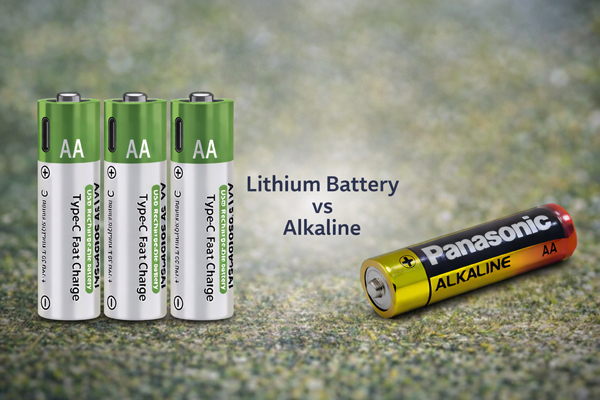
AAA Batteries: Lithium AAA vs Alkaline AAA
The same capacity and weight trends apply to AAA batteries, but they are even more noticeable due to the smaller size. Alkaline AAA batteries have limited capacity and are highly sensitive to load, meaning usable capacity can drop sharply in higher-drain applications. Lithium AAA batteries maintain output voltage more effectively, allowing them to deliver a higher proportion of their stored energy before performance declines. In terms of weight, lithium AAA batteries are much lighter than alkaline AAA batteries. This is especially beneficial for compact or handheld devices that rely on multiple AAA cells, where reducing overall weight improves balance and user comfort without sacrificing runtime.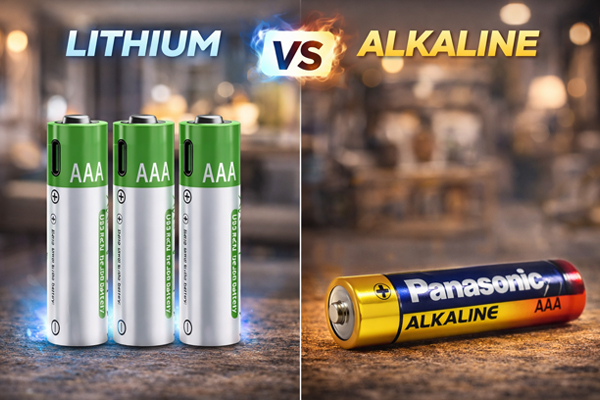
9V Batteries: Lithium 9V vs Alkaline 9V
For 9V batteries, the differences in capacity and weight are more pronounced. Alkaline 9V batteries have relatively low usable capacity and experience a steady voltage drop during discharge, which can limit runtime in devices that require stable power. Lithium 9V batteries are typically constructed using multiple lithium cells with internal regulation, allowing them to maintain consistent output and deliver greater usable capacity over their service life. In terms of weight, lithium 9V batteries are generally lighter than alkaline 9V batteries while offering better performance. Alkaline 9V batteries contain multiple small alkaline cells internally, which adds weight without providing proportional energy output. Lithium 9V designs achieve higher energy density, making them easier to handle and better suited for applications where long service life and reduced weight are important. 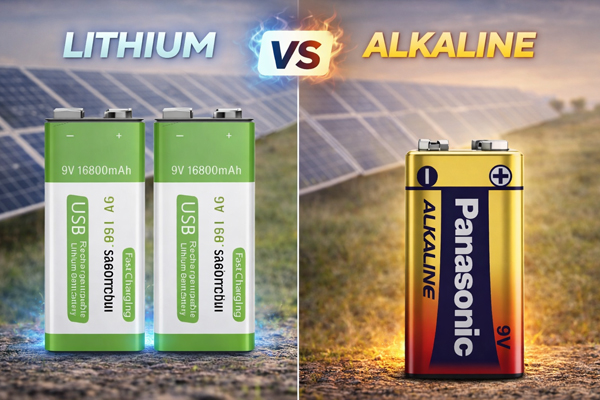
Real-world performance comparisons between lithium and alkaline AA batteries show clear differences when both are subjected to the same load. Independent engineers have conducted discharge tests on AA cells at various current draws to evaluate capacity and voltage behavior under load.
In one published test, AA alkaline batteries from multiple brands were tested at different discharge rates (100 mA, 500 mA, 1 A, etc.). For a high current load (2 A), an alkaline AA cell typically delivered around 0.7–1.18 Ah before dropping below a usable voltage, whereas a similarly rated lithium metal AA battery (non-rechargeable lithium iron disulfide chemistry) delivered about 2.8 Ah under the same conditions, maintaining higher voltage and longer runtime. This illustrates that lithium cells can sustain higher current loads and provide significantly greater usable capacity in real testing compared with alkaline under demanding discharge conditions.
Example test data from actual measurements:
• Alkaline AA @ 2 A load: ~0.7–1.18 Ah
• Lithium AA @ 2 A load: ~2.8 Ah
These measured results highlight two practical advantages of lithium cells in performance-intensive applications:
• Higher usable capacity under load
• Better voltage stability throughout discharge
Such real discharge results are especially relevant for devices that draw current continuously—such as flashlights, portable electronics, and high-drain outdoor equipment—where alkaline batteries tend to lose effective capacity quickly, while lithium maintains usable energy longer.
Conclusion
There is no doubt that lithium batteries offer clear technical advantages over alkaline batteries, especially in terms of power stability, weight, temperature performance, and overall lifespan. However, these benefits come with a noticeably higher price. Because of this cost difference, lithium batteries cannot fully replace alkaline batteries in every application. In many low-drain electronic products, batteries may only need to be replaced once every six months or even once a year, and in these cases rechargeable lithium solutions do not always provide a meaningful practical advantage.
The choice ultimately depends on how the device is used. For products that demand higher performance, consistent output, or operate in challenging environments, lithium batteries are the preferred option. On the other hand, for devices with low power consumption, infrequent battery changes, and strong price sensitivity, alkaline batteries remain a sensible and cost-effective choice. Understanding this balance helps users select the right battery for their needs rather than assuming one chemistry is always better than the other.


