✅
Global Race in Lithium Battery Technology: America, China, and the EU✅
EV Battery Technology: How Tesla, BYD, Toyota and GM Are Pushing Li-ion to the Next Level✅
Next-Generation Battery Technologies: Many Competitors, but Solid-State Lithium Still Leads✅
Battery Storage Technology for Solar: How New Batteries Are Transforming Solar Power✅
Battery Charging Technology: How New Fast-Charging Systems Are Transforming Lithium Batteries
✅ AGM Battery Technology and Exide: Legacy Lead-Acid at a Turning Point✅
ConclusionOver the past decade—but especially in the last five years—the explosive growth of electric vehicles has pushed battery technology into a historic turning point. What used to be a niche industrial sector has become one of the world’s most competitive, heavily funded, and strategically important industries. Global EV sales have grown from just over 2 million units in 2019 to more than 14 million in 2023, and this surge has created unprecedented pressure for manufacturers to deliver safer, cheaper, and more efficient batteries. Governments are pouring billions into gigafactories, automakers are redesigning entire supply chains, and research labs are releasing constant new battery technology updates as the race intensifies.
These developments raise a central question: Will lithium-ion continue to lead the next generation of energy storage, or will emerging chemistries overtake it? Today, lithium-ion remains the undisputed backbone of electric mobility and renewable storage, with hundreds of gigawatt-hours of annual production capacity and a mature ecosystem spanning mining, refining, and manufacturing. LFP batteries have become the preferred choice for cost-sensitive EVs and home energy storage, while NMC and high-nickel variants dominate long-range electric cars. Companies like CATL, Tesla, BYD, and Panasonic are scaling production at a global pace never seen in battery history.
At the same time, the future is no longer guaranteed for lithium alone. Solid-state batteries promise dramatic gains in energy density and safety; sodium-ion tech is rapidly emerging as a low-cost alternative for stationary storage; lithium-sulfur research aims to break energy-density limits; and graphene-enhanced electrodes are pushing charging performance further. These innovations show that the battery technology of the future may not be a single chemistry but a competitive landscape shaped by multiple candidates fighting for dominance.
Whether lithium-ion will remain the world’s most competitive technology—or eventually be replaced by a breakthrough in next generation batteries—has become one of the defining questions in global energy, transportation, and industrial strategy.
Global Race in Lithium Battery Technology: America, China, and the EU
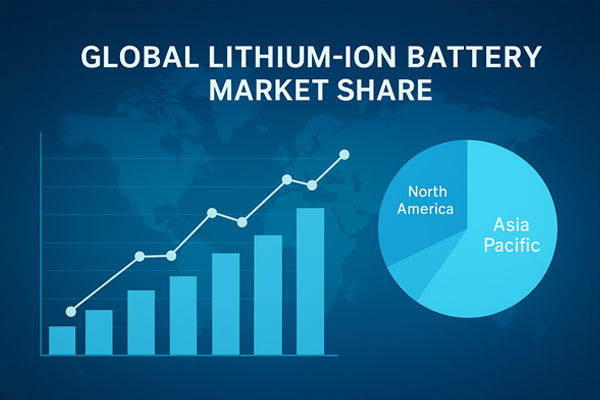
Around the world, lithium ion battery technology has become a strategic industry, and the U.S., China, and the EU are all trying to lead the next generation of battery technology of the future. In the United States, a whole policy toolbox has been built around batteries and clean manufacturing. The Inflation Reduction Act (IRA) introduced generous production incentives such as the Section 45X Advanced Manufacturing Production Credit, which pays manufacturers for each kWh of battery cells and modules produced in the U.S., as well as for critical minerals like lithium, nickel, and cobalt used in EV batteries. Together with consumer credits for clean vehicles and earlier laws like the Bipartisan Infrastructure Law (which funds battery R&D, recycling, and demonstration projects), these measures are designed to pull gigafactories, cathode/anode plants, and recycling facilities back onto American soil and reduce dependence on imported cells. Under the Biden administration, companies have already announced over $90 billion in new clean energy manufacturing investment, a large share of which is tied to batteries and EV supply chains.
China, however, still holds a commanding lead in existing li-ion manufacturing capacity—and it is not slowing down. Under its 14th Five-Year Plan for Modern Energy System and its dedicated plans for “new energy storage,” Beijing has labeled advanced batteries as a strategic pillar for both energy security and its dual-carbon goals (carbon peaking by 2030 and neutrality by 2060). Policy documents from the National Energy Administration target massive deployment of new energy storage, including novel lithium-ion, sodium-ion, and other chemistries; by late 2025, China’s new energy storage capacity had already exceeded 100 GW, more than 30 times the level at the end of the 13th Five-Year Plan and over 40% of the global total. Earlier guidance also set a goal to cut battery storage costs by about 30% by 2025, pushing companies to accelerate innovation in both lithium and next-gen tech. This policy push keeps China at the center of new battery technology updates and news, while positioning Chinese firms to dominate exports of cells, materials, and complete battery systems.
The European Union is responding with a different strategy: instead of focusing only on volume, it is trying to build a sustainable, regulated and resilient battery value chain. The new EU Batteries Regulation (2023/1542) replaces the old Batteries Directive and covers the entire life cycle of batteries—from raw-material sourcing to production, labeling, performance, durability, recycled content, and end-of-life management. It introduces requirements for carbon-footprint declarations, minimum levels of recycled materials, and a digital battery passport that will become mandatory for many batteries placed on the EU market. Alongside this, the Net-Zero Industry Act and the Critical Raw Materials Act aim to accelerate European battery factory projects while securing supplies of lithium, nickel, cobalt and other key materials—setting targets for domestic mining, processing, and recycling shares by 2030.
Taken together, these policies show three different approaches to the same goal:
• America is using powerful tax credits and subsidies to rebuild domestic li-ion battery manufacturing.
• China is scaling production and deployment at record speed, using five-year plans and targeted industry guidance to keep its lead.
• The EU is building a tightly regulated, sustainability-driven battery ecosystem backed by industrial and raw-materials policy.
All three understand that whoever leads in lithium and next-generation battery tech will gain a long-term advantage in EVs, energy storage, and the broader clean-energy economy.
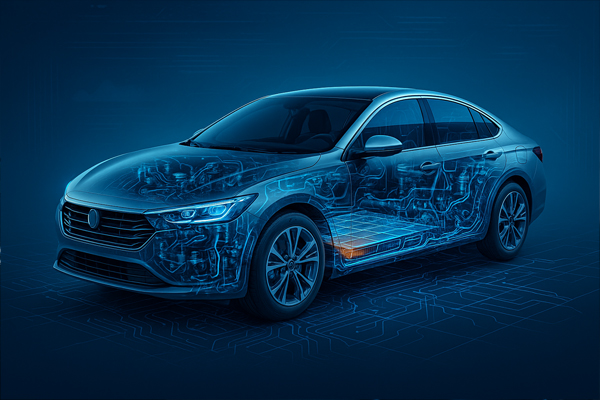
EV Battery Technology: How Tesla, BYD, Toyota and GM Are Pushing Li-ion to the Next LevelModern EV battery technology is built almost entirely on advanced lithium-ion chemistries, and the big electric car makers are racing to squeeze out more range, faster charging and better sustainability. Tesla has focused on high-energy cylindrical cells and the new 4680 format, which the company now calls its cheapest cell per kWh after finally scaling production for models like the Model Y, with future applications planned across the Model 3, Model S and Model X lineup. These batteries integrate into the vehicle structure to reduce weight and cost, and sit at the “latest / next-gen” end of today’s commercial EV lithium battery designs.
In China, BYD has become a leading EV and battery manufacturer with its LFP-based Blade Battery, recognized as one of the world’s safest EV packs and designed for long cycle life, strong structural integrity and sustainable, cobalt-free chemistry. The newer Blade 2.0 versions push higher energy density and support thousands of charging cycles, making BYD cells some of the most promising “best value” EV batteries in mass production. Toyota, long known for hybrids, is now investing heavily in solid-state lithium batteries and has announced plans—together with partners like Sumitomo Metal and Idemitsu—to launch solid-state EVs around 2027–2028, promising longer life and much faster charging than today’s packs. GM, meanwhile, is rolling out its modular Ultium platform, using large-format NCMA and NMC pouch cells and developing a new manganese-rich (LMR) chemistry that targets up to 400 miles of range with higher energy density and lower cost, positioning its next-generation Ultium packs as an advanced and scalable solution for future electric vehicles.
Taken together, these EV car strategies show how Tesla, BYD, Toyota and GM are all betting on lithium-based batteries—but each with a different mix of LFP, NMC, structural packs, hybrids of old and new chemistries, and experimental solid-state designs. The “newest” and “most promising” EV batteries are not a single breakthrough cell, but a fast-moving family of advanced lithium technologies competing to become the leading, sustainable standard for the next generation of electric vehicles.
Next-Generation Battery Technologies: Many Competitors, but Solid-State Lithium Still Leads
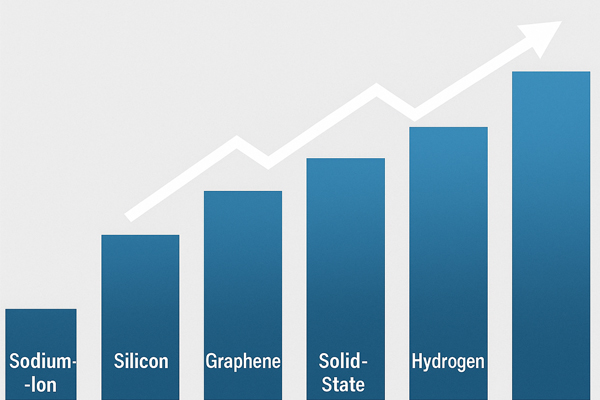
• Solid-State Lithium Batteries — The Strongest Next-Gen Contender
Solid-state battery technology replaces the liquid electrolyte inside today’s li-ion cells with a solid ceramic or polymer layer. This design greatly reduces fire risk while enabling higher energy density, making solid-state one of the most promising next-generation EV battery technologies. According to Toyota’s latest development roadmap, solid-state EV packs could deliver over 600 miles of range and recharge significantly faster than current lithium-ion batteries—if manufacturing hurdles can be solved.
• Sodium-Ion (“Salt”) Batteries — Affordable and Stable
Sodium-ion batteries are gaining attention because sodium is cheap and abundant. They offer good low-temperature performance and strong safety, making them ideal for stationary storage and entry-level EVs. However, their energy density remains lower than lithium-ion systems, and they are unlikely to replace high-performance EV batteries in the near future.
• Graphene and Diamond Concepts — High Potential, Early Stage
Graphene battery technology typically enhances existing li-ion systems by improving conductivity and heat management, which can allow faster charging and higher power output. Diamond-based “nuclear” concepts target ultra-long-life micro-power sources, not full-size EV batteries. Both remain interesting research directions, but neither is ready for mass-market applications.
• Lithium-Sulfur Batteries — Extremely High Density, Short Lifespan
Lithium-sulfur batteries offer exceptional theoretical energy density, but real-world performance is limited by fast capacity fade. The polysulfide shuttle effect and poor electrode stability remain major challenges. While promising for aviation and lightweight applications, Li-S technology still needs breakthroughs before it can compete with commercial lithium-ion cells.
• LFP (LiFePO₄) and NMC — Today’s Reliable Workhorses
In current lithium battery technology, LFP and NMC remain the dominant chemistries. LFP (LiFePO₄) is known for safety, long cycle life and stability, making it ideal for solar storage, buses and mass-market EVs. NMC offers higher energy density and better performance for long-range electric vehicles. Both are mature and scalable, but they represent evolutionary improvements—not the revolutionary leap the industry is seeking.
• Hydrogen, Aluminum and Silicon-Enhanced Cells — Valuable But Niche
Silicon-rich anodes are already improving fast-charging performance in premium li-ion cells. Hydrogen fuel cells excel in long-distance transport but are not direct replacements for rechargeable batteries. Aluminum-based systems show potential for low-cost storage but remain early in development.
Why Solid-State Still Looks Like the Most Promising “Future Battery”
When comparing energy density, charging speed, safety and long-term durability, solid-state lithium remains the only next-generation battery technology that can realistically surpass today’s li-ion systems while still fitting into EV manufacturing requirements. Most global automakers—including Toyota, Nissan, BMW, Hyundai, and several U.S. and Chinese startups—are investing heavily in solid-state development, reinforcing its position as the leading candidate for the next major battery breakthrough.
Battery Storage Technology for Solar: How New Batteries Are Transforming Solar Power
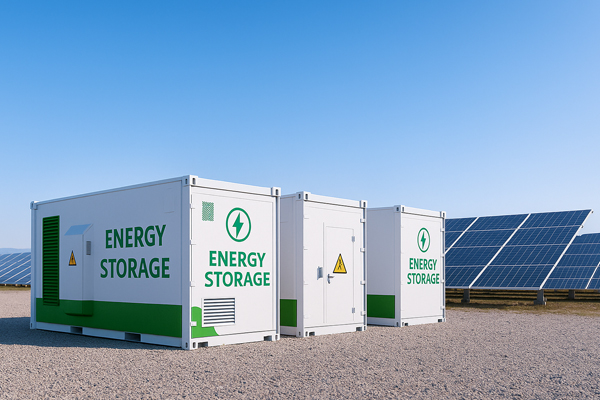
Modern battery storage technology has become just as important as solar panels themselves in building a truly sustainable energy system. Instead of simply sending excess solar power back to the grid at noon and buying electricity again in the evening, homeowners and businesses now use qualified solar-plus-storage systems to store daytime energy and release it when the sun goes down. Thanks to the latest lithium-ion and LFP storage batteries, solar installations can smooth out daily fluctuations, provide backup power, and even participate in grid services like peak-shaving and frequency support. Recent industry data shows that solar-plus-storage is now one of the most competitive forms of new electricity capacity worldwide, with global battery energy storage deployments growing by more than 50% in 2024 as utilities and households rush to pair batteries with PV systems.
Looking ahead, new battery technology—from safer, longer-life LFP and sodium-ion batteries to future solid-state systems—is expected to push solar storage even further. Higher energy density and longer cycle life will allow smaller, more efficient batteries to store more solar energy for longer periods, while improved durability reduces lifetime cost. In practical terms, the newest generation of solar storage batteries is turning rooftop PV and commercial solar plants into reliable, dispatchable power sources, making clean solar electricity not only renewable but also predictable and truly 24/7.
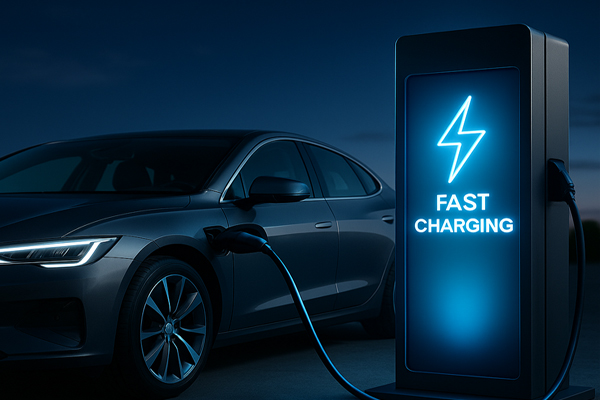
Battery Charging Technology: How New Fast-Charging Systems Are Transforming Lithium Batteries
Modern battery charging technology has advanced rapidly in recent years, especially as electric vehicles and high-power electronics push manufacturers to shorten charging times without damaging the battery. The newest systems rely on intelligent thermal management, high-efficiency power electronics, and smart BMS algorithms that monitor temperature, voltage, and internal resistance in real time. These upgrades allow lithium-ion batteries to safely accept higher currents, enabling today’s fast charging capabilities that can bring an EV from low state-of-charge to 80% in minutes instead of hours.
In consumer electronics and EVs alike, brands now highlight features such as quick charging or rapid charge, but behind these marketing terms is the same engineering principle—delivering more power in a controlled way while limiting heat generation. Innovations like silicon-enhanced anodes, improved electrolytes, and better cell tab designs help reduce resistance and improve charge acceptance. As new charging standards continue to evolve, the goal is consistent across the industry: make charging safer, faster, and more efficient without sacrificing battery lifespan.
AGM Battery Technology and Exide: Legacy Lead-Acid at a Turning Point
Although AGM battery technology and other lead-acid designs are gradually being pushed aside by cleaner, higher-performance li-ion batteries, they are far from dead. Lead-acid still dominates many starter, backup and industrial applications because it is cheap, robust, and supported by a fully mature recycling ecosystem. One recent global market study found that lead-acid batteries still accounted for about 40.3% of the entire battery market in 2024, largely thanks to automotive SLI and backup power demand—even as lithium-ion rapidly expands its share. You can see this trend in more detail in this global battery market by chemistry report.
At the same time, the pressure from lithium battery technology is undeniable: li-ion and LFP packs are now the default choice for EVs, home storage and many new industrial systems, steadily eating into the growth space that used to belong to lead-acid. That’s why old-guard manufacturers like Exide are standing at a historical crossroads. On one hand, they continue to optimize traditional lead-acid and AGM products with better grids, improved charge acceptance and longer cycle life to defend their core markets. On the other hand, they are investing in their own lithium-ion lines, new factories and advanced battery management electronics so they can participate in the next generation of energy storage rather than be displaced by it. In short, lead-acid giants are using their price advantage and manufacturing experience to hold on to a shrinking but still huge market, while cautiously stepping into the lithium ion era to survive the long-term transition.
Conclusion
The evolution of battery technology has entered a defining era—one shaped by rapid innovation, geopolitical competition, and the accelerating shift toward electrification. While dozens of chemistries are being explored, from sodium-ion and lithium-sulfur to graphene-enhanced and solid-state systems, the industry’s trajectory remains both dynamic and unpredictable. Each tech carries its own promise and its own limitations, and none has yet emerged as a universal solution for every application.
What is clear, however, is that lithium batteries have become the foundation upon which this new energy landscape is being built. Their maturity, scalability, and proven performance allow manufacturers, automakers, and energy providers to advance confidently while still keeping an eye on the breakthroughs that could redefine the field. Rather than a single tech replacing all others, the future will likely be shaped by a diverse mix of solutions—each optimized for safety, cost, lifespan, or energy density depending on the use case.
As research accelerates and global investment continues to surge, the next decade will determine which technologies move from laboratory potential to real-world dominance. Whether lithium remains the central pillar or ultimately shares the stage with new contenders, one thing is certain: battery technology will be one of the most influential forces shaping the world’s transition to cleaner, smarter, and more resilient energy systems.


