✅ Lithium Car Battery Lifespan • Key Factors • How to Extend Battery Life • Do You Really Need to Worry About Battery Lifespan? • When Lifespan Really Matters✅ Lithium vs Lead-Acid Car Battery (Including AGM)✅ Lithium Car Battery Disposal & Recycling • How to Dispose and Recycle • Where to Recycle • What Not to Do✅ Lithium Car Battery Safety • Causes of Lithium Car Battery Fires and Explosions •
How Safe Are Lithium Car Batteries in Practice • Fire Extinguishing Methods • Should You Be Worried About Safety✅ Conclusion✅ FAQ Are car batteries lithium? Can I use a lithium battery in my car? Do electric cars use lithium batteries? Do hybrid cars have lithium batteries? How long do lithium car batteries last? Are lithium car batteries better?In modern vehicles, lithium batteries are used in two main roles, but their applications and market trends are evolving rapidly.
- EV traction batteries are used in electric vehicles (EVs) and hybrid vehicles to power the drivetrain. Today, almost all new energy vehicles rely on lithium batteries for propulsion.
- 12V car batteries are used for starting, lighting, and auxiliary systems. Traditionally, these have been lead-acid batteries, including types such as AGM and flooded batteries. However, lithium 12V batteries are increasingly being adopted as replacements.
In hybrid vehicles, the main driving battery is already
lithium-based, and the auxiliary battery is also gradually shifting toward lithium in newer models.
From a market perspective, lead-acid car batteries are being rapidly replaced by lithium batteries, especially in applications where weight, lifespan, and efficiency matter. This shift is not temporary — it reflects a broader, long-term trend driven by technological advancement and performance advantages.
For most users, this means that lithium batteries are becoming the standard solution for both propulsion and auxiliary power systems in modern vehicles.
Lithium Car Battery Lifespan
Lithium car batteries typically last between 8 to 15 years, depending on usage, battery type, and environmental conditions. In terms of mileage, most modern
lithium batteries can support around 150,000 to 300,000 km (100,000 to 200,000 miles) before significant degradation occurs.
The lifespan also varies by chemistry:
- NMC / NCA batteries: around 1,000–2,000 cycles
- LiFePO4 batteries: up to 2,000–4,000 cycles, with longer overall lifespan
In real-world use, most lithium car batteries still retain 70%–90% of their original capacity even after many years of driving.
• Key Factors
Several key factors influence how long a lithium car battery will last:
Factors that reduce lifespan
- Frequent fast charging (DC charging)
- Keeping the battery at 100% for long periods
- High temperatures (hot climates or parking in the sun)
- Regular deep discharges (near 0%)
- Poor battery management or lack of thermal control
• How to extend battery life
- Keep daily charge between 20%–80%
- Use slow/AC charging whenever possible
- Avoid prolonged exposure to heat
- Store the vehicle at 40–60% charge if not used for long periods
- Choose batteries with a reliable BMS (Battery Management System)
With proper care, lithium batteries can significantly exceed their expected lifespan.
• Do You Really Need to Worry About Battery Lifespan?
This is one of the biggest concerns for buyers — but in reality, most drivers don’t need to worry about lithium battery lifespan at all.
For a typical household car, average driving is around:
- 1,000–1,500 km per month
- 12,000–18,000 km per year
At this rate, even a conservative battery lifespan of 200,000 km translates to 10–15 years of use, which already exceeds how long most people keep a car.
In practice:
- Most users replace the vehicle before the battery reaches its theoretical end of life
- Lithium batteries don’t suddenly fail — they gradually lose capacity (range decreases), but remain usable
- Even at 70–80% capacity, the car is still perfectly functional for daily driving
• When Lifespan Really Matters
There are cases where battery lifespan becomes critical:
- Commercial vehicles (taxis, ride-sharing, delivery fleets)
- High daily mileage (e.g. 200–400 km/day)
In these scenarios, battery degradation happens faster due to intensive use, making lifespan a key cost factor.
For most personal vehicles, lithium car batteries are more than durable enough. They are designed to outlast typical ownership periods, and while range may gradually decrease over time, complete battery failure is rare under normal use.
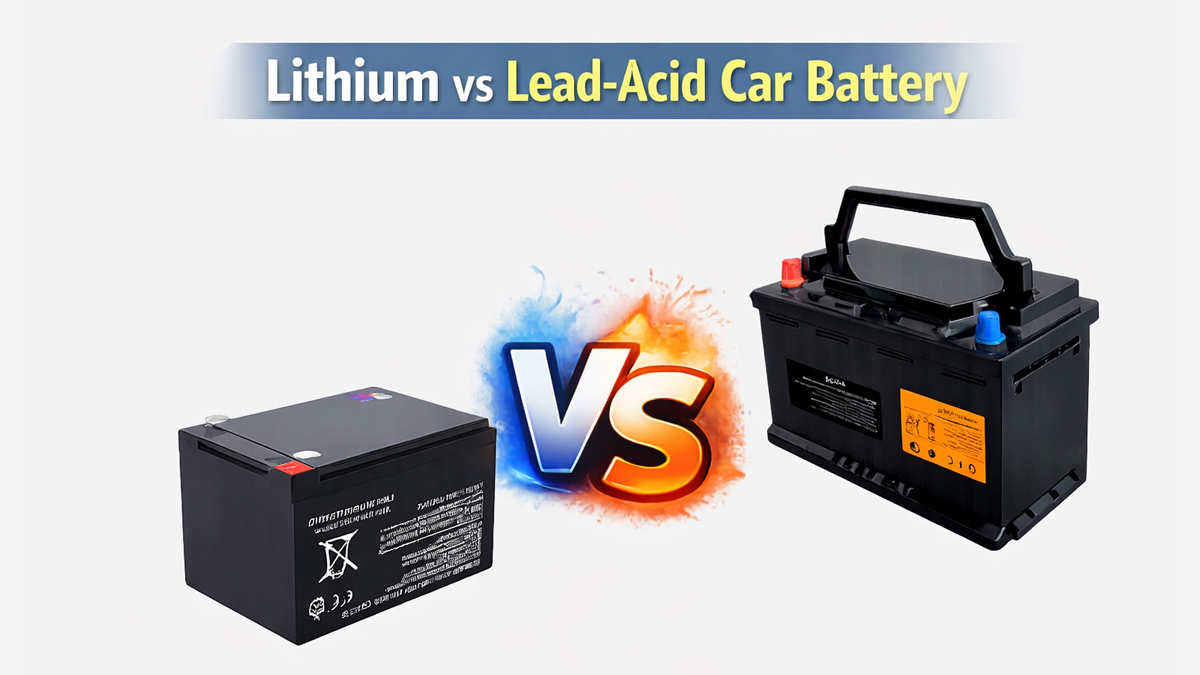
Lithium vs Lead-Acid Car Battery (Including AGM)
When comparing lithium and lead-acid batteries in automotive applications, it is important to clarify that this comparison mainly վերաբers to 12V starter batteries, not the main traction batteries used in electric vehicles.
In modern EVs and hybrid vehicles, the driving (traction) battery is almost always lithium-based, so there is no direct comparison in that context. However, for traditional cars and auxiliary systems, the 12V battery can still be either lead-acid (including AGM) or lithium, which is where this comparison becomes relevant.
Below is a clear side-by-side comparison of lithium and lead-acid (including AGM) starter batteries:
| Feature |
Lithium Battery |
Lead-Acid Battery (Including AGM) |
| Lifespan |
8–15 years |
3–5 years |
| Weight |
50–70% lighter |
Heavier and bulkier |
| Charging Speed |
Fast charging |
Slower charging (AGM slightly better than flooded) |
| Charging Efficiency |
High (90–95%) |
Lower (70–85%) |
| Depth of Discharge (DoD) |
80–100% usable capacity |
50–60% usable capacity |
| Maintenance |
Maintenance-free |
May require replacement more often |
| Performance in Cold Weather |
Can be affected without heating |
More stable in cold conditions |
| Safety |
Requires BMS protection |
Mature and stable technology |
| Upfront Cost |
Higher |
Lower |
| Long-Term Cost |
Lower over time |
Higher due to shorter lifespan |
While AGM batteries represent an improvement over traditional lead-acid designs, they still cannot match lithium batteries in terms of lifespan, weight, and overall efficiency.
For most modern applications, lithium starter batteries offer better long-term value and performance, while lead-acid and AGM batteries remain a more affordable option for users with lower upfront budget requirements.
Lithium Car Battery Disposal & RecyclingLithium car batteries should never be thrown away in regular trash. They are recyclable, and in many regions it is legally required to dispose of them through proper recycling channels. Lithium batteries contain valuable materials such as lithium, nickel, cobalt, and copper, which can be recovered and reused. Improper disposal can lead to fire risks, environmental damage, and toxic leakage, so responsible recycling is essential.
• How to Dispose and Recycle
Proper disposal involves handling the battery safely and sending it to certified recycling facilities.
Safe disposal steps:
- Turn off and disconnect the battery properly
- Avoid damaging or puncturing the battery casing
- Store the battery in a cool, dry, non-flammable area
- Place it in a non-conductive container during transport
- Deliver it to an authorized recycling center or collection point
For damaged or swollen batteries:
- Do not attempt to use or repair
- Keep away from heat and flammable materials
- Contact a professional recycling service
• Where to Recycle
You can recycle lithium car batteries through several common channels.
Recycling options:
- Certified battery recycling centers
- Local hazardous waste collection facilities
- Automotive repair shops or battery retailers
- EV manufacturers or dealerships with take-back programs
In many countries, including the United States, there are established systems for handling lithium batteries safely, making recycling accessible.
• What Not to Do
Improper handling of lithium batteries can be dangerous. Never:
- Throw lithium batteries into household trash
- Burn or incinerate the battery
- Disassemble or puncture the battery
- Store damaged batteries indoors or near flammable materials
- Mix lithium batteries with metal objects, which can cause short circuits
If unsure, treat the battery as hazardous material and seek professional handling.
Lithium car batteries are highly recyclable and contain valuable materials, but they must be handled correctly. By following proper disposal steps and using certified recycling channels, you can reduce safety risks, protect the environment, and support sustainable battery reuse.
Lithium Car Battery SafetyLithium car batteries can be divided into two main types, and their safety characteristics are slightly different:
- EV traction batteries (used in electric and hybrid vehicles)
- 12V lithium starter batteries (used for engine starting or auxiliary power)
Because of the nature of lithium chemistry, many people worry about risks such as fire or explosion. However, in real-world use, serious safety incidents are relatively rare, especially with modern battery management systems and proper design.
• Causes of Lithium Car Battery Fires and Explosions
Most safety issues are not random — they are usually caused by specific conditions:
- Thermal runaway due to overheating
- Physical damage (crash, puncture, or internal short circuit)
- Overcharging or poor charging systems
- Manufacturing defects or low-quality cells
- Exposure to extreme heat for long periods
In EVs, large battery packs are equipped with advanced BMS and thermal management systems, which significantly reduce these risks. For 12V lithium batteries, quality and built-in protection circuits play a critical role.
• How Safe Are Lithium Car Batteries in Practice
In practice, lithium car batteries are generally safe when used correctly.
- EV batteries go through strict testing, including crash, heat, and impact resistance
- Built-in systems monitor temperature, voltage, and current in real time
- Many incidents reported online are rare cases or extreme situations, not typical usage
Compared to traditional lead-acid batteries, lithium batteries actually offer advantages such as better stability, lower leakage risk, and longer service life, although they require more advanced protection systems.
• Fire Extinguishing Methods
If a lithium car battery catches fire, your first priority is always personal safety. Move away immediately, keep a safe distance, and call emergency services. Do not attempt to approach the vehicle if you see flames, heavy smoke, or hear popping sounds, as lithium batteries can enter thermal runaway and reignite.
If the fire is still small and it is safe to act, you can try to control it using the right method:
- Use a Class D fire extinguisher (best for metal-related fires)
- A Class ABC extinguisher can help suppress surrounding flames
- Avoid direct contact with the battery or opening the battery casing
For larger fires, especially in electric vehicles, large amounts of water may be used to cool the battery and prevent fire spread, but this should typically be handled by trained professionals.
Because lithium battery fires can reignite even after being extinguished, never assume the fire is fully out. Always maintain a safe distance and let emergency responders take over as soon as possible.
In all situations, protecting yourself and others is far more important than trying to save the vehicle.
• Should You Be Worried About Safety
For most drivers, safety is not a major concern as long as the battery is properly installed and used within normal conditions.
- Modern lithium batteries are designed with multiple safety layers
- Failures are usually linked to misuse, damage, or low-quality products
- Reputable brands and certified batteries are significantly safer
In everyday use, lithium car batteries are considered reliable, and the risk of fire or explosion is very low under normal conditions.
ConclusionLithium car batteries are becoming the new standard in modern vehicles, offering longer lifespan, lighter weight, and higher efficiency compared to traditional lead-acid options. While concerns about safety, cost, and durability are common, real-world use shows that lithium batteries are generally reliable and designed to last well beyond typical vehicle ownership.
For most drivers, battery lifespan is more than sufficient, and performance remains stable even as capacity gradually decreases over time. With proper charging, basic maintenance, and safe handling, lithium car batteries can deliver consistent and dependable performance for years.
As automotive technology continues to evolve, the shift from lead-acid to lithium is accelerating, making lithium batteries an increasingly practical and long-term solution for both propulsion and 12V applications.
FAQ
Are car batteries lithium?
Not all car batteries are lithium. Traditional vehicles typically use lead-acid batteries (including AGM), while modern electric vehicles use lithium batteries. Some newer cars are also starting to use lithium for 12V systems.
Can I use a lithium battery in my car?
Yes, you can use a lithium battery in your car if it is compatible with your vehicle’s electrical system. Many 12V lithium batteries are designed as direct replacements for lead-acid batteries, but it’s important to check voltage, size, and charging compatibility.
Do electric cars use lithium batteries?
Yes, almost all electric cars use lithium batteries as their main traction battery. These batteries power the vehicle and provide high energy density and long lifespan.
Do hybrid cars have lithium batteries?
Yes, most modern hybrid cars use lithium batteries for the main drive system. Some hybrids may still use lead-acid or AGM batteries for auxiliary functions, but lithium is increasingly common.
How long do lithium car batteries last?
Lithium car batteries typically last 8 to 15 years or around 150,000 to 300,000 km, depending on usage and battery type. In most cases, they outlast typical vehicle ownership.
Are lithium car batteries better?
In many cases, yes. Lithium batteries offer longer lifespan, lighter weight, and higher efficiency compared to lead-acid batteries. However, they have a higher upfront cost and may require compatible charging systems.


