In this article, we’ll walk through the most common ebike battery problems, how to test them using simple tools like a multimeter, and when it makes sense to repair or replace the battery. From BMS failures to cell imbalance and aging, you’ll learn how to identify the real issue and choose the safest and most effective solution.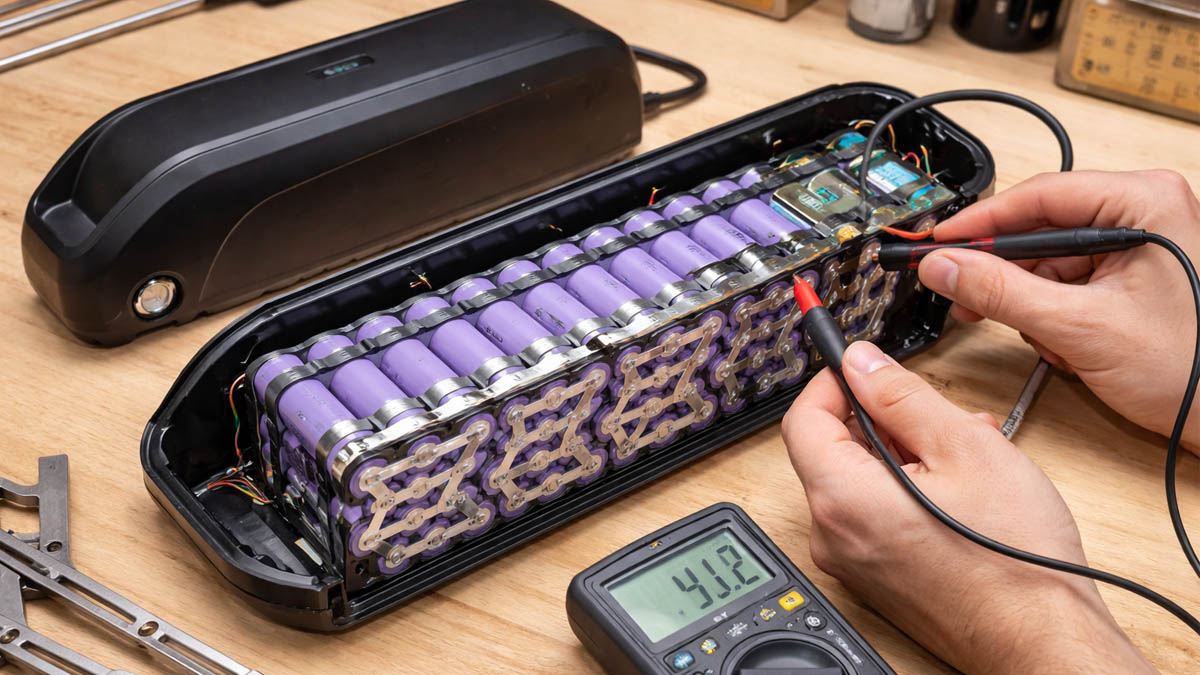
Not Working Or Not Turning On
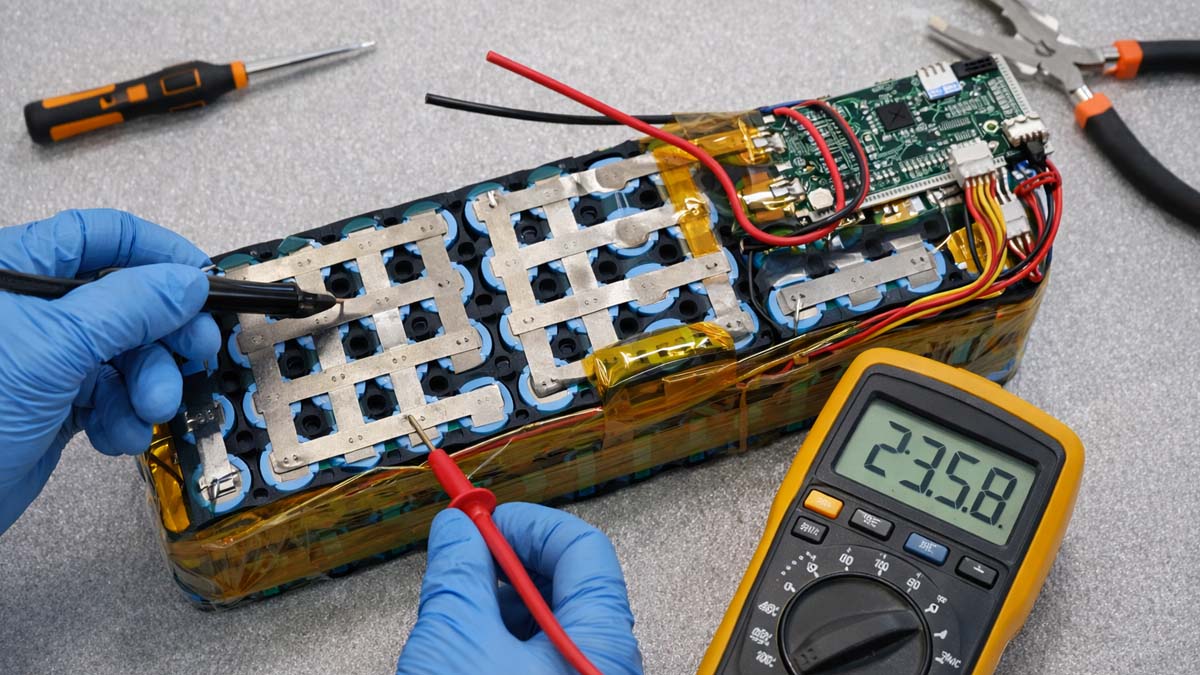
Ebike battery is not turning on or not working, the issue is most often caused by a faulty BMS or damaged battery cells. A failed BMS can block power output, while degraded cells may prevent the battery from delivering any power at all. In most cases, the solution is to replace the BMS or the affected cells, depending on which component is causing the problem.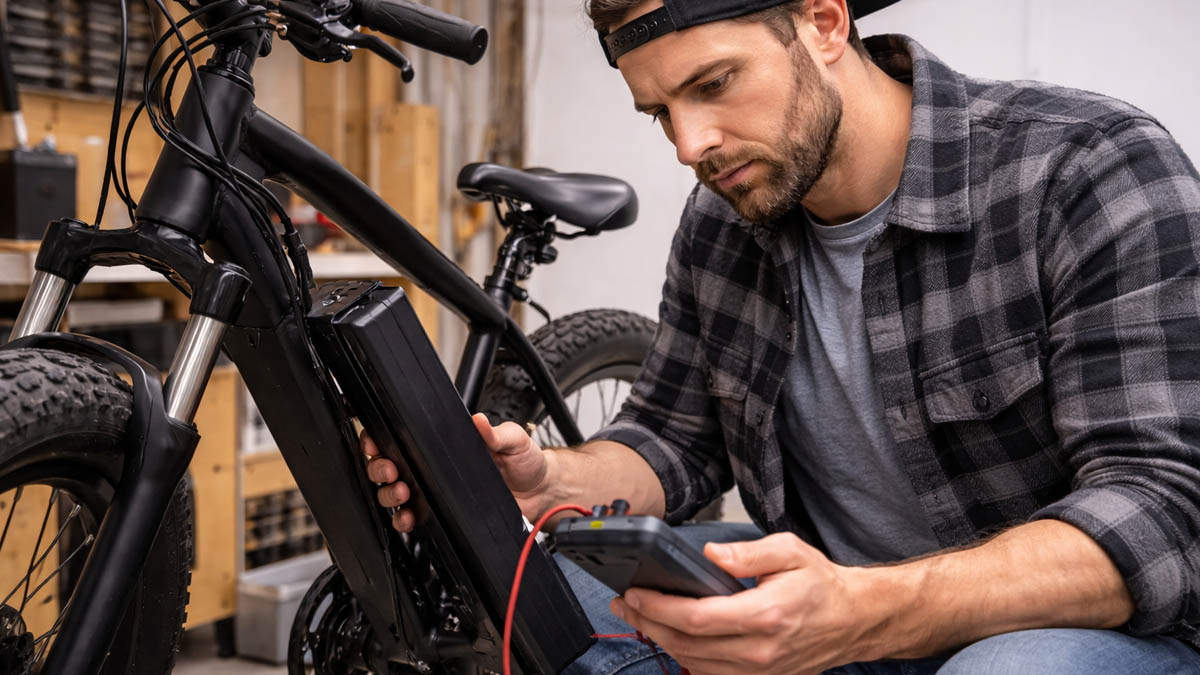
Ebike battery is draining fast, the most likely cause is poor battery cell quality. In this situation, it is generally not recommended to spend money on repairs.
Rapid power loss is often due to increased voltage imbalance between cell groups or the use of low-rate cells that cannot handle the required load. In either case, even if the battery is repaired, the problem is likely to return quickly.
For a more reliable and long-term solution, replacing the battery cells—or the entire battery pack—is usually the better choice.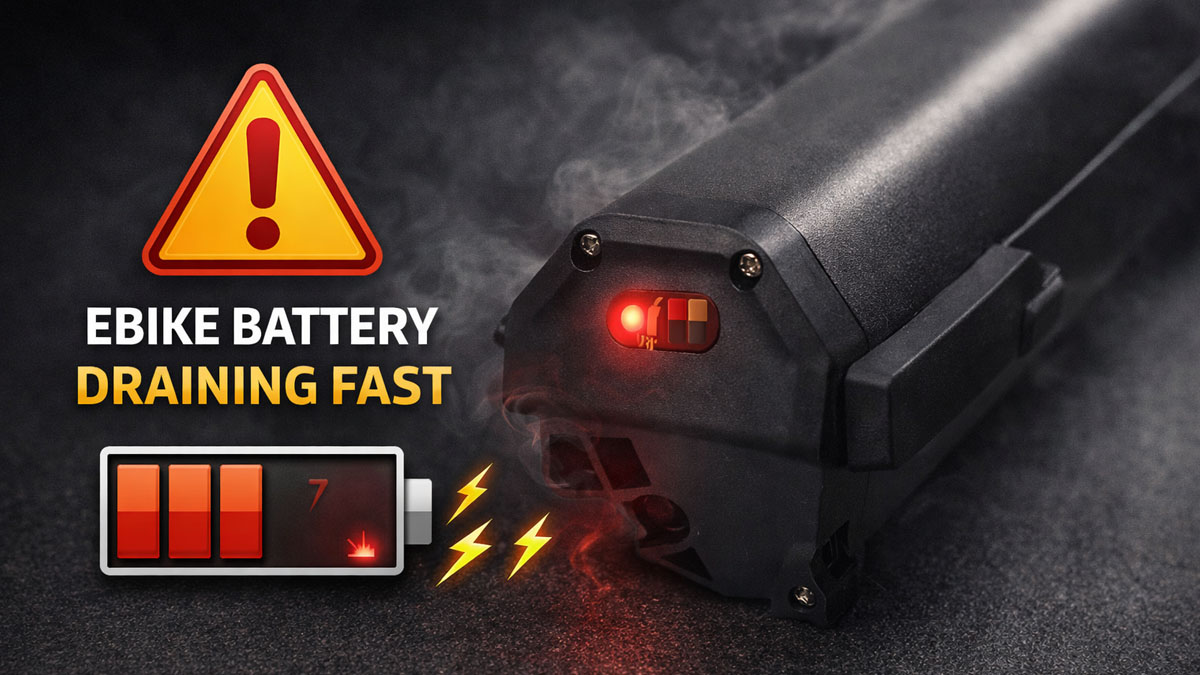
Dead Ebike Battery
A dead ebike battery usually shows clear warning signs before it completely stops working. Common symptoms include the bike not turning on, sudden power loss while riding, the battery not charging, or charging but not holding power. In some cases, the display may light up briefly and then shut off, or the battery may appear fully charged but deliver no output. These issues are often caused by BMS protection, cell degradation, or severe voltage imbalance. Understanding these symptoms can help you quickly identify the problem and decide whether to troubleshoot, fix, or replace the battery.
• How to Start an Ebike With a Dead Battery
If your ebike battery is completely dead, the bike usually cannot be powered on or provide any assist. In most cases, there is no reliable way to “start” the bike without battery power, since the controller and motor both depend on it. As a temporary solution, you may still ride the bike manually like a regular bicycle. Some users try using an external battery or a compatible backup pack, but this requires proper voltage matching and is not recommended unless you understand the system.
• How to Charge a Dead Ebike Battery
When charging a dead ebike battery, the first step is to check whether the charger is working properly. Try using another compatible charger to rule out charger failure. If the battery does not respond or the charger indicator shows no charging activity, the issue may be related to the BMS or over-discharge protection. In some cases, the battery voltage may have dropped too low, preventing normal charging. A professional technician may be able to pre-charge or reset the battery safely.
• How to Revive a Dead Ebike Battery
Reviving a dead ebike battery is sometimes possible, but it depends on the cause. If the battery has entered protection mode due to over-discharge, a controlled pre-charge or BMS reset may help fix the issue. However, if the problem is caused by damaged or severely degraded cells, revival is usually only temporary. In these cases, even if you manage to fix the battery, the same problem will likely return. For long-term reliability, replacing the cells or the entire battery pack is often the better solution.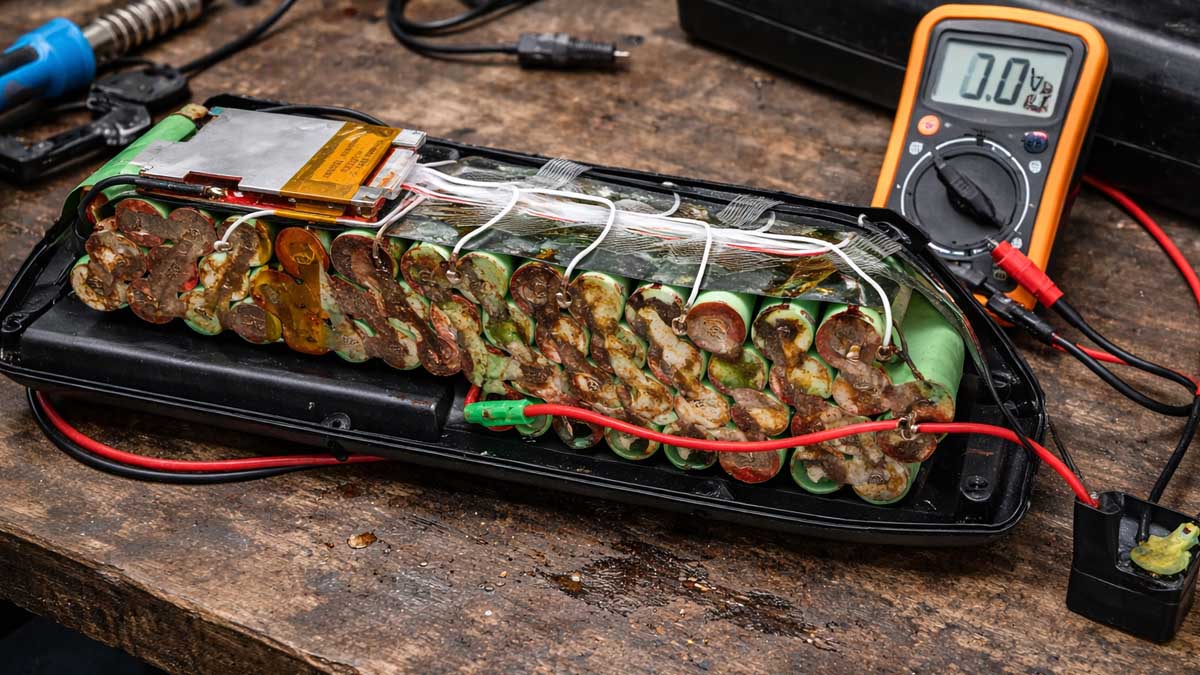
Testing
• Testing With Multimeter
For basic testing, most users rely on a multimeter to check the battery condition. The main focus is measuring the overall output voltage and the voltage of each cell group.
Since most ebike batteries are 72V or below, you can set the multimeter to the 200V DC range when measuring the total output voltage. This allows you to safely and accurately read the battery’s overall voltage.
When testing individual cell groups, switch the multimeter to the 20V DC range. Then measure each series group one by one. By comparing the voltage readings, you can identify imbalances or abnormal drops in specific cell groups.
Based on these measurements, you can analyze the battery’s condition. A normal battery should have consistent voltage across all cell groups, while significant differences usually indicate cell degradation or imbalance.
Capacity testing requires specialized equipment and is typically performed at a professional repair facility. It involves measuring how much energy the battery can actually store and deliver under controlled conditions.
While it is possible to purchase a battery capacity tester or analyzer, these devices are usually expensive and not cost-effective for most individual users. For this reason, it is generally recommended to have capacity testing done at a professional service center rather than attempting it at home.
When the voltage difference between cell groups becomes too large, the battery needs balancing. The fastest method is to open the ebike battery and connect a balancing device directly to the BMS balance leads, which can usually complete the process within a few hours.
If you try to balance the battery only through normal charging and discharging, the process is much slower and may take several days of repeated cycles. This method also depends on whether the BMS has a built-in balancing function—without it, balancing will not be effective.
In most cases, increased cell imbalance is caused by poor cell quality or natural aging after long-term use (typically 3–5 years). While balancing can temporarily restore performance, it does not fix the root problem. Over time, the imbalance will return, so replacing the battery pack is often the more reliable long-term solution.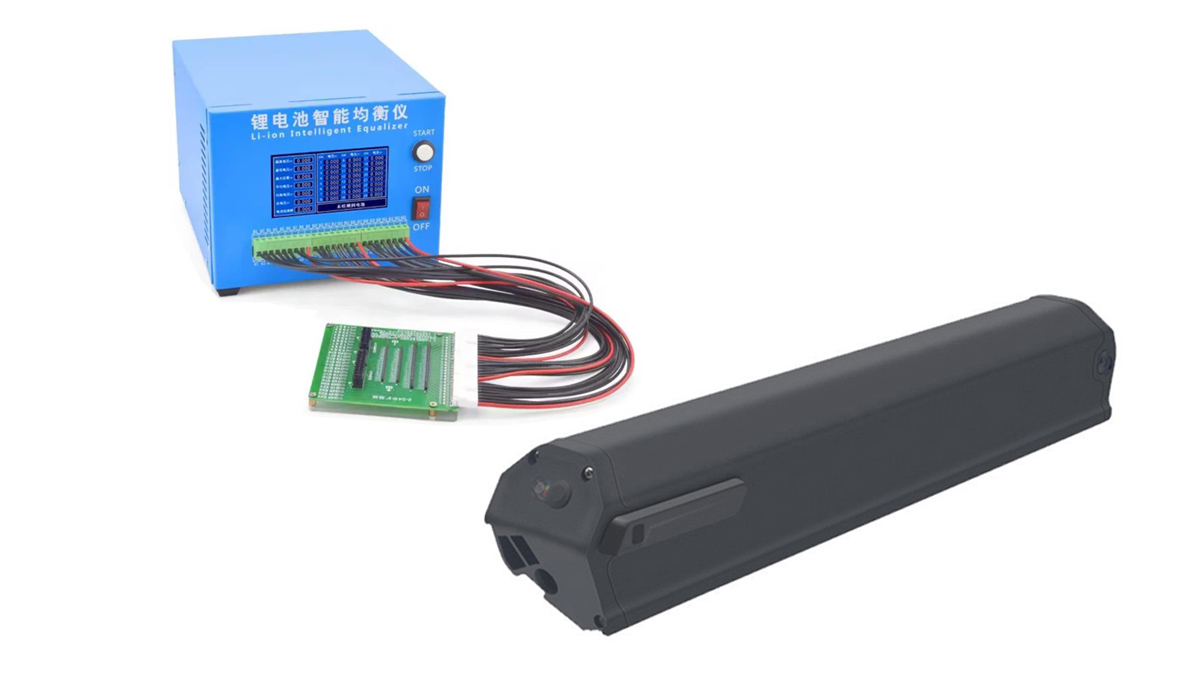
Not all ebike battery problems can be effectively repaired. In fact, when the issue involves battery cell quality or degradation, it is usually not possible to fix it at the root level. In these cases, replacing the entire battery pack is generally the recommended solution. Even if the battery is temporarily repaired, the same problem is likely to return quickly, sometimes along with new issues.
If the problem is limited to the BMS, wiring, connectors, or outer casing—and the battery cells themselves are not damaged—then repair is usually possible and relatively straightforward. These components can often be replaced or fixed without affecting the overall performance of the battery.
However, due to the nature of lithium batteries, attempting repairs without proper knowledge and equipment can be dangerous. Improper handling may lead to overheating, fire, or even explosion. For safety reasons, it is strongly recommended not to attempt DIY repairs at home. Always take the battery to a professional repair service for inspection and maintenance.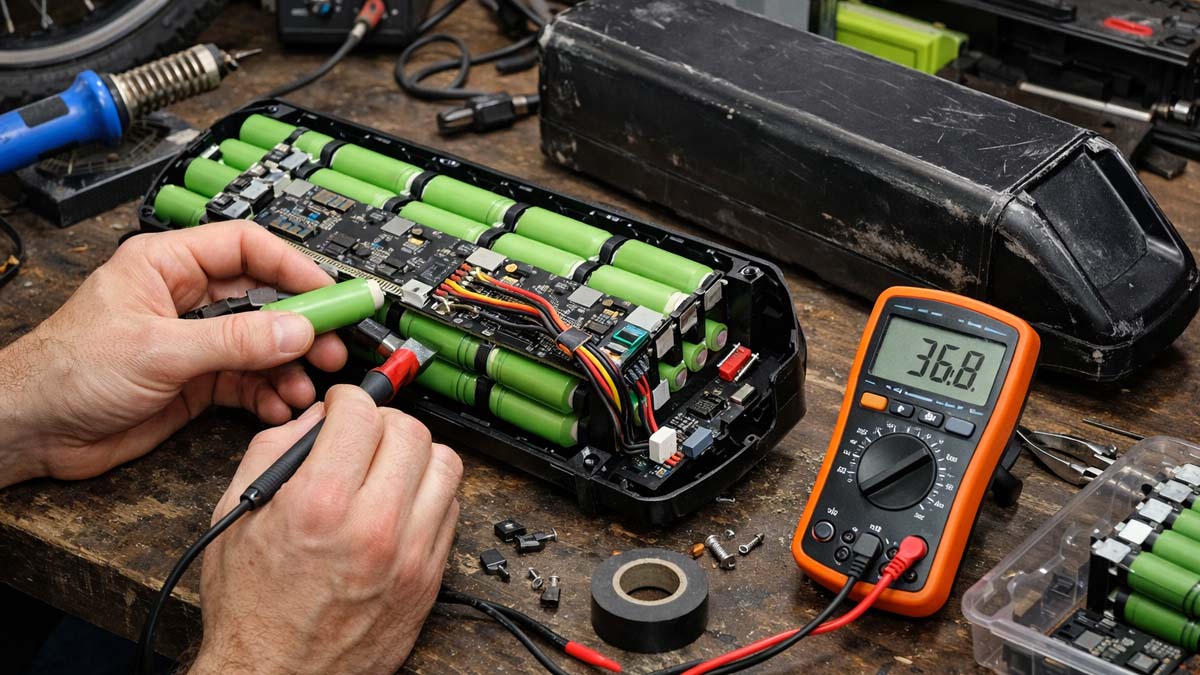
Conclusion
Not all ebike battery problems can be fixed, and knowing the difference is key to saving time and money. Issues related to the BMS, wiring, or connectors are usually repairable, while problems caused by cell degradation, imbalance, or poor-quality cells are often only temporary fixes at best.
Accurate testing—especially voltage checks and identifying cell imbalance—plays a critical role in diagnosing the problem. However, due to the safety risks of lithium batteries, repairs should always be handled with caution and preferably by professionals.
In many cases, especially when the battery is aging or has significant cell issues, replacing the battery pack is the most reliable long-term solution.
FAQ
How to fix ebike battery not charging?
First, test with another compatible charger to rule out charger failure. If it still won’t charge, the problem is usually the BMS charging circuit or damaged cells. A faulty BMS can often be fixed by replacing the BMS, but if cells are degraded or over-discharged, cell replacement or a new battery pack is usually the more reliable solution.
How to repair ebike battery?
Repairs are practical when the issue is the BMS, wiring, connectors, terminals, or casing—without cell damage. If the problem involves cell quality, severe imbalance, or aging cells, repairs are often temporary and the same issue can return quickly, so replacing the pack is commonly recommended.
How to test ebike battery with multimeter?
Use a multimeter to check total output voltage and cell-group voltages. For most ebike packs (72V and below), set the multimeter to 200V DC to measure pack output voltage. To measure each series group, switch to 20V DC, then compare readings across groups to identify abnormal voltage differences.
Why is my ebike battery draining so fast?
Fast draining is most commonly caused by poor-quality or degraded cells, increased voltage imbalance, or cells that can’t handle the load. Repairs are often not cost-effective and the problem tends to repeat, so replacing the cells or the entire battery pack is usually the best long-term solution.


